Surprises on the Trans-Canada Trail
October 13th, 2016
A tip on Facebook led me to a section of the Trans-Canada Trail I had never hiked before. I heard that Fringed Gentian, a wildflower with which I have rather fallen in love, could be found in abundance there, if you knew where to look. I didn't ask for details (I didn't know if he'd want to give up his secret, and besides, it's more fun to make it a treasure hunt); instead Michael and I just went to the trail and explored.
It was pretty well off-trail where we found the motherload: dozens of them, some growing in dense stands. Fringed Gentian is enormously picky about sunlight, and in the late-afternoon partly-cloudy conditions we found them in, they were all mostly closed. I promised myself to come back soon on a sunny mid-morning.
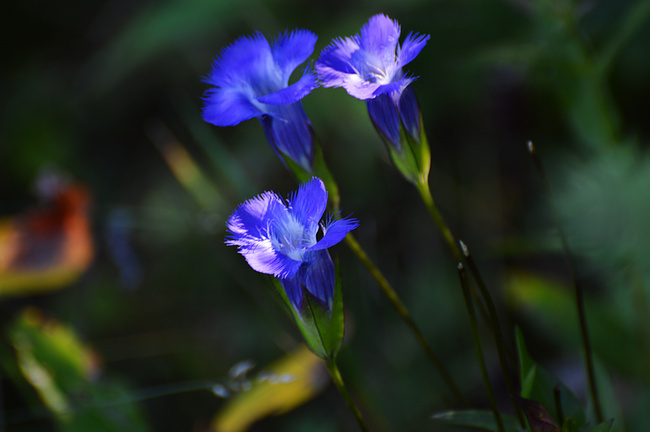
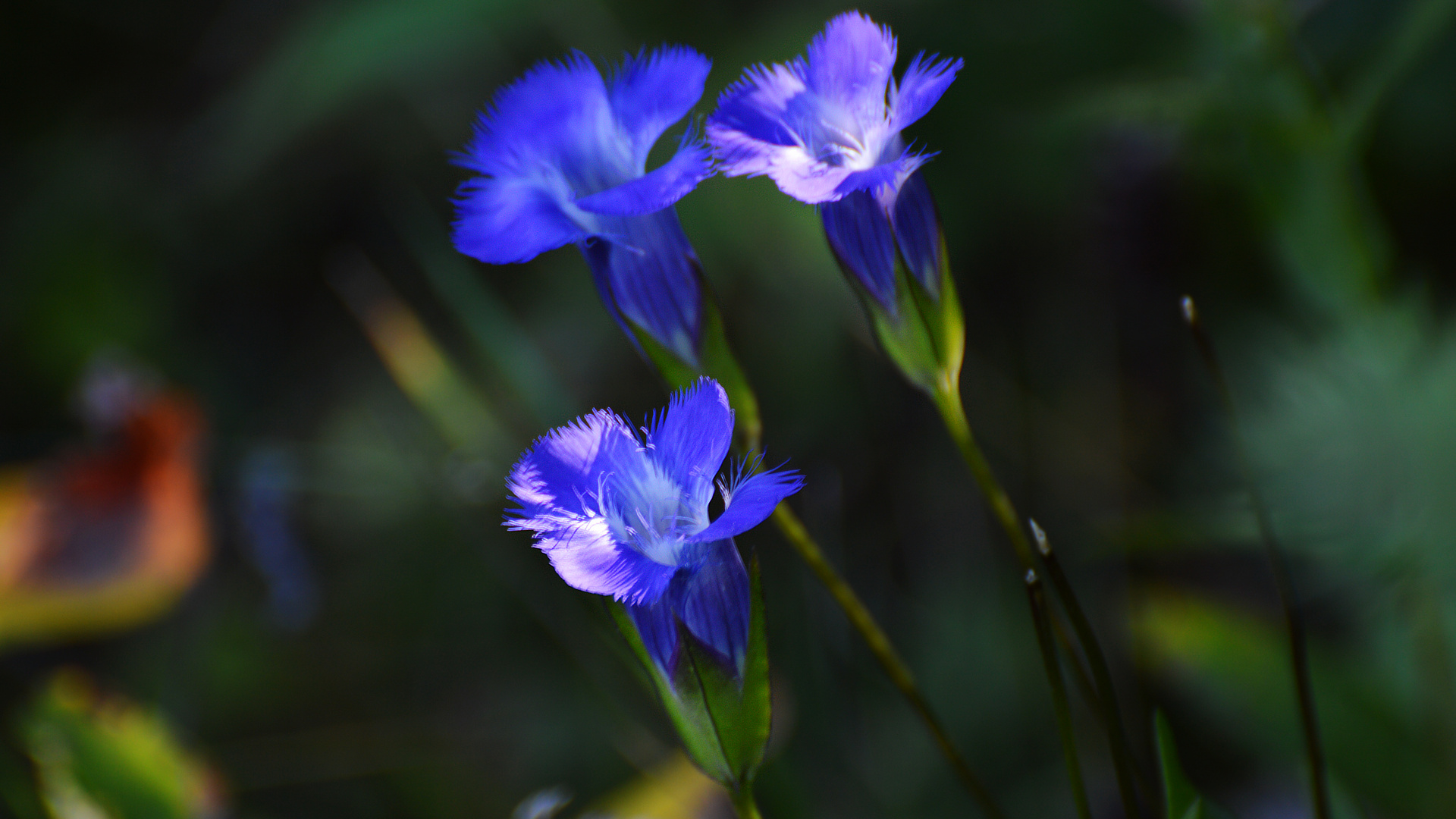
So I did, and after much poring over the site in search of the perfect photo op, I found these three lovely ladies. They were standing up against a hillside with the sun behind it, open and waiting. I waited with them until it arrived.
1680x1050 wallpaper
The abundance of limestone quarries in the area provided a clue as to why Fringed Gentian was so happy there. Limestone bedrock is one of their favorites. Other interesting wildflowers were in evidence also, including Harebells and some wild geraniums that Mike tentatively identified as Bicknell's Cranesbill. The land and flora reminded me of both Carp Ridge and the Burnt Lands.
The birding was far better than I expected. Both a juvenile Sharp-Shinned Hawk and a juvenile Red-Shouldered Hawk flew over while I was photographing gentians. Red-Shouldered Hawk is very uncommon in Ottawa, only my second ever here. Back on the trail, I was stunned to find an Eastern Towhee, another highly uncommon bird, seldom seen in Ottawa except for its small breeding population in the Carp Ridge barrens. (Sadly, my photos of these two excellent birds are not worth showing. Exposure fail.)
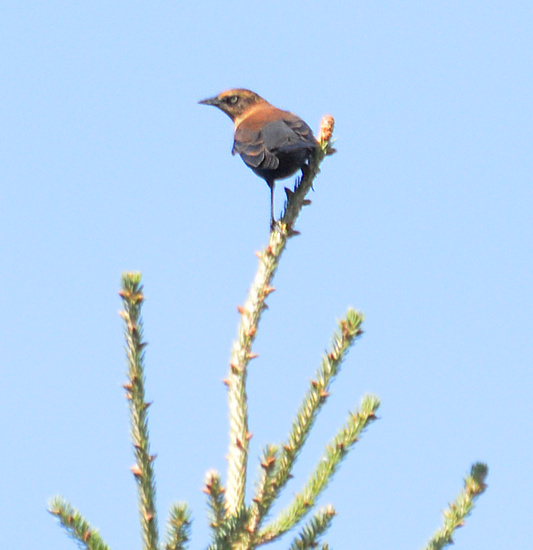
Across the trail from the towhee, what sounded like a sizable flock of Rusty Blackbirds was twittering in some dense spruces. I couldn't see a one of them, except for a lone sentry who perched at the very top of a spruce to look around. Rusties are uncommon, declining blackbirds who nest and forage in wetlands. Most of them breed in the boreal forest.
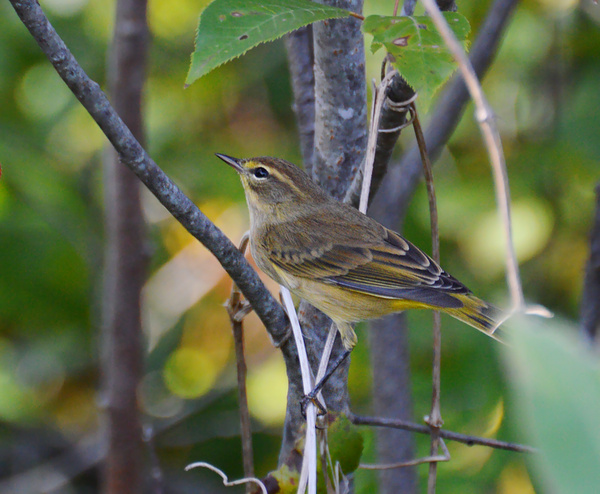
Palm Warbler, one of our earliest (in spring) and latest (in fall) migrant warblers. They favor spruce bogs for nesting. A small number of pairs breed at Mer Bleue bog each year.
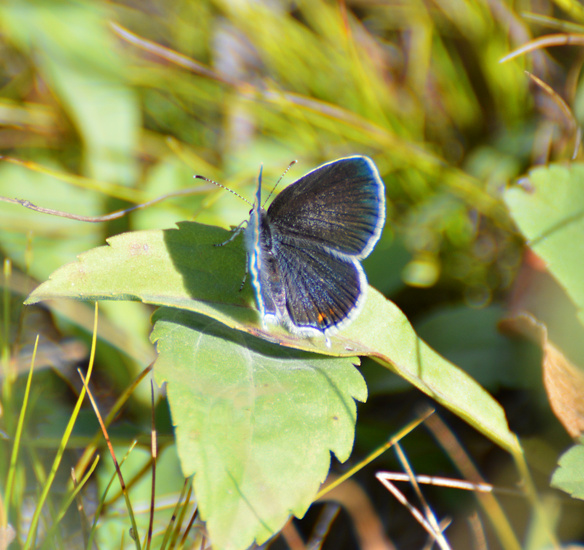
Eastern-Tailed Blue
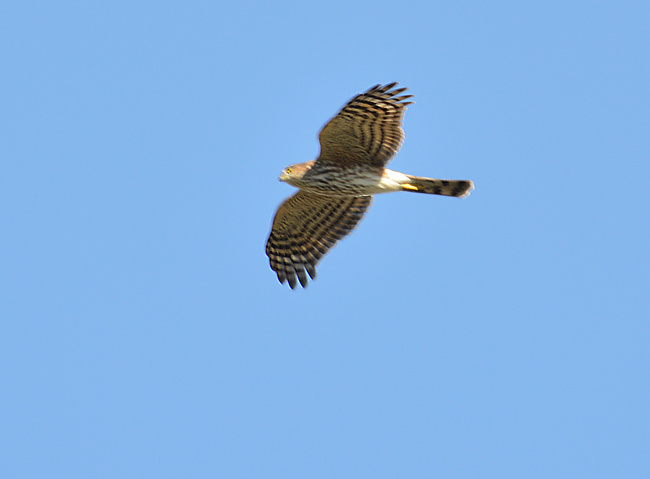
Sharp-Shinned Hawk
If you would like to explore this area yourself, it's in Stittsville around where Jinkinson Road crosses the TCT. There's a parking lot for trail users there.
My First Proper Lincoln's
October 2nd, 2016
On September 19th, an honorary lifer at the Goulbourn Sparrow Field! This spot--actually just a weedy hydro cut near the Trans-Canada Trail--was discovered recently by Jon Ruddy as being a motherload of migrant sparrows. It's the kind of spot (small, choked with non-native weeds, bordered by recent housing developments) that you might look at and instantly dismiss as having any potential for nature-watching, but birds are sometimes less picky than we expect, at least in migration. Weedy patches, suburban back yards, and puddles in snow dumps can be as worth exploring as pristine forests and wetlands.
Lincoln's Sparrow has always been one of my nemesis birds. It's a bashful little sparrow that nests on the ground in bogs. Field marks include thin streaking on buffy-tinted breast and flanks. Ottawa has one known breeding population in Mer Bleue bog, but I've never seen one there or even heard one singing. In fact my only sighting ever was a brief, unsatisfying view at Point Pelee, identified for me buy the trip leader. So when Jon dropped me a text to let me know Lincoln's Sparrows had arrived at the sparrow field, I made plans to head out there in the early morning as soon as I could.
Nemesis bird no more! Ottawa first. Also Ottawa second, Ottawa third, Ottawa fourth, Ottawa fifth...The first one I saw was along the Trans-Canada Trail itself, feeding in a bushy tree loaded with berry vines. It wasn't quite sunrise yet. From then until about 7:30, I just kept seeing them.
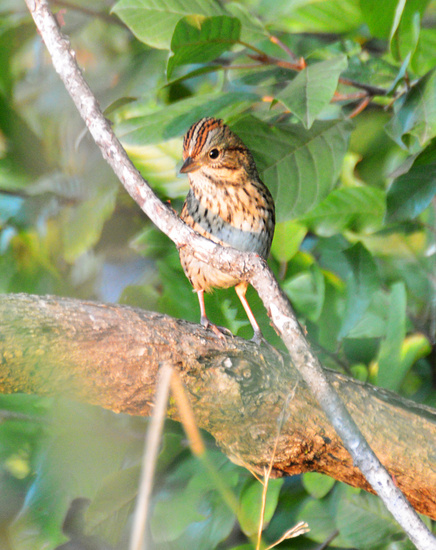
The Lincoln's mannerisms give it a sort of startled, delicate air, and a very different feel from the superficially similar Song Sparrow. As shown above, it has a habit of erecting its crown feathers into a little peak.
I could scarcely believe I had ever called Lincoln's Sparrow a nemesis bird. I pished and they came right out into the open. But then, with the sun properly up, many more sparrows flooded into the weeds and trees, and all the Lincoln's Sparrows just...melted away. They stopped appearing, stopped responding to pishes. Until then they were practically all I saw, now all I could see were the hordes of Song, Field, Chipping, and other common species. It was like they were allergic to sunlight. (This gave me an inkling as to why I've never seen or heard one at Mer Bleue. The bog parking lot doesn't open until well after sunrise in summer.)
An incredible morning. And now Jon is suggesting that Le Conte's Sparrow is a possibility there, which would be a not-merely-honorary lifer and a rarity in Ottawa. I'll be back.
To The Fringed Gentian
September 23rd, 2016
Thou blossom bright with autumn dew,
And coloured with the heaven's own blue,
That openest when the quiet light
Succeeds the keen and frosty night.
Thou comest not when violets lean
O'er wandering brooks and springs unseen,
Or columbines, in purple dressed,
Nod o'er the ground-bird's hidden nest.
Thou waitest late and com'st alone,
When woods are bare and birds are flown,
And frosts and shortening days portend
The aged year is near his end.
Then doth thy sweet and quiet eye
Look through its fringes to the sky,
Blue—blue—as if that sky let fall
A flower from its cerulean wall.
I would that thus, when I shall see
The hour of death draw near to me,
Hope, blossoming within my heart,
May look to heaven as I depart.
- William Cullen Bryant
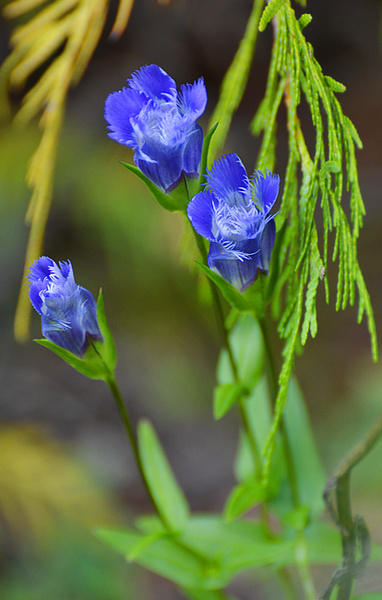
Photographed in Marlborough Forest, September 4th.
Fall Festival at Mud Lake (part 3)
September 15th, 2016
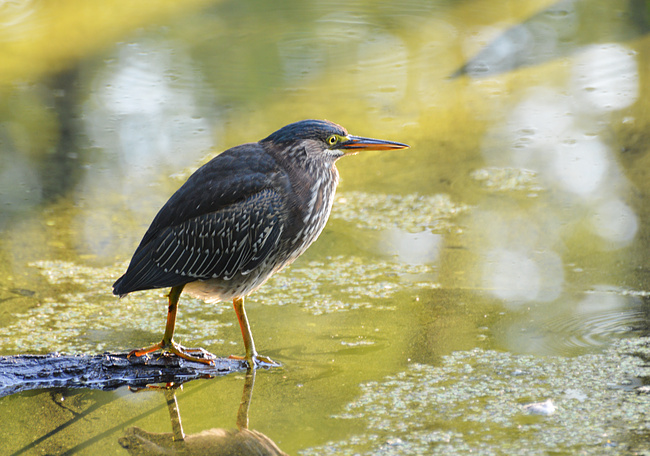
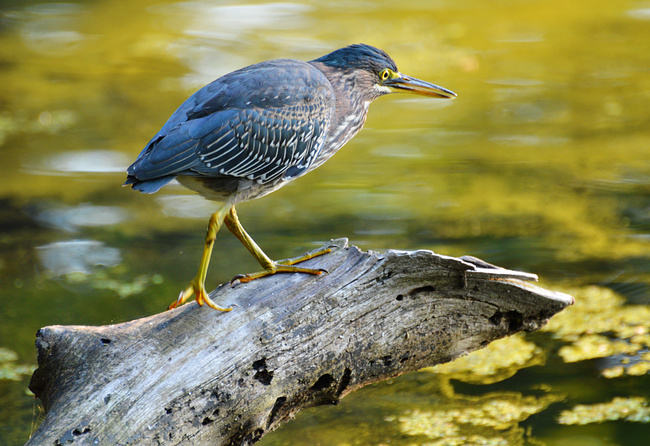
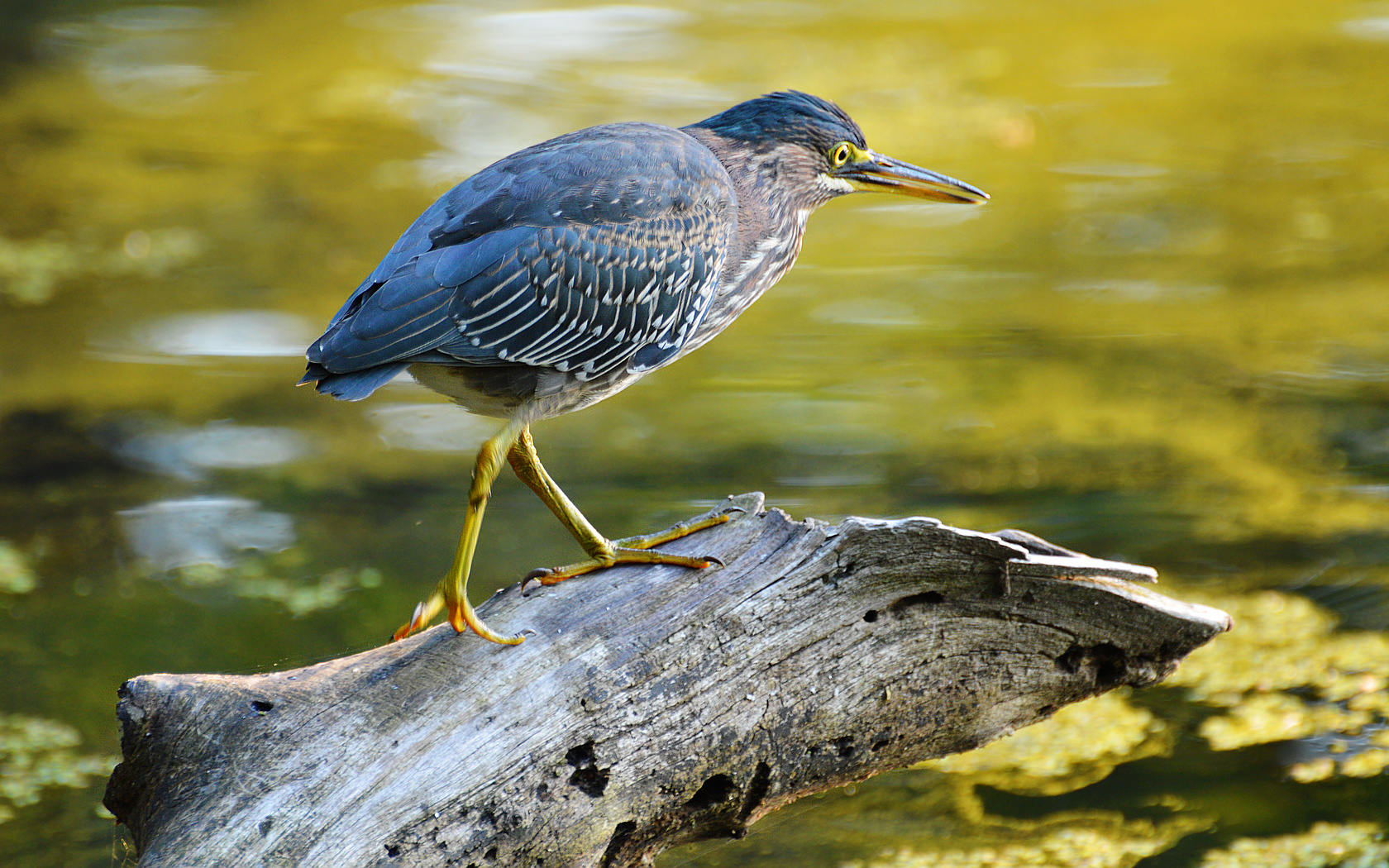
This last part is dedicated to a Green Heron, fishing and frog-gigging in the early morning. This is the smallest of the four heron species who frequent Mud Lake in summer.
1680x1050 wallpaper

1680x1050 wallpaper
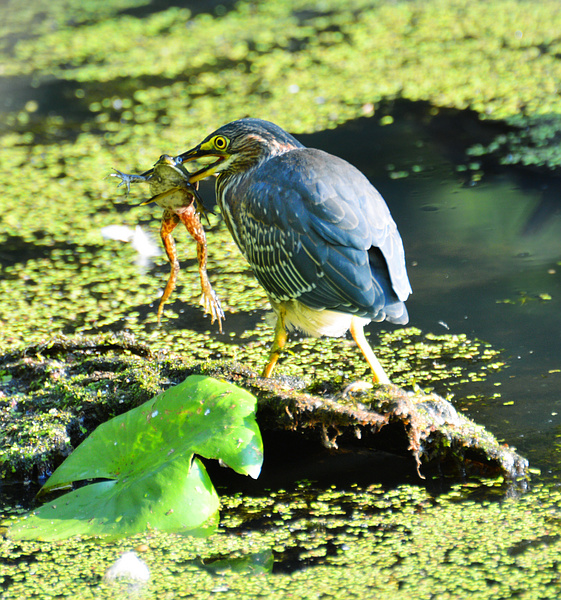
Given the orangey legs, I think this is a Pickerel Frog. I know it's morbid, but something about the look on its face here makes me smile. "Go ahead. Ask me how my day is going."
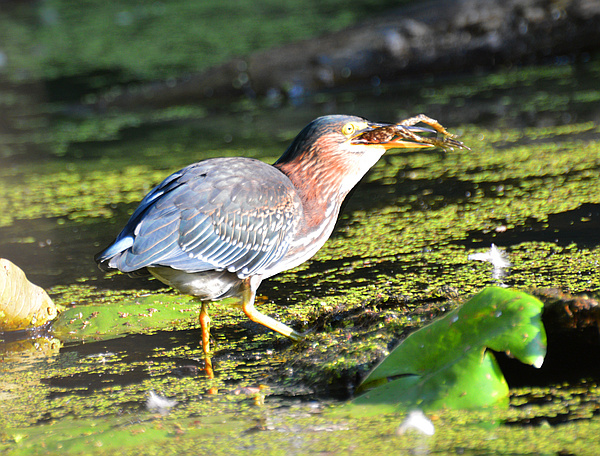
"Poorly."
Fall Festival at Mud Lake (part 2)
September 10th, 2016
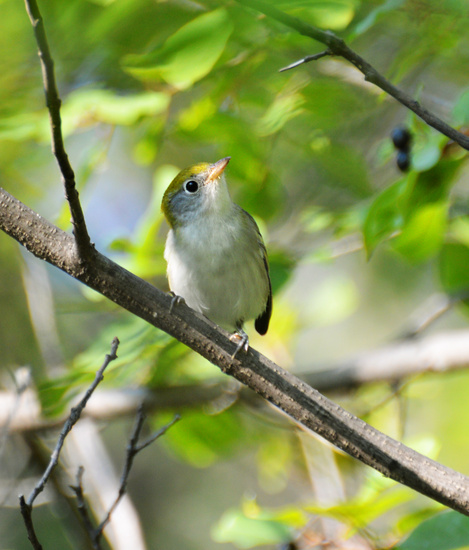
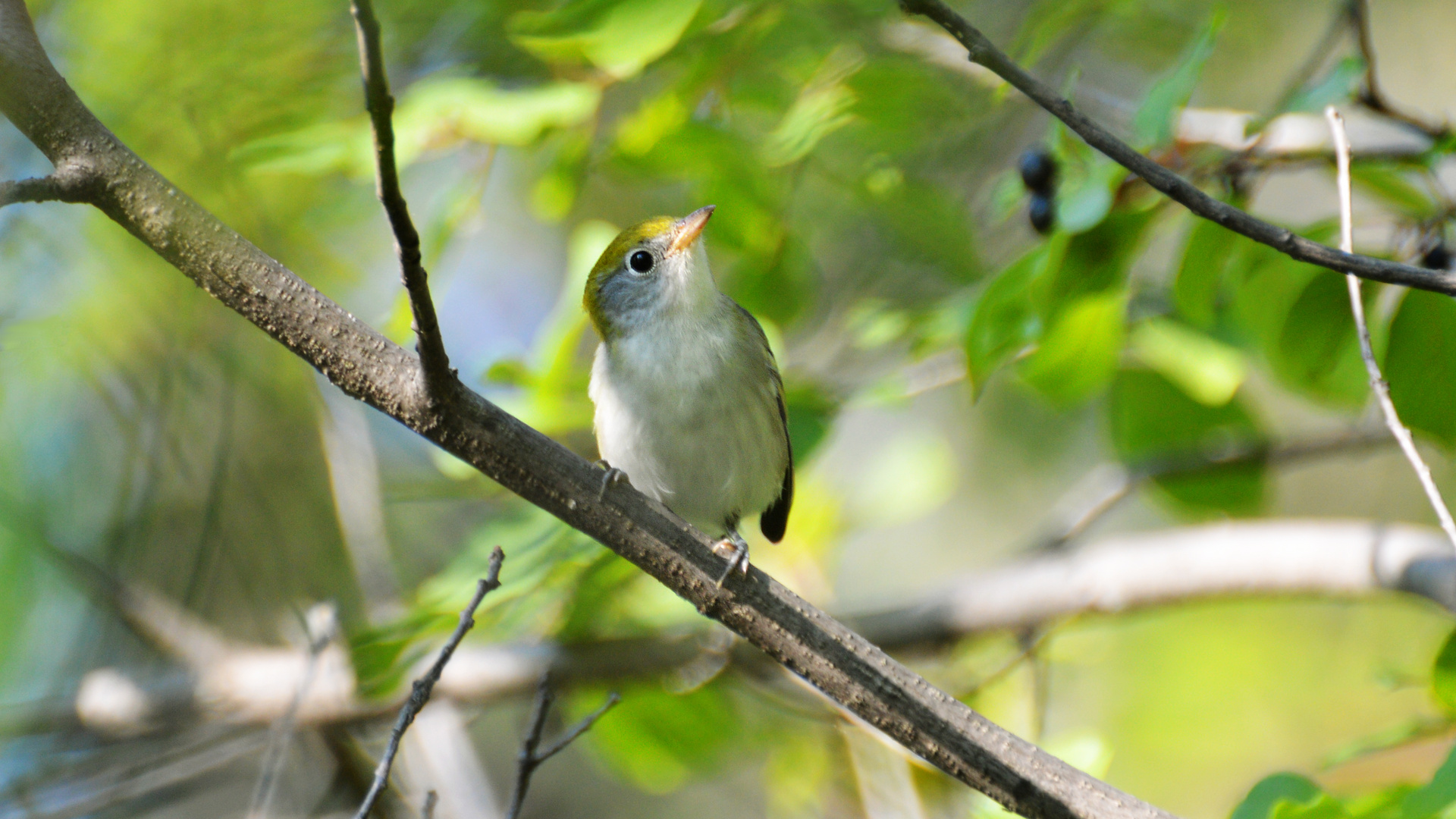
The reaction from a young Chesntut-Sided Warbler right after I pished (which I shall dub a "pish-take"):
1680x1050 wallpaper
1680x1050 wallpaper
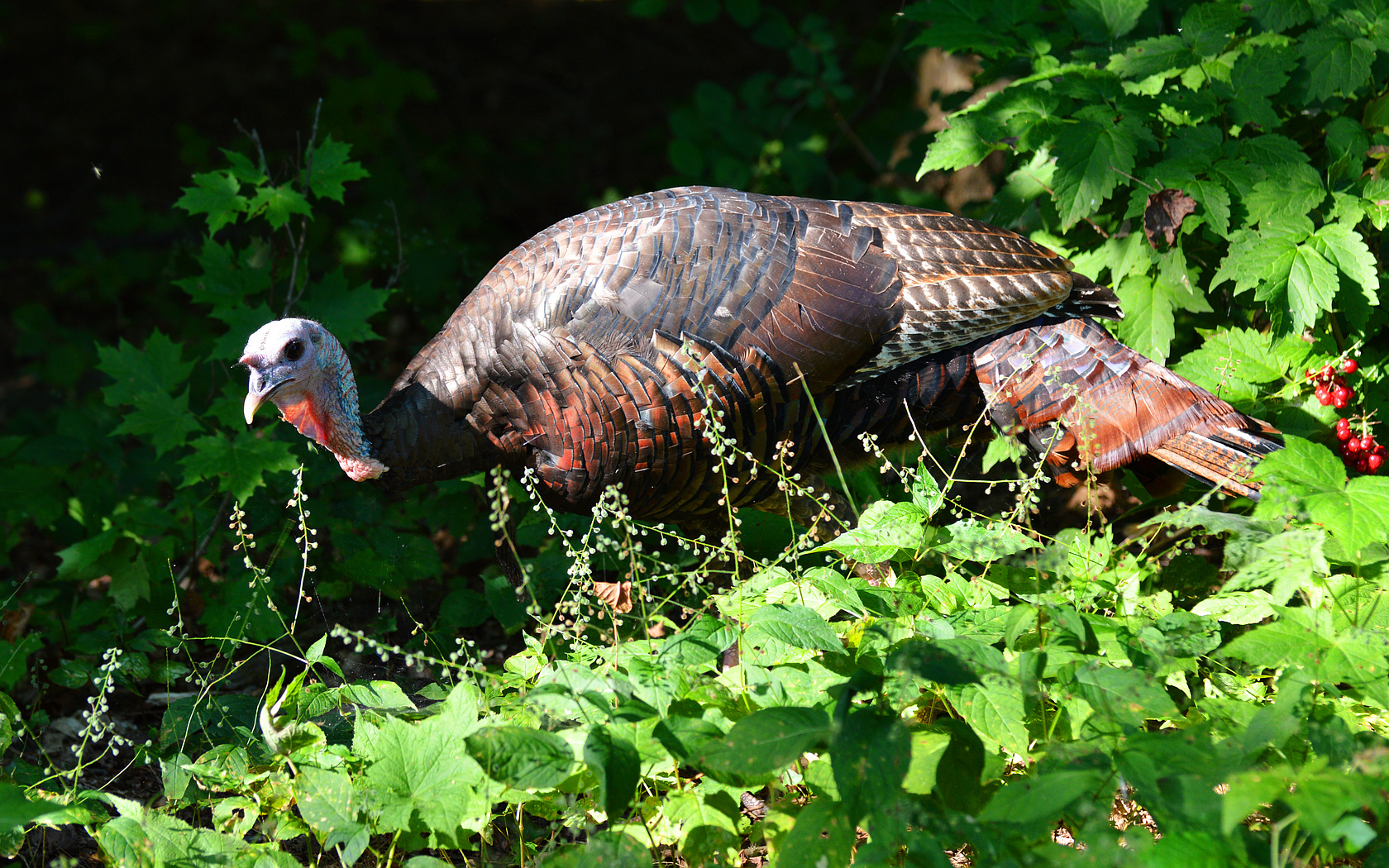
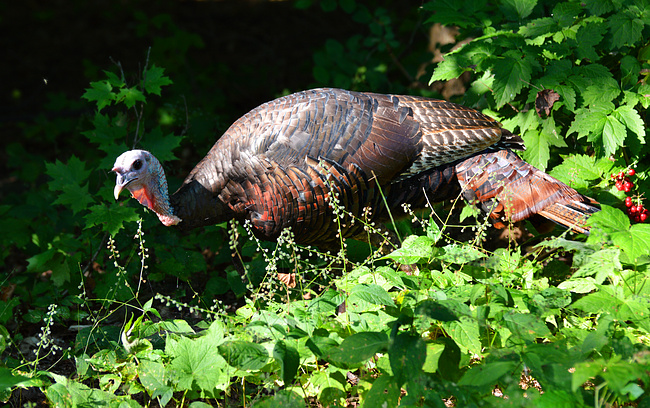
The male Wild Turkey was looking resplendent. I haven't spotted his mate in months, and as far as I know no one has seen baby turkeys at Mud Lake, but I wouldn't be surprised if she's sequestered away somewhere raising a family. Wild Turkeys hens are very good at being secretive when they have poults to protect! (As for the male, he won't get involved in childrearing, which given his flashy plumage is probably for the best.)
That one is well worth seeing at high res to appreciate the plumage highlights. The small size does not do him justice!
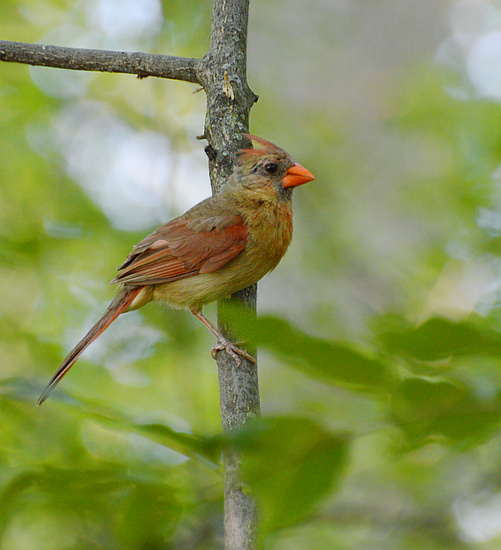
female Northern Cardinal
1680x1050 wallpaper
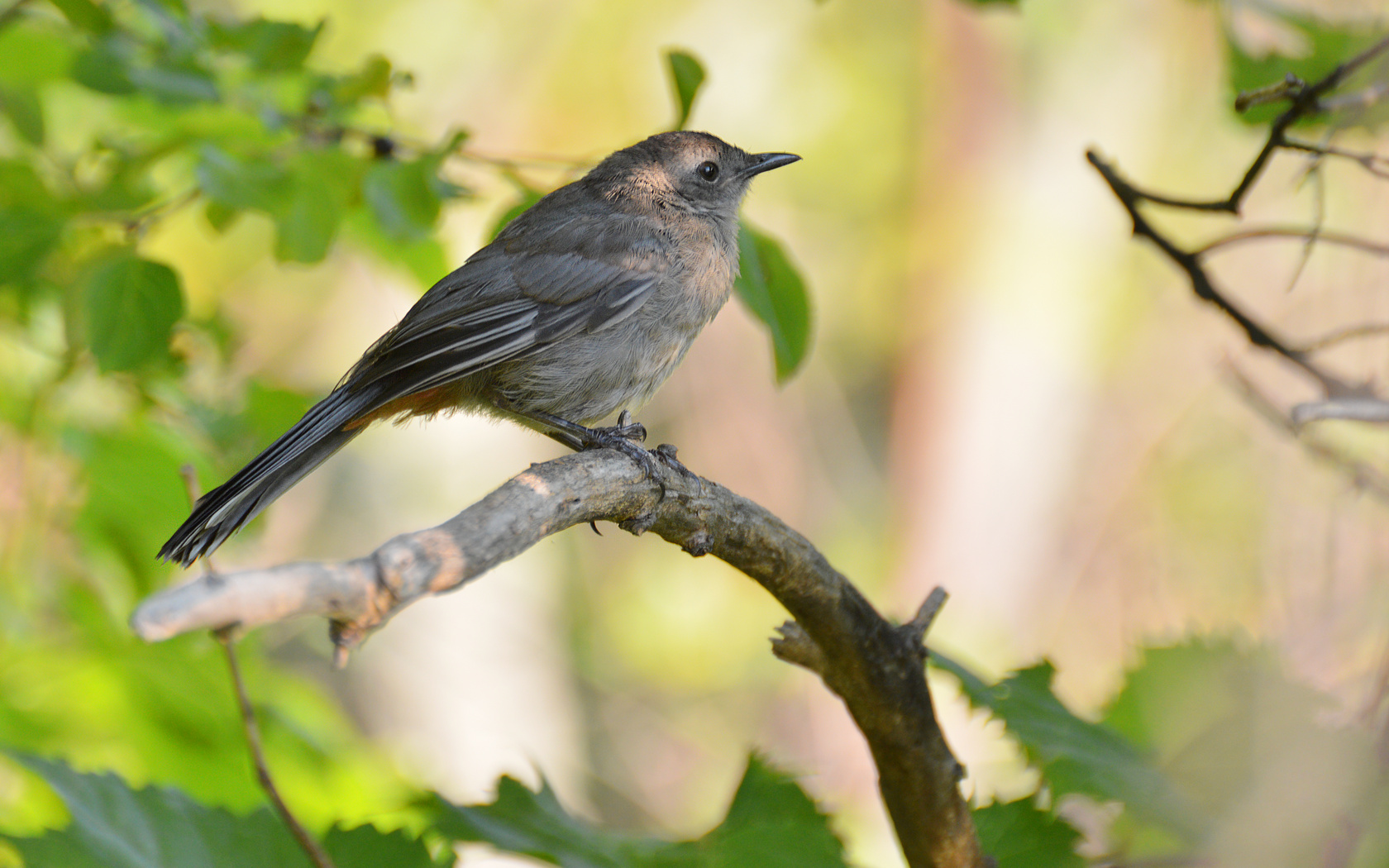
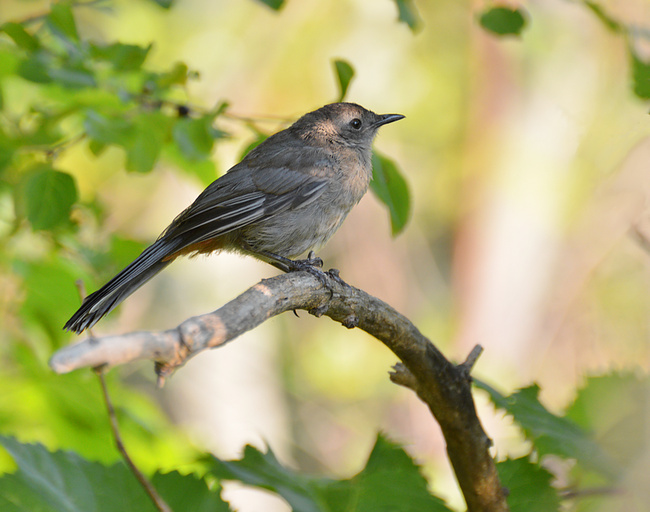
Gray Catbird greets the morning. It just sat there in the sun for some time. I seldom see this usually skulky species be so visible, except when singing in spring. Probably an inexperienced youngster. Catbirds' alarm calls typically emanate from dense tangles of undergrowth, sounding for all the world like plaintive meows.
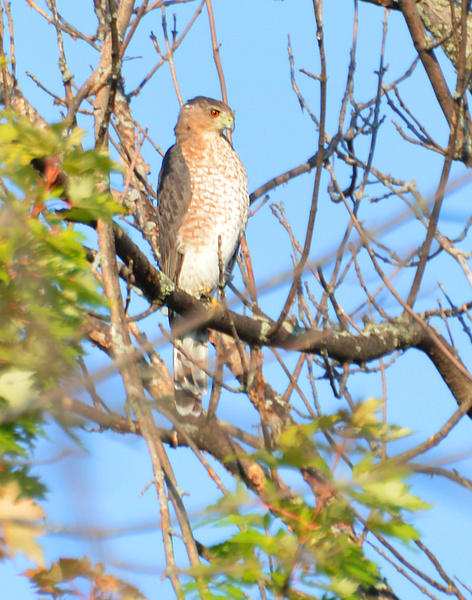
Take note, juvie songbirds: this is what trouble looks like. I spotted and photographed this mature Cooper's Hawk in the distance from Cassels Rd. Like the Sharp-Shinned Hawk I had seen two days ago, this is an accipiter, and accipiters are well-known for showing up wherever large flocks of songbirds gather, looking for an unwary or just unlucky bird to call lunch. I climbed up onto the ridge to try for a better, closer vantage on it, but it got chased off by angry Blue Jays before I could get there.
Fall Festival at Mud Lake (part 1)
September 6th, 2016
After a summer spent photographing insects in the wilds of Marlborough Forest, it's back to birds, and back to the most well-known nature lovers' haunt in Ottawa: Mud Lake.
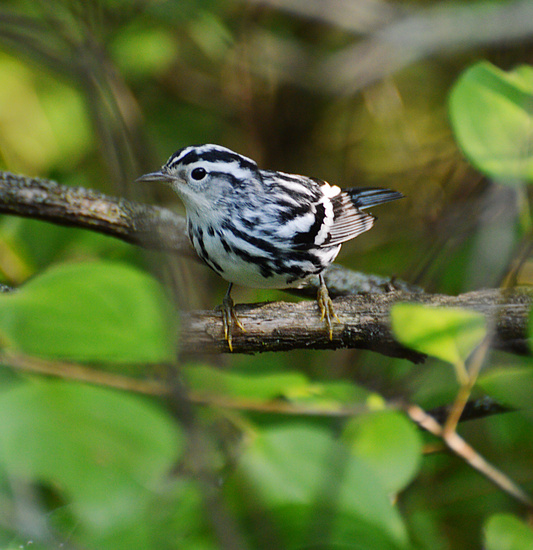
Black-and-White Warbler
Jon Ruddy sent notice on the 21st of August that a deluge was coming the next morning. A cold front was coming through, encouraging countless songbirds to get a move on southward. He was right. I arrived the next morning to find the trees off Cassels Road positively dripping with birds (though alas, much less so after a young Sharp-Shinned Hawk flew by. They were still around, of course, but all took cover in dense undergrowth.) That was a binoculars day. I came back two days later armed with my camera, and happily, found that the migrant activity was still excellent.
1680x1050 wallpaper
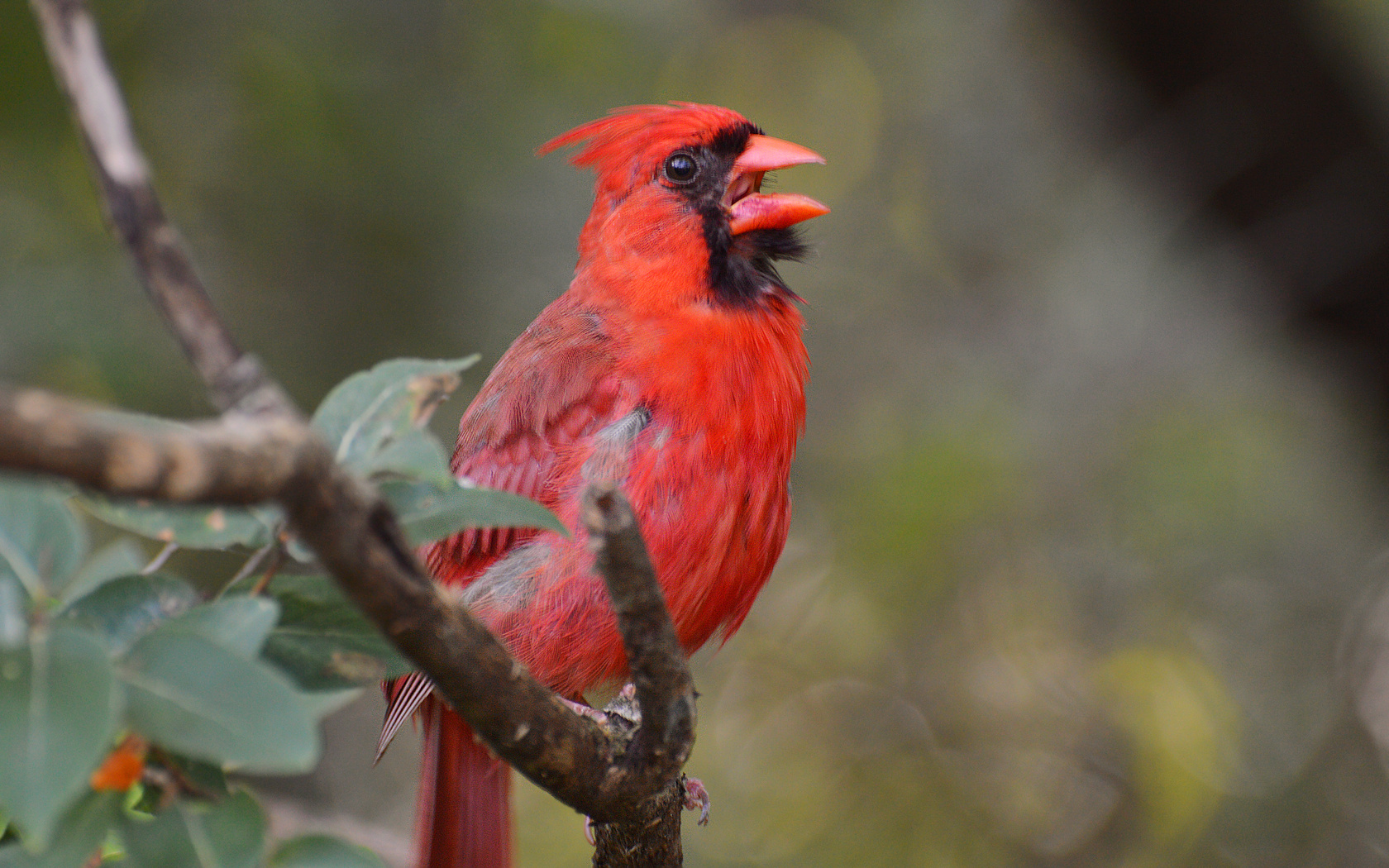
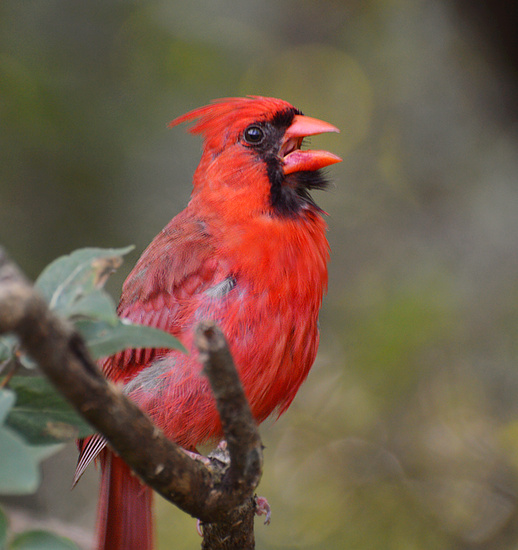
Of course some of the locals wanted their pictures taken too. This male cardinal was singing as proudly as ever despite his territory being overrun with vagrants, and despite his annual molt causing him to look a bit scraggly. Elsewhere I spotted a very young, just-fledged cardinal, probably from its parents' second brood this year.
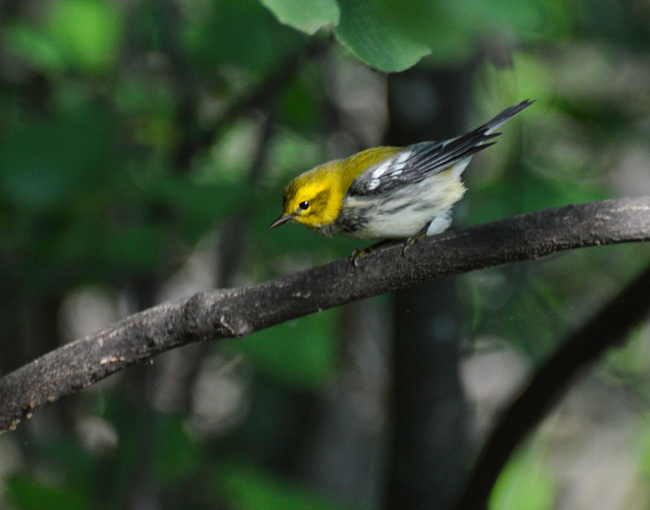
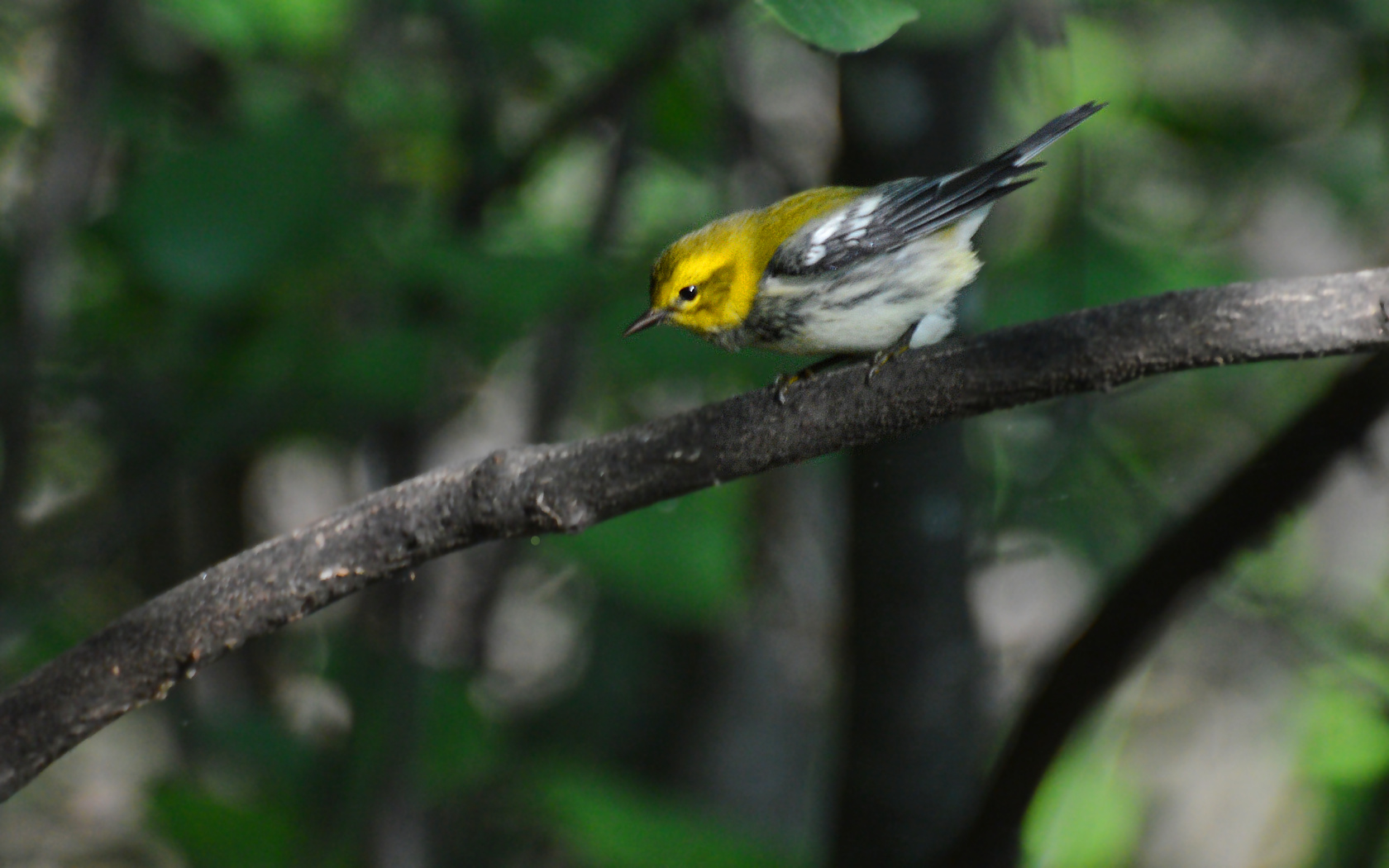
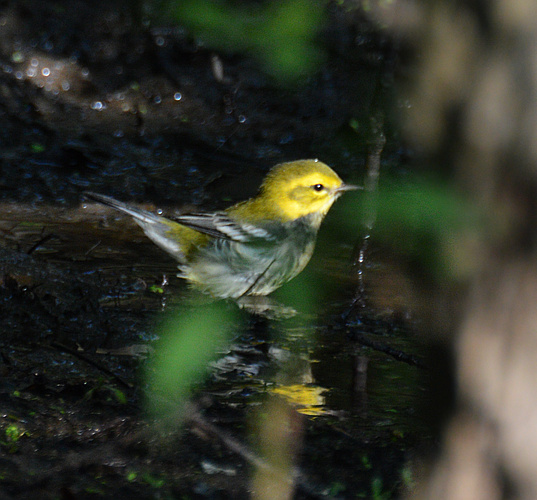
Taking a side trail in the woods I stumbled upon a popular birdbath. It was a muddy inlet of the pond with hanging and fallen branches leaning all over--perfect for little birds to carefully make their way down to the shallow water. It reminded me of that magical spot in Costa Rica where Johan took us. I knelt there awhile, but though birds periodically materialized in the upper branches and descended partway, they were hesitant to actually bathe in front of me. Only this Black-Throated Green Warbler had the nerve.
1680x1050 wallpaper
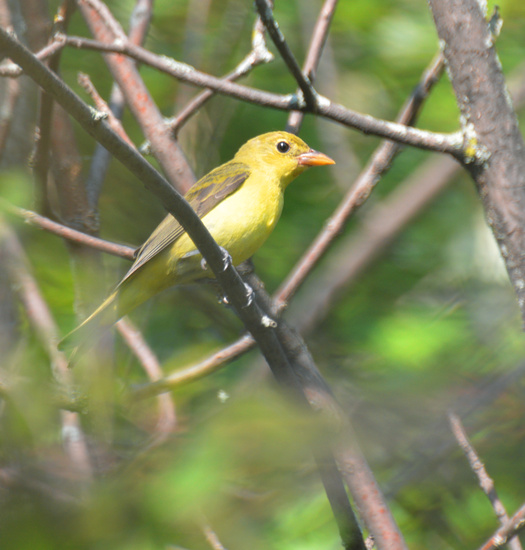
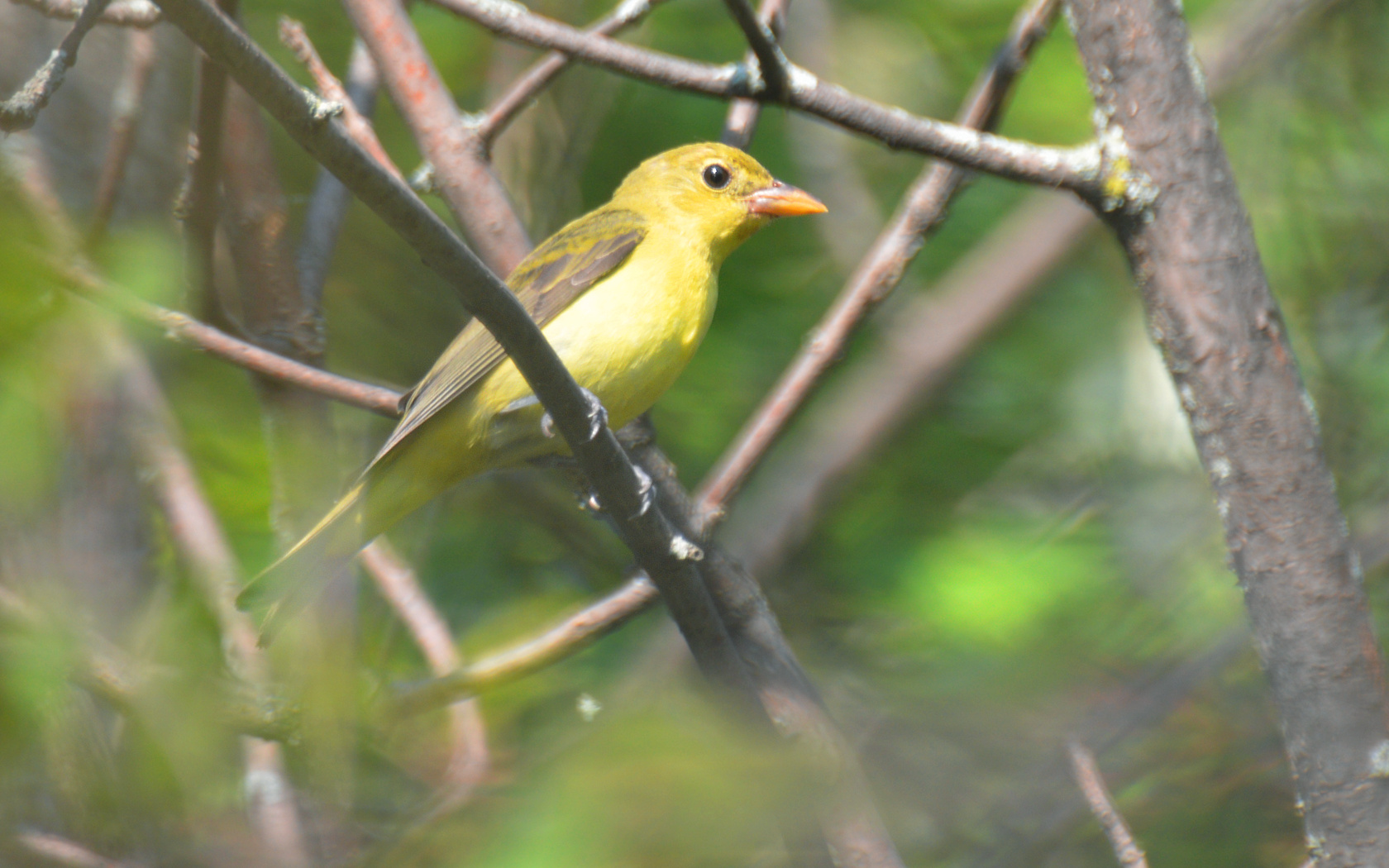
Pictured below, a Scarlet Tanager, one of the didn't-quite-dares who lingered in the trees above the bath. Only mature male Scarlet Tanagers are actually scarlet, and only in the breeding season. This one is probably a female.
1680x1050 wallpaper
A few more from Marlborough Forest
August 31st, 2016
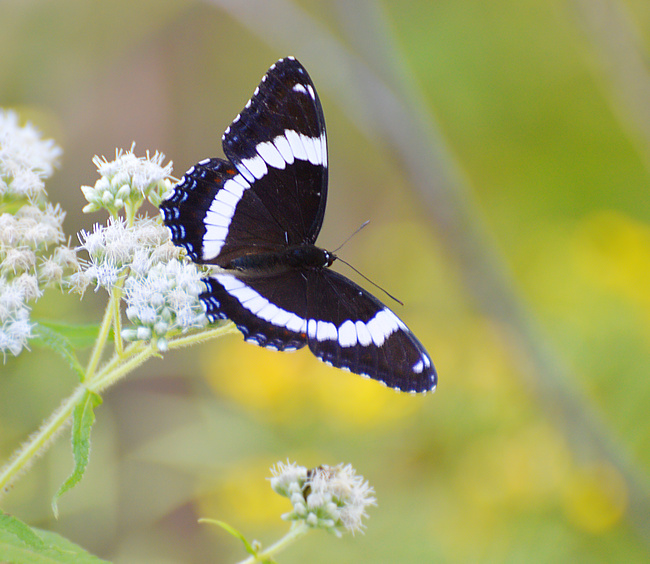
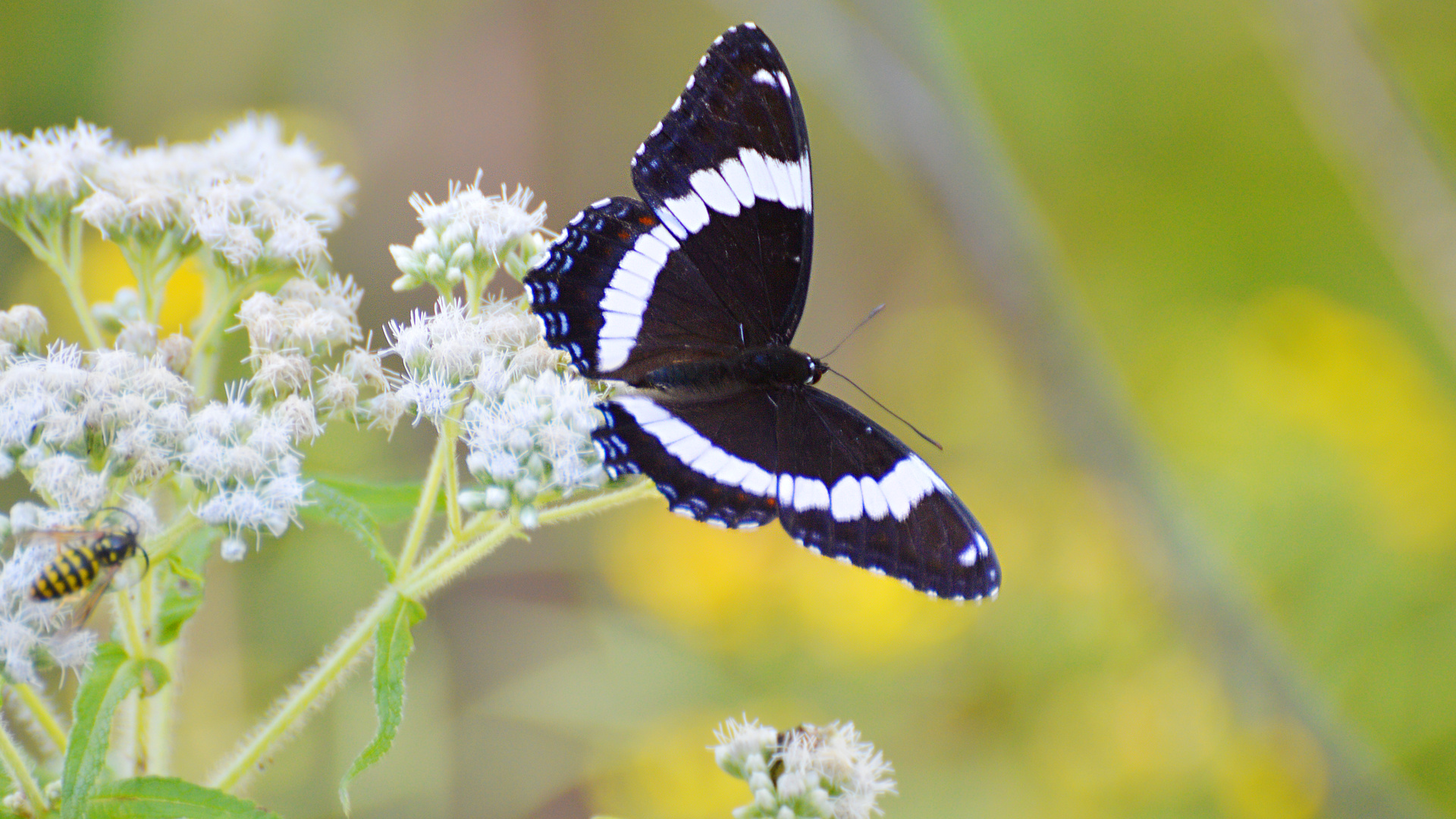
White Admiral, wallpaper available
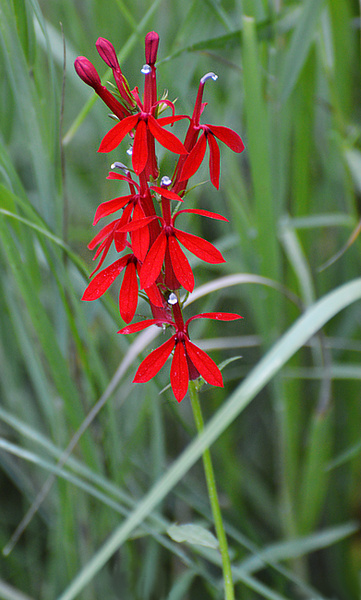
Daylight was waning, I was in the shade--it didn't matter. Cardinal Flowers are unconditionally blazing red! This beautiful native (pollinated exclusively by hummingbirds) was a singleton sprouting up amidst dense sprays of non-native Loosestrife and Queen Anne's Lace, literally a flower in a field of weeds (apologies to Billy Talent.)
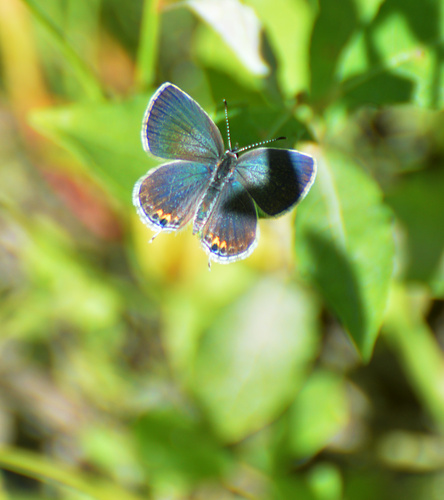
Eastern Tailed Blue
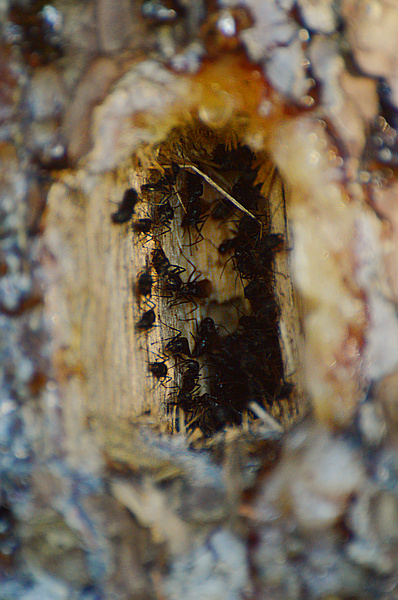
Carpenter Ants were just boiling out of this hole in a tree. These are food source number one for Pileated Woodpeckers--comprising about 2/3 of their diet and even close to 100% in some individuals. And it's most certainly a Pileated Woodpecker who made this hole to get at them. The only question is why it moved on with so many of the colony still left!
It may have moved on because of me. Glistening rivulets of sap proved how recent the job was.
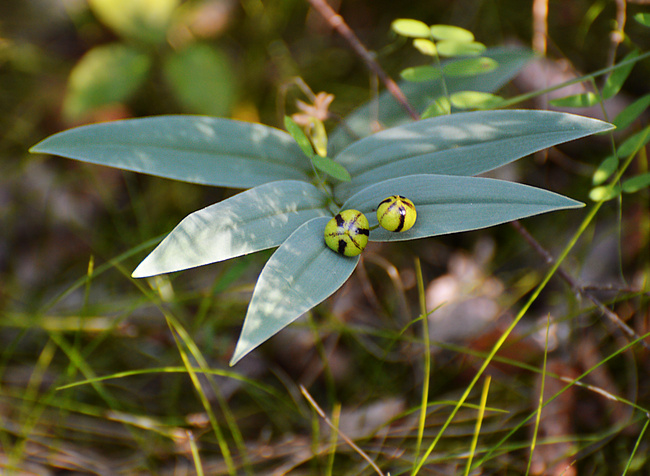
False Solomon's Seal berry is disgruntled.
Early Morning At Pink Lake
August 27th, 2016
Pink Lake is one of the most beautiful spots in the Gatineau. But it's a popular spot and sound carries around the lakeshore, so the resident wildlife tend to keep their distance from the trail. Unless you get there so early in the morning that no one else has arrived yet...
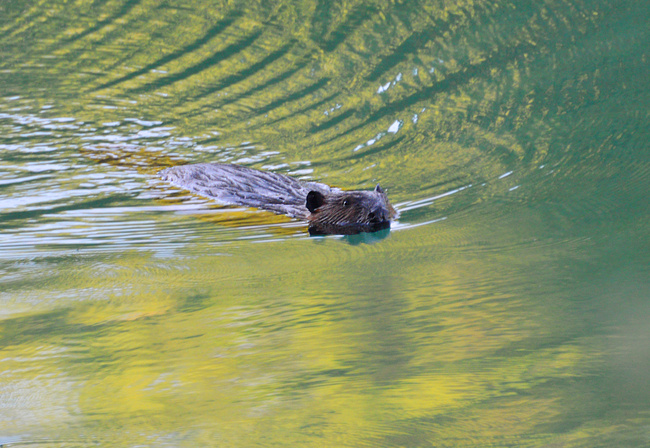
North American Beaver
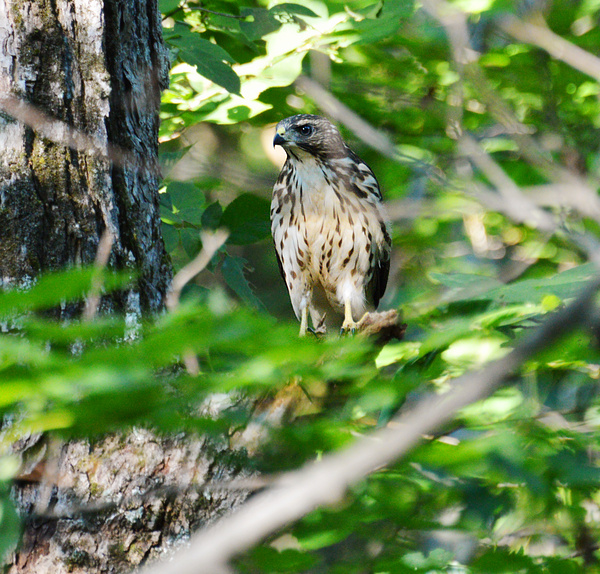
Broad-Winged Hawks are phantoms of the forest--elusive deep-woods raptors. They are seldom found during the breeding season. Folks say that they're not actually rare, just shy, but if I hear their call once in a year's worth of birding, I count myself lucky. It's a call you can't mistake, a strange piercing whistle that seems more mechanical than avian. Which is how I knew who this was the moment he opened his mouth.
More thrilling still was when his call was answered by two more nearby! This youngster's whistle had a slight rasp to it; theirs were sharp and pure. A whole family group of Broad-Winged Hawks. He called back and forth with them as long as I stood there, as if seeking reassurance about the strange intruder.
1680x1050 wallpaper
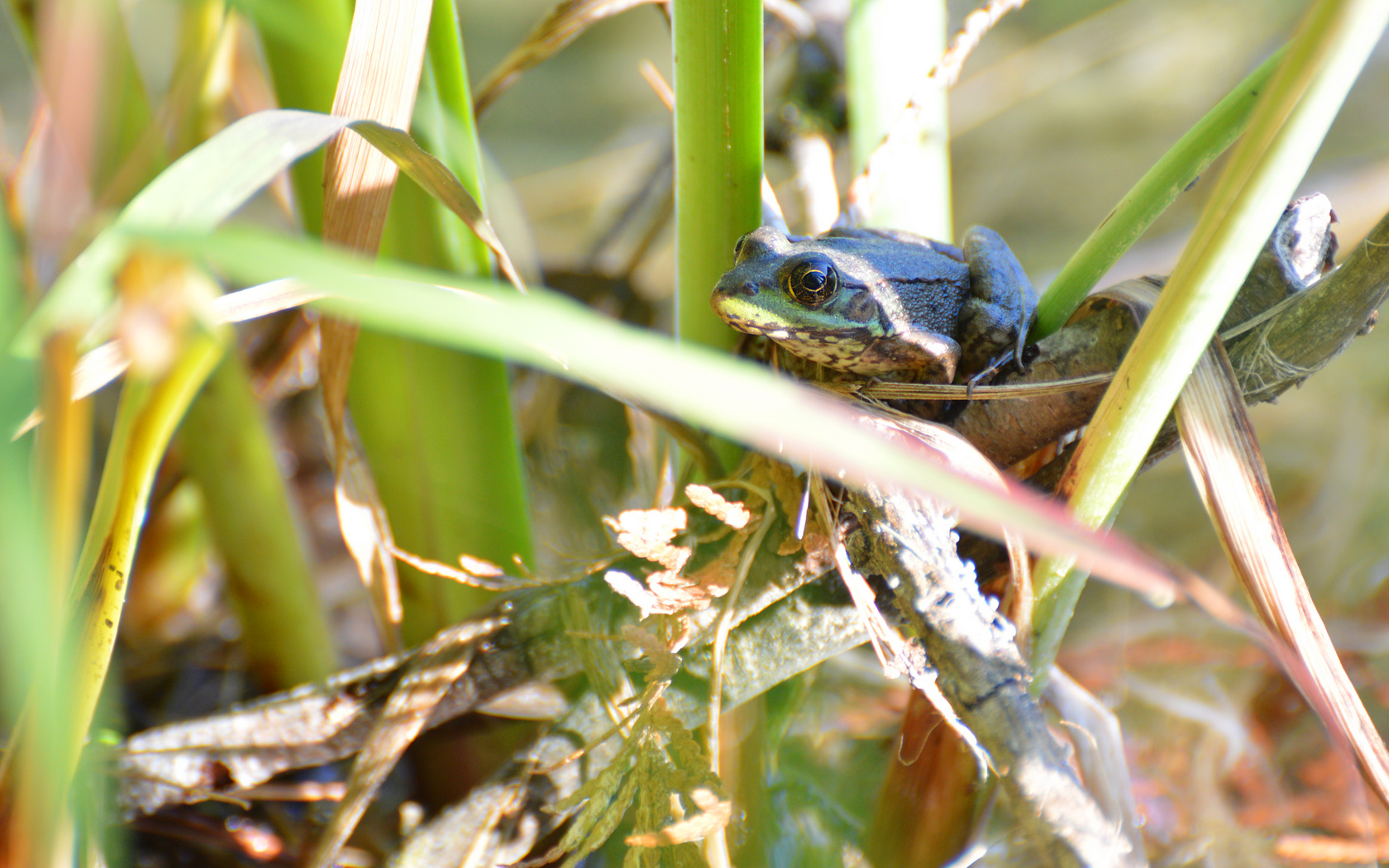
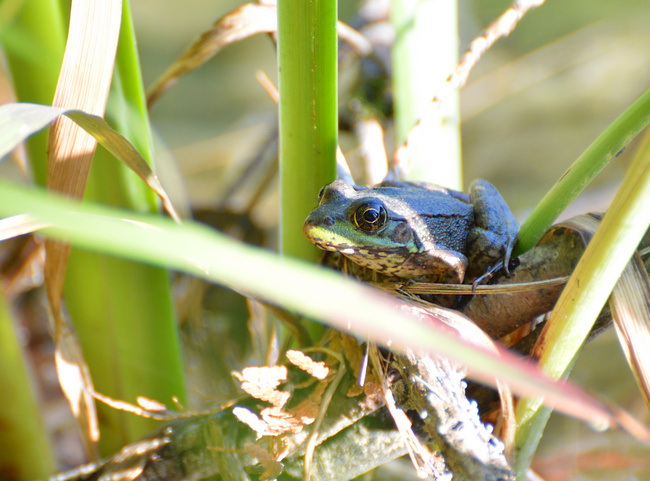
A small, young-looking Northern Green Frog. I was sore for days from the position I had to contort myself into to get an unobstructed vantage on this guy. He was more well-hidden than it looks!
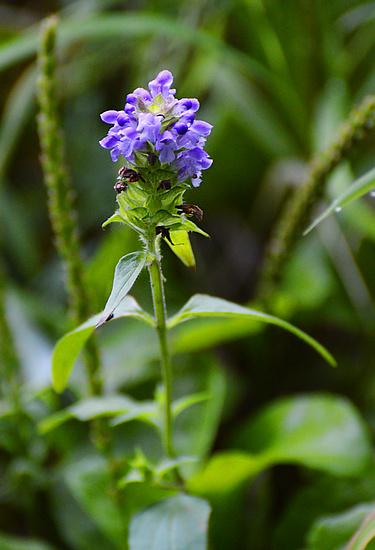
Common Heal-all
( More (Black-Throated Green Warbler, Purple Loosestrife, Northern Green Frog) )
Highlights from the Burnt Lands (part 2)
August 21st, 2016
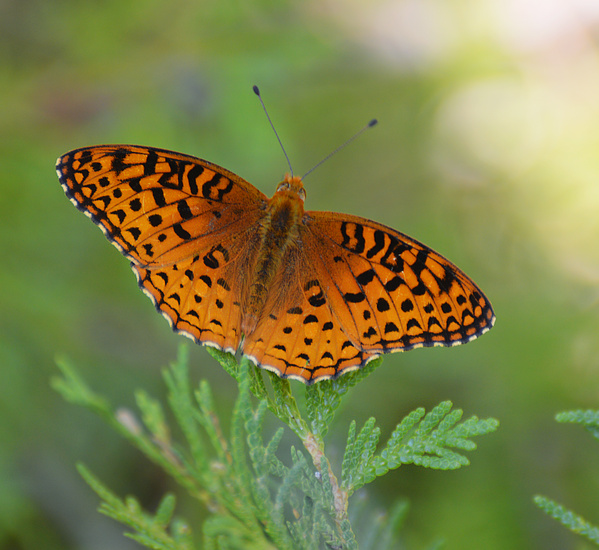
Aphrodite Fritillary, wallpaper available
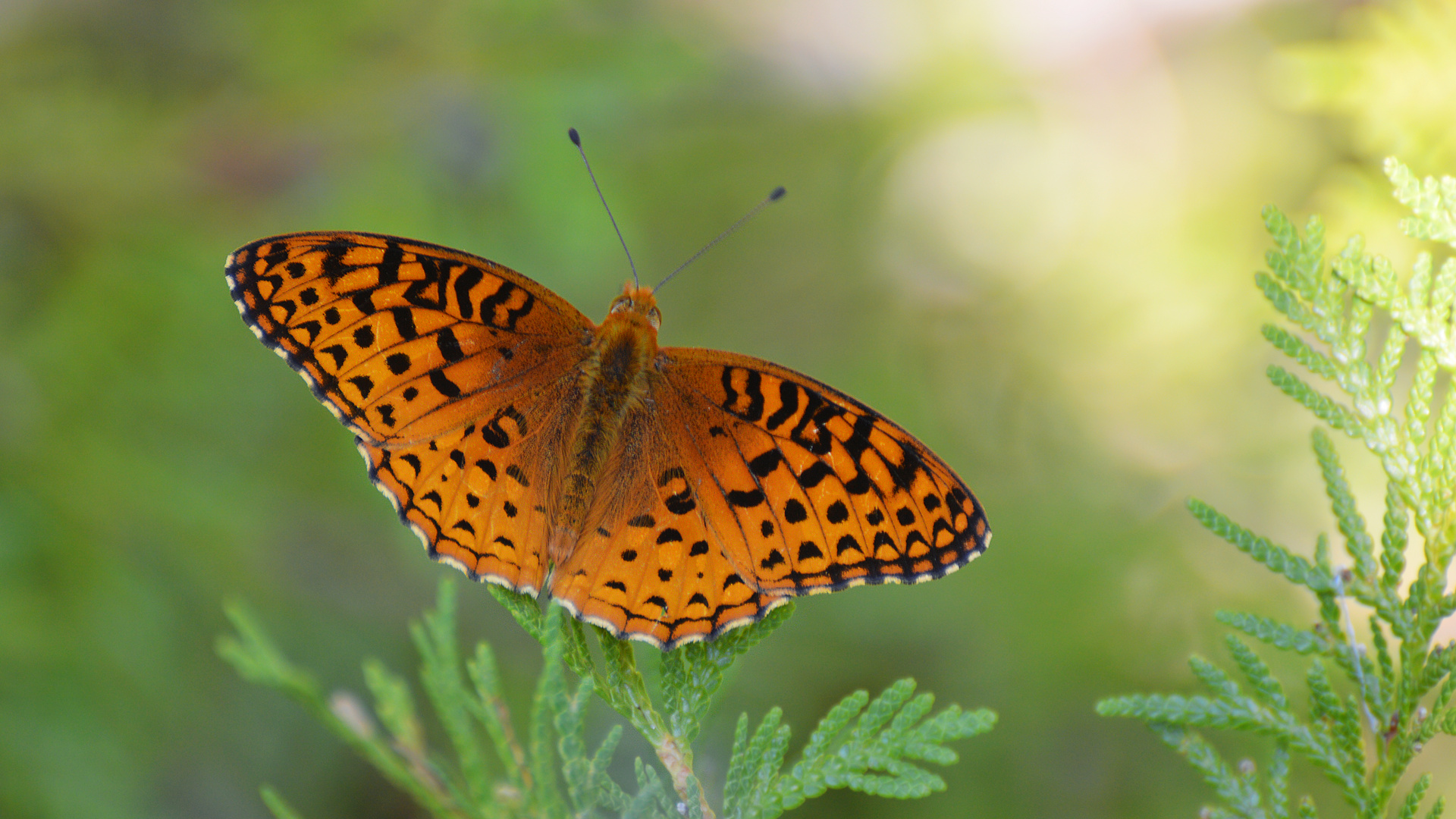
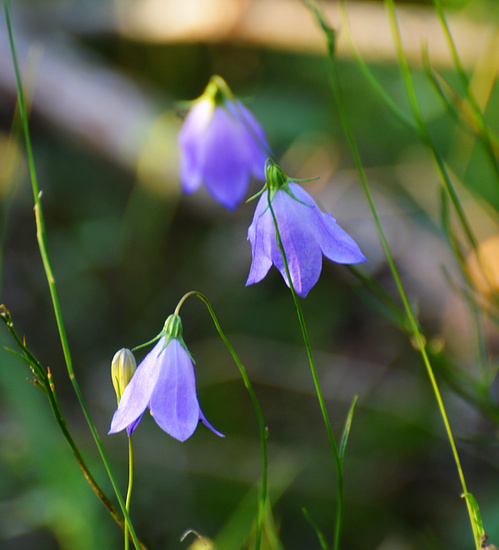
1680x1050 wallpaper
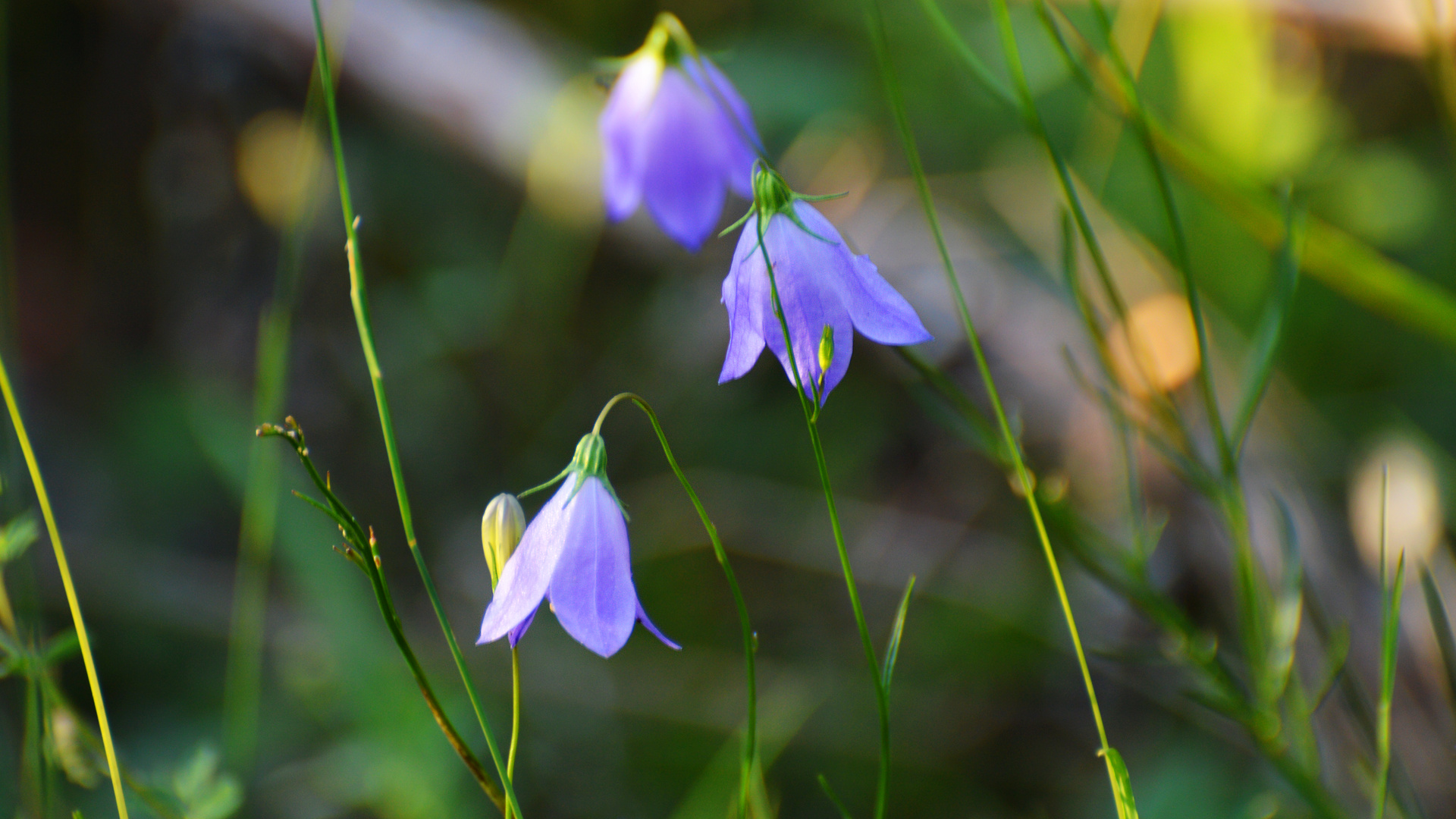
Delicate blue Harebells seemed to be everywhere. I've also seen this native flower at Carp Ridge, another rocky habitat (but not technically an alvar.) I find it prettier than the more common, invasive Creeping Bellflower, but maybe I'm just prejudiced in favor of the native!
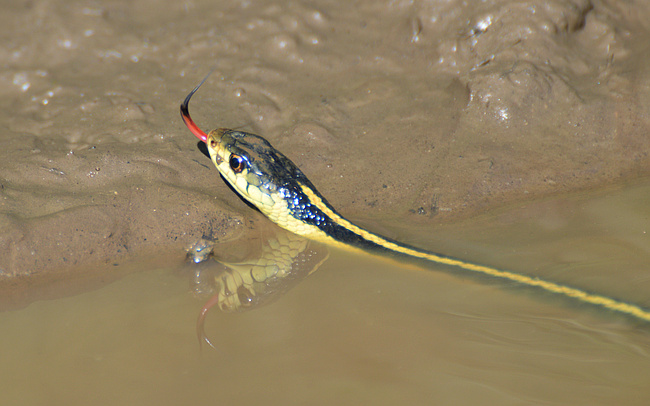
There's something strange about this photo. The garter snake's reflection looks like it's eating something. The snake itself doesn't. At any rate, this guy repeatedly ducked underwater, thrashed about wildly, then emerged and tested the air as if to say, "is she gone yet?"
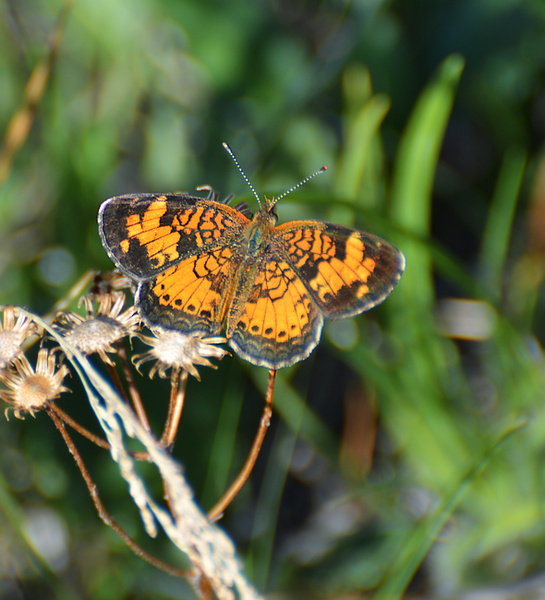
Northern Crescent
Highlights from the Burnt Lands (part 1)
August 15th, 2016
My latest new venture in nature-watching is the Burnt Lands alvar, a non-operating provincial park out in Almonte. An alvar, as I mentioned a few posts back, is a limestone plain with shallow soil. While most of eastern North America is naturally dominated by forest (the parts we haven't developed, that is), alvars create a more prairie or savannah-like ecosystem. Since this is a rare ecosystem here, rare flora and fauna are often to be found. The Burnt Lands have some startlingly rare orchids and other treasures besides. I plan to go back often this summer and fall and next spring and see what I can find.
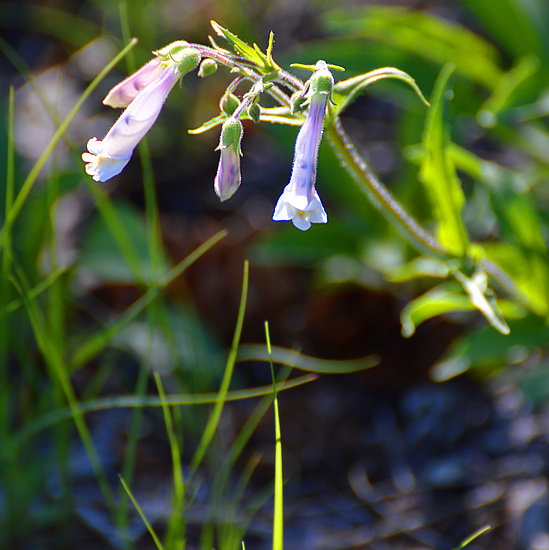
This is Hairy Beardtongue, a wildflower somewhat characteristic of alvars. I've never seen it elsewhere in Ottawa. I became excited afterwards when I learned that this flower is a larval host for Baltimore Checkerspot, a gorgeous butterfly that I have yet to see. I'm probably too late for it this year, but next June I'll be looking!
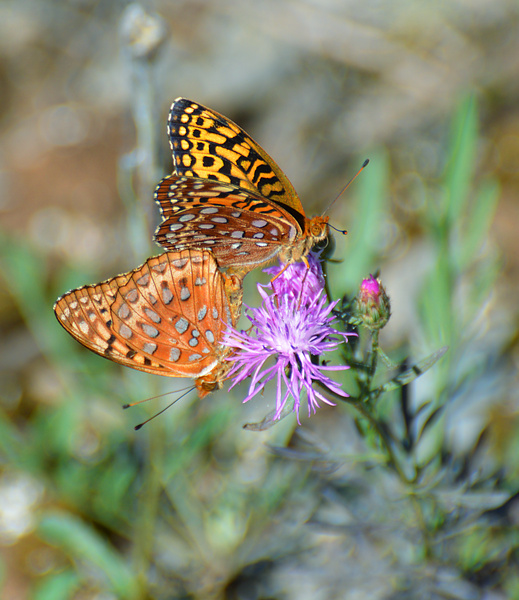
1680x1050 wallpaper

Mating Aphrodite Fritillaries. These beauties are overall rather rare in our area, but common in the Burnt Lands. The photo didn't capture it, but those pale spots on their undersides actually gleamed silver in the sunlight.
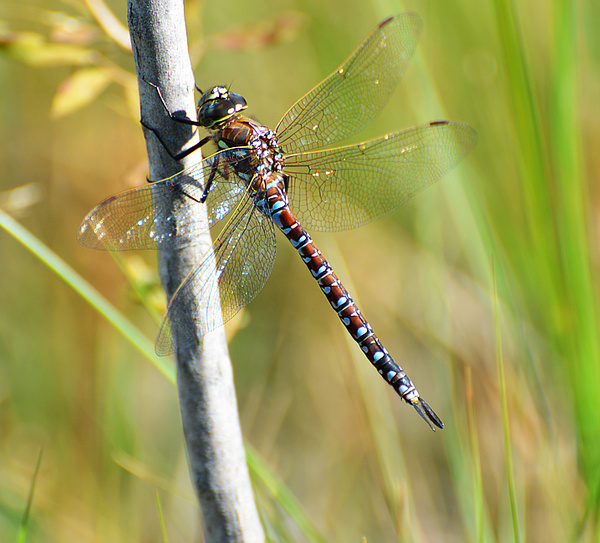
Mosaic Darner, wallpaper available
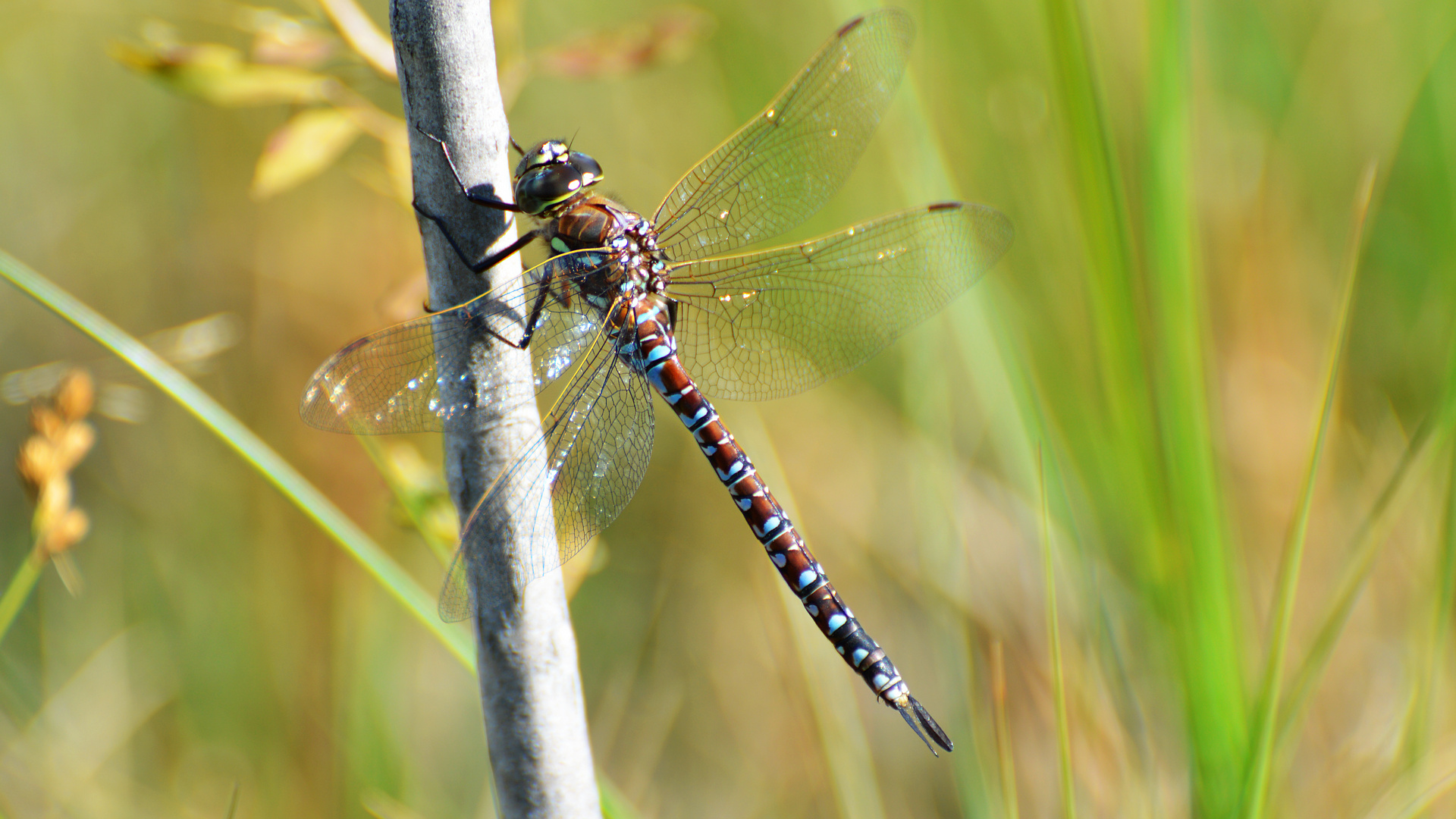
ETA: Thanks to Gillian for pointing out that this is specifically a Variable Darner ("Mosaic Darner" is a general term for dragonflies of the genus aeshna, that's all I was sure of when I posted.) That makes it a lifer dragonfly for me!
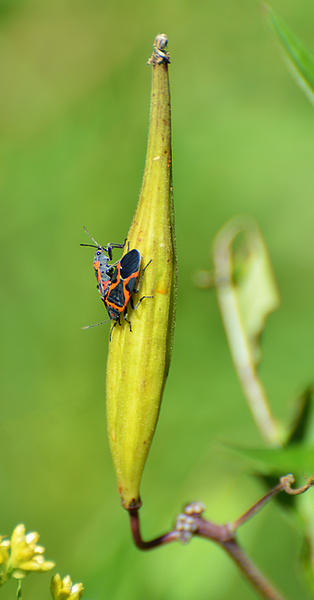
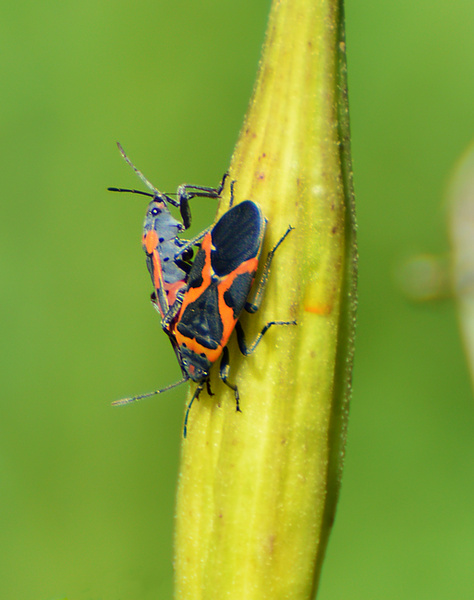
A pair of Milkweed Bugs on their favorite plant. They had just mated.
|