Winter in Algonquin: Pine Grosbeaks and Pine Martens
January 22nd, 2017
Around the start of our trip, we came across a flock of female and juvenile Pine Grosbeaks on the roadside, and carefully pulled over to watch them.
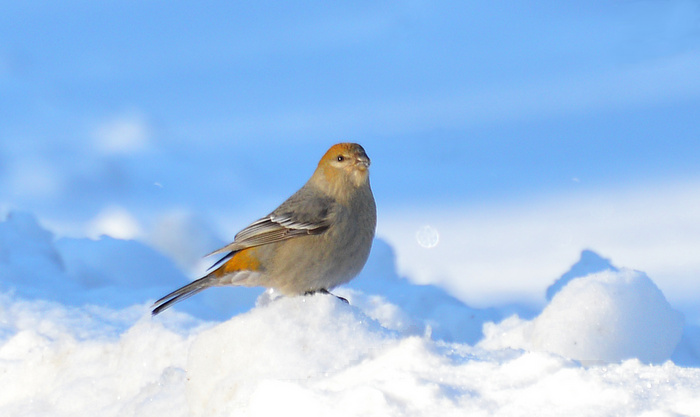
1680x1050 wallpaper

Like many finches, Pine Grosbeaks need to eat grit to help them digest their food, and roads are a good place to find it--but also a dangerous place. It was a nervewracking moment for us when we heard a car coming fast around the bend, but they all flushed just in time.
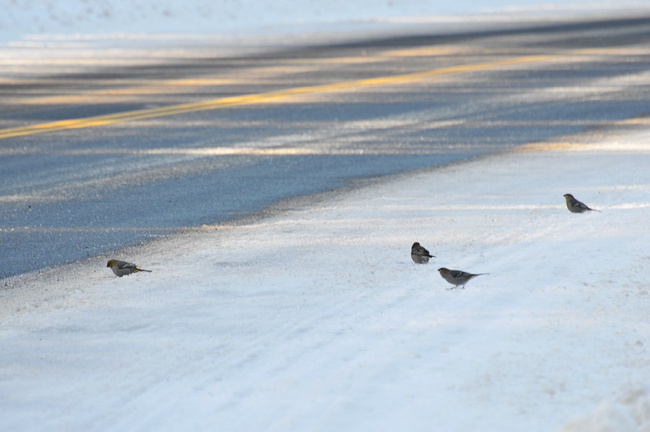
Drive carefully in the park!
One male White-Winged Crossbill wasn't so fortunate. Jon found him freshly killed on the road. A beautiful bird even in death, and it would have been my only decent picture of a crossbill on this trip, but I didn't have the heart. Happily we also saw many healthy White-Winged Crossbills in multiple places, crowding into spruce trees and prying open the cones to get at the seeds, their favorite and usually only food.
(Here's a photo of one of the crossbills we saw taken by Laura, aka "The Afternoon Birder." It shows the unique crossed mandibles that they use to twist open conifer cones.)

A morning stop at Mew Lake Campground gave us some photogenic Blue Jays--
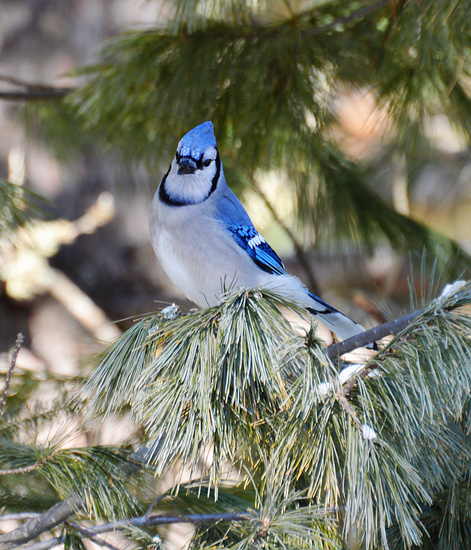
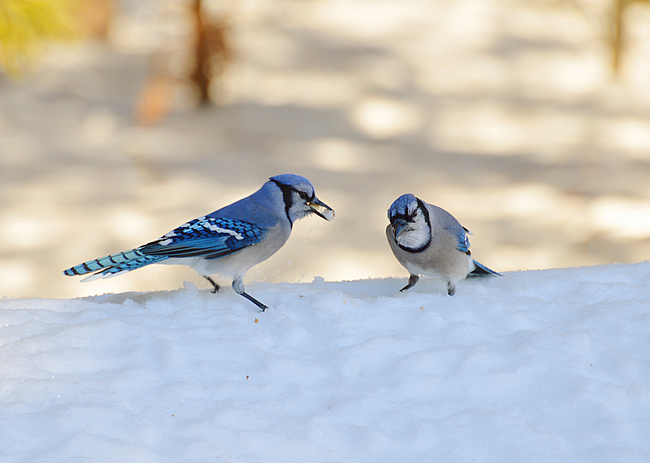
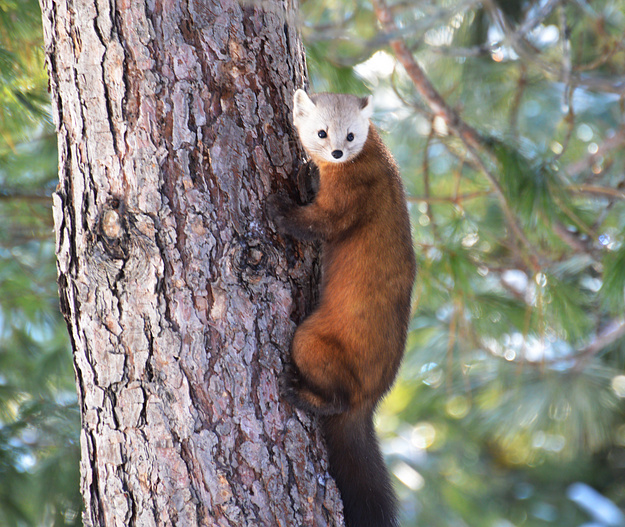
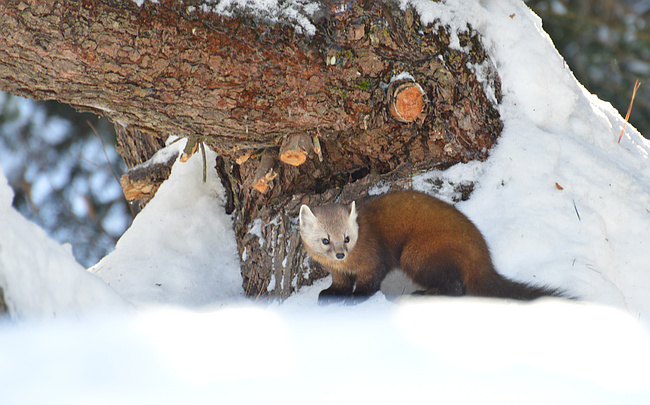
--and a thrilling, close-up view of a family group of Pine Martens! This was my one lifer of the trip---a mammalian lifer, not a bird. Pine Martens are mustelids, relatives of weasels and minks among others, that live in northern coniferous woodlands. I found them enchanting. They were far more arboreal than other mustelids I've encountered, scampering and leaping through trees with the agility of monkeys. I tried to get action shots, but they were just too fast for my shutter. The only good pictures were when they paused to have a look at us.
1680x1050 wallpaper

(More to come)
Winter in Algonquin: Mind Blown
January 19th, 2017
On January 15th, I joined Jon Ruddy and ten others for a day-long birding trip in Algonquin Provincial Park. And I took a break from my break from photography for the day.
Algonquin, particularly the Highway 60 corridor in the south part of the park, is famous among birders for its boreal specialties. Despite being less than three hours drive from Ottawa, it hosts species more characteristic of northern Ontario: Boreal Chickadees, Spruce Grouse, Gray Jays, Black-Backed Woodpeckers, and of course, a healthy population of Moose. (One other way Algonquin is reminiscent of north Ontario--its healthy population of black flies! Jon is doing an early June outing to Algonquin as well, around when they'll be at their worst. I haven't yet decided whether I have the nerve to go.)
Though all of these birds nest in the park, they are often hard to find in the warm months--as I've sadly found for myself on my two autumn vacations there. There aren't really that many of them, they are spread over such a large area, and, like many birds, they are inclined to be secretive during nesting season. Winter is the best time to see them. That's when Gray Jays and others become interested in human handouts, and Spruce Grouse hang out in plain view in spruce trees.
As our paid guide, Jon had scouted the park a few days prior, taking note of the best birding spots. We hit them all.
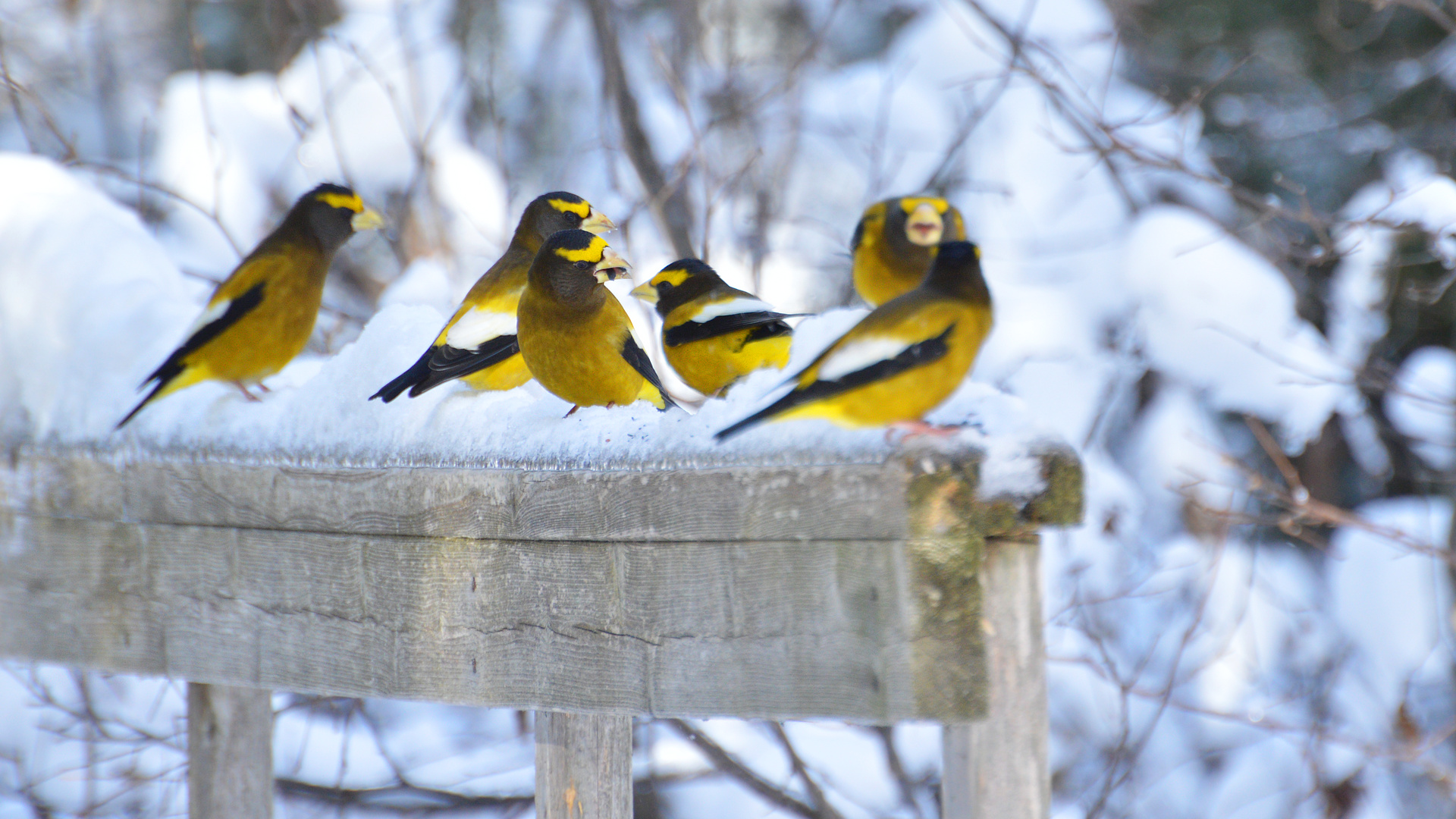
Breathtaking. Awe-inspiring. There are not enough superlatives in the English language. And I'm not sure if I'm describing the trip as a whole (though it was definitely a great trip), or just the Evening Grosbeaks. I had no idea how beautiful they were. People had scattered seed on the boardwalk railings, as they often do at Stony Swamp here in Ottawa, but whereas in Stony Swamp it would be chickadees and nuthatches, at Spruce Bog Boardwalk, at least on that day, it was Evening Grosbeaks.
I was in awe. I just kept saying, "oh my god" and "I never knew"--to the point that I felt embarrassed, but I couldn't shut myself up. I had seen them before, a few times--but not like this. On a snowy winter morning in Algonquin, Evening Grosbeaks fluoresce.
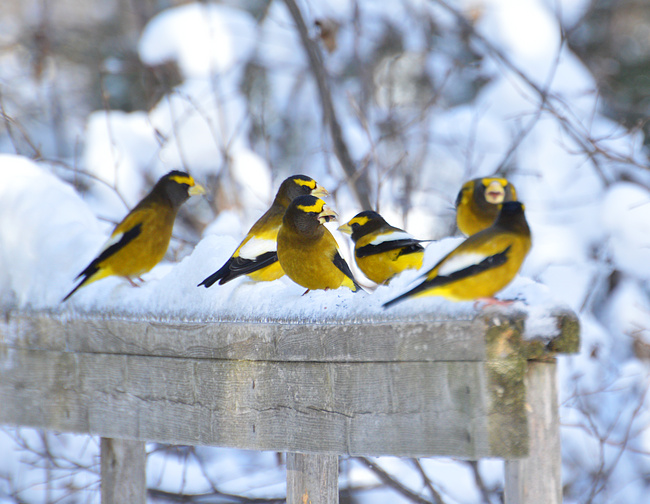
1680x1050 wallpaper
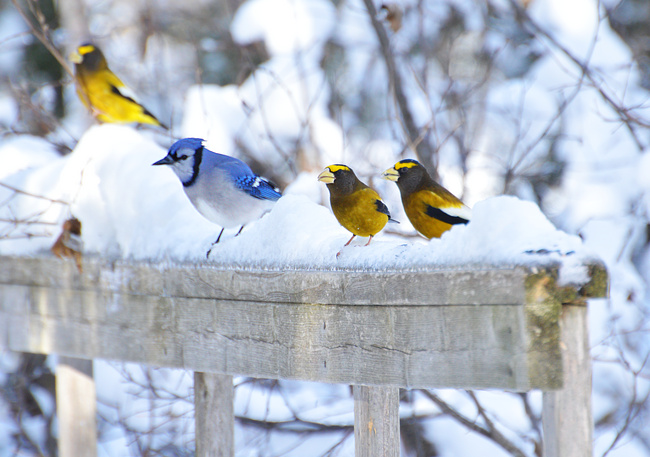
And as if that wasn't enough of a festival of color, next a Blue Jay flew in!
1680x1050 wallpaper
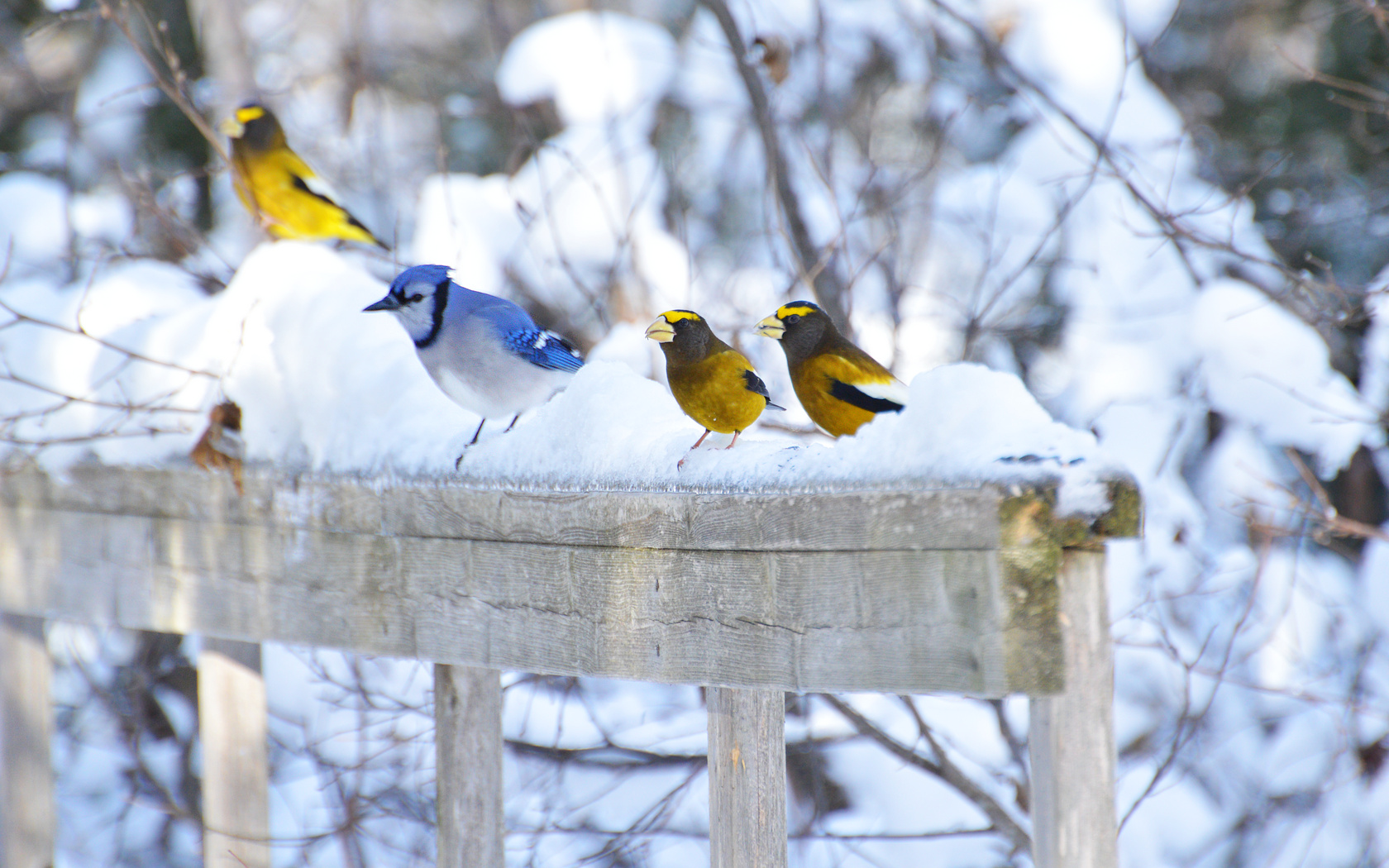
...and proceeded to act like he owned the place.
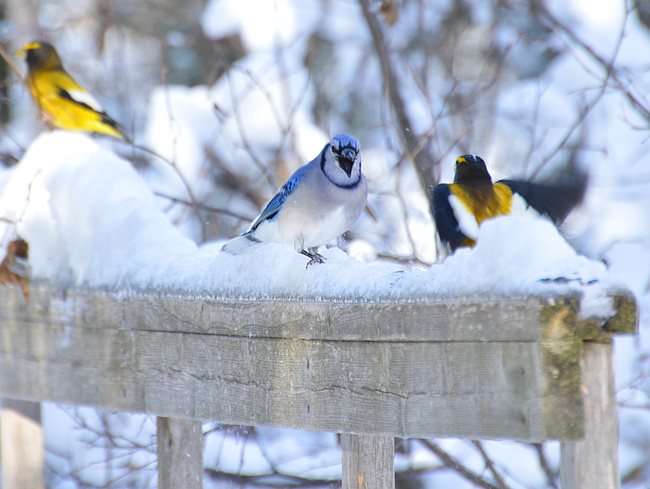
In coming posts I'll go back to the beginning and share all the highlights of the outing, roughly in chronological order.
Memories of 2016 (part 3)
January 14th, 2017
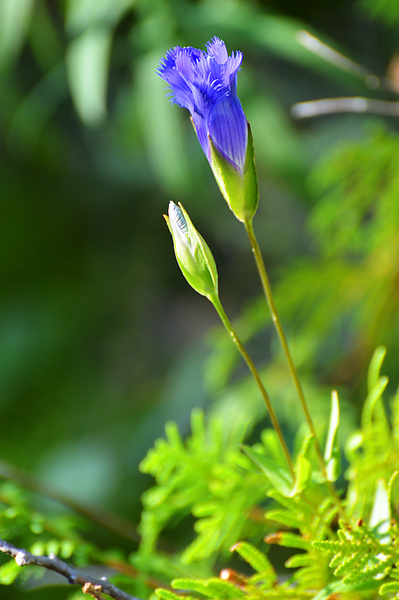
Fringed Gentian, Cedar Grove Nature Trail, Sept. 4
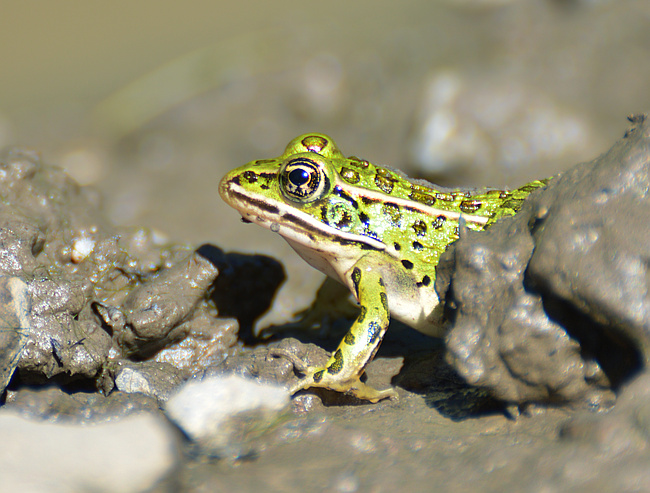
Leopard Frog, Burnt Lands, July 30
1680x1050 wallpaper
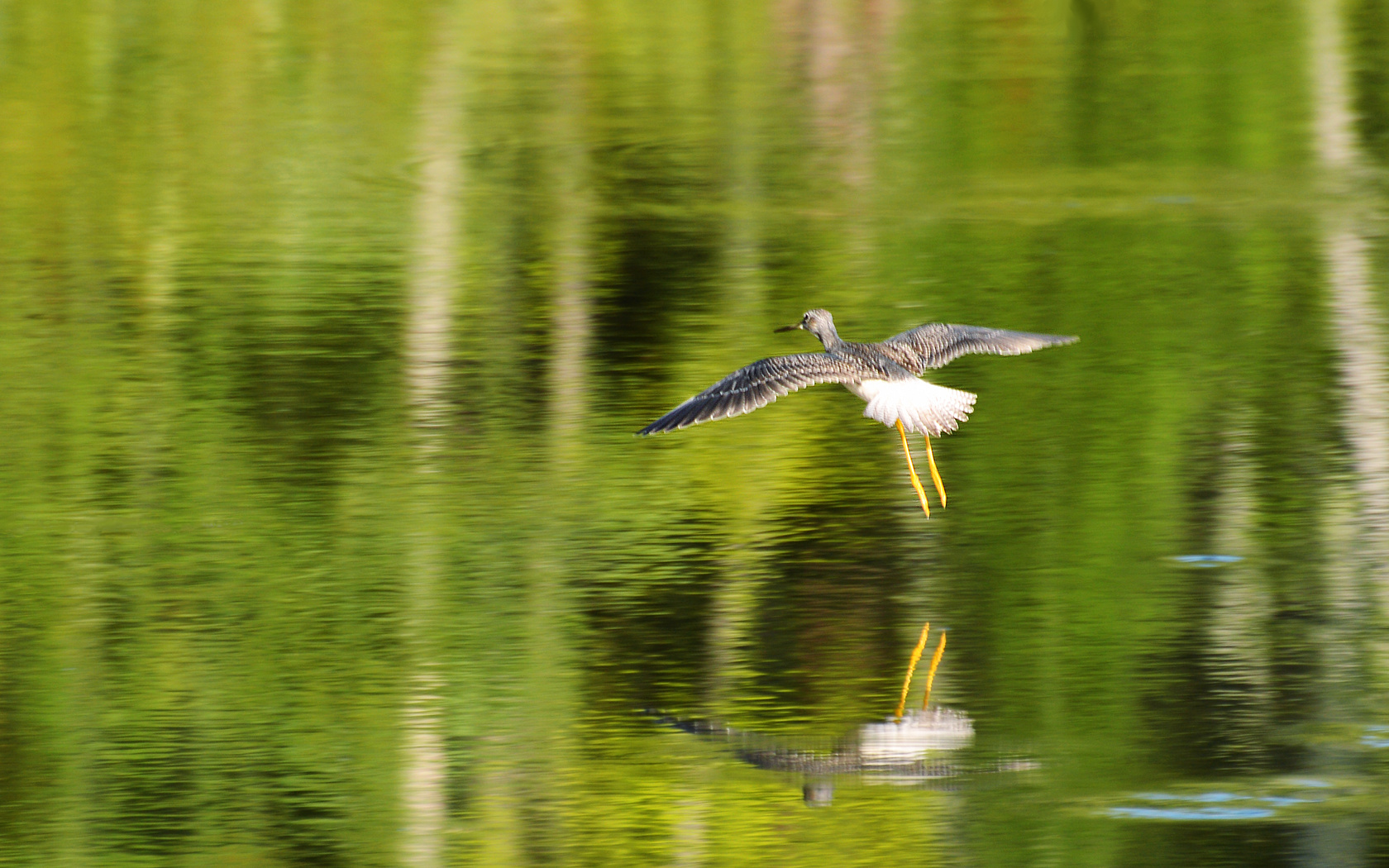
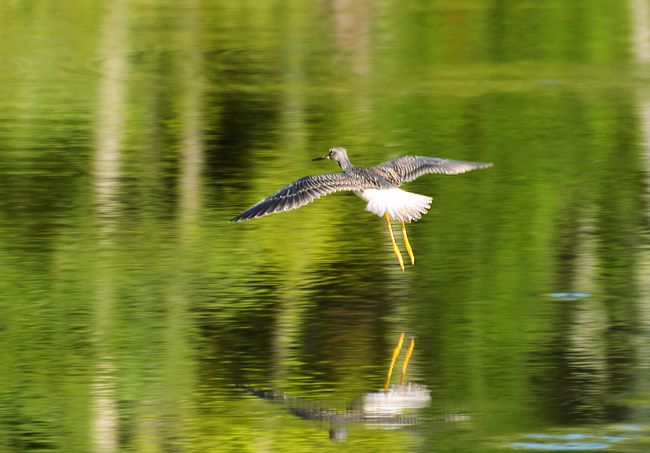
Greater Yellowlegs at the old quarry pond near Bill Mason Centre, Sept. 5th. This bird is a common sight in Ottawa in fall migration. Like most sandpipers, it nests in tundra and boreal forest, well north of us.
1680x1050 wallpaper
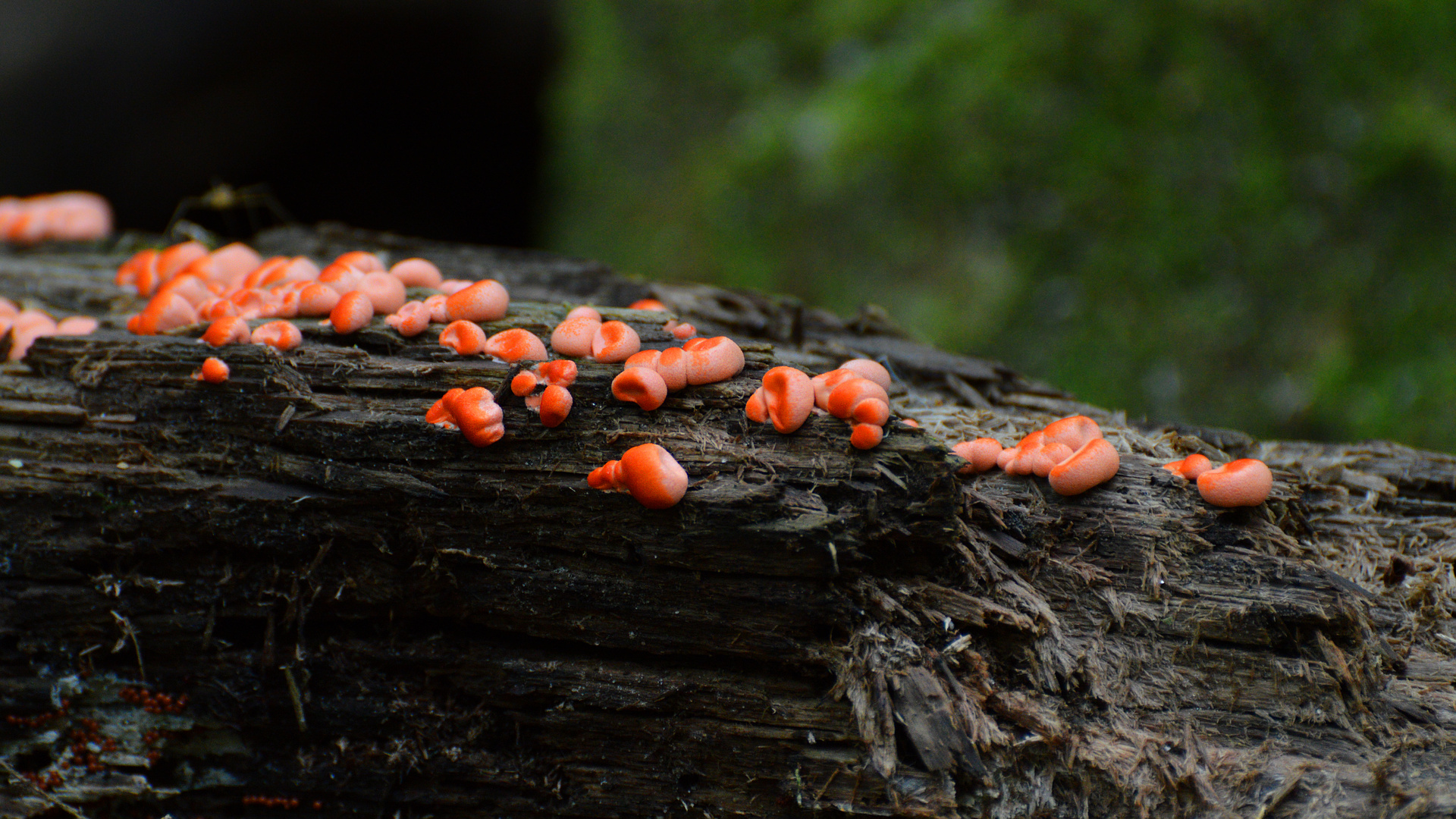
Lurid fungi in Gatineau Park, Sept. 29th. Note another colony of something in the lower left.
Memories of 2016 (part 2)
January 10th, 2017

1680x1050 wallpaper
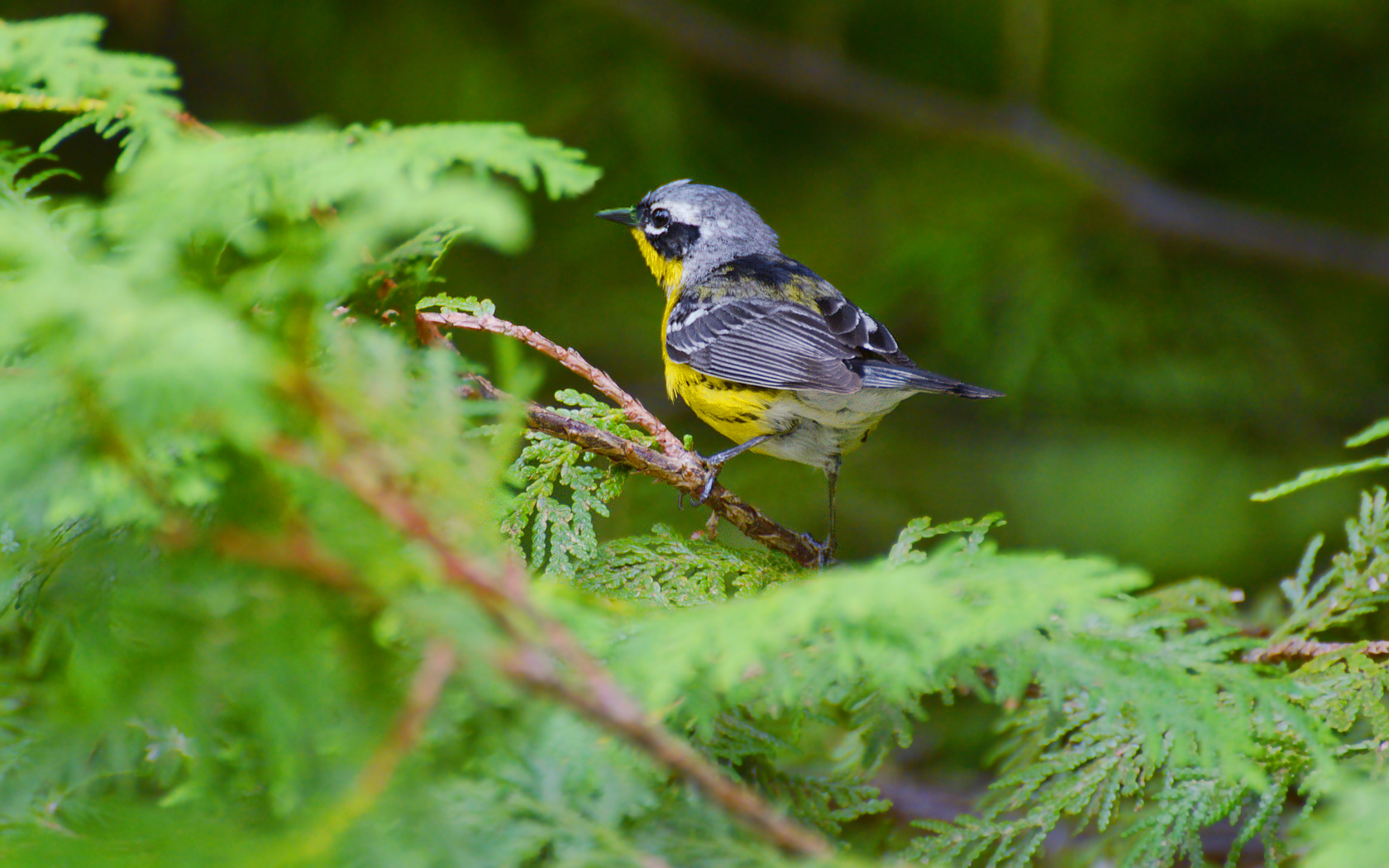
Magnolia Warbler, photographed in early July in Denholm, Quebec.
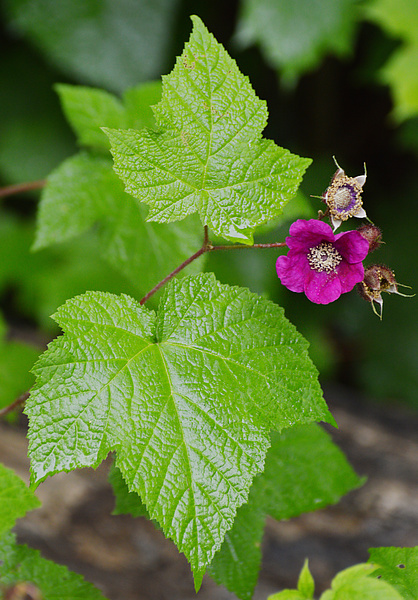
Purple-Flowering Raspberry, also photographed in Denholm in July (while staying at a friend's cottage.) This common flowering bush is in the rose family and looks similar to Pasture Rose, but has maple-leaf-like leaves, and instead of producing rose hips it produces very tart raspberries! They are virtually inedible raw, but it's said you can make jellies and pies out of them.
(ETA: See comments on the question of edibility/palatability of PFR berries.)

1680x1050 wallpaper

A Northern Water Snake pokes its head up out of Roger's Pond in Marlborough Forest. This is a harmless snake, to humans anyway, that leads an aquatic lifestyle and eats mainly fish and amphibians.
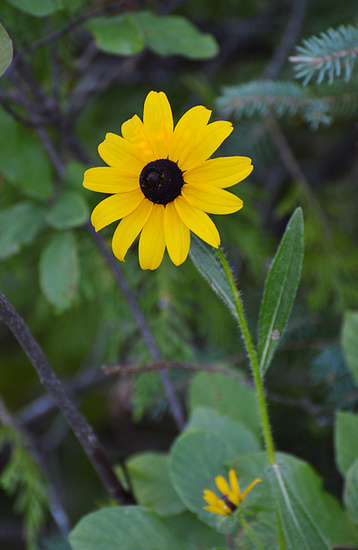
A luminous Black-Eyed Susan in Marlborough Forest.
Memories Of 2016
December 29th, 2016
While I'm on an extended break from nature photography, I thought I'd share some as-yet-unposted pictures from the past year. (For whatever reason these fell through the cracks back when they were current, typically because I was drowning in photos at the time!) This first set is oldest, taken in May and June.
1680x1050 wallpaper
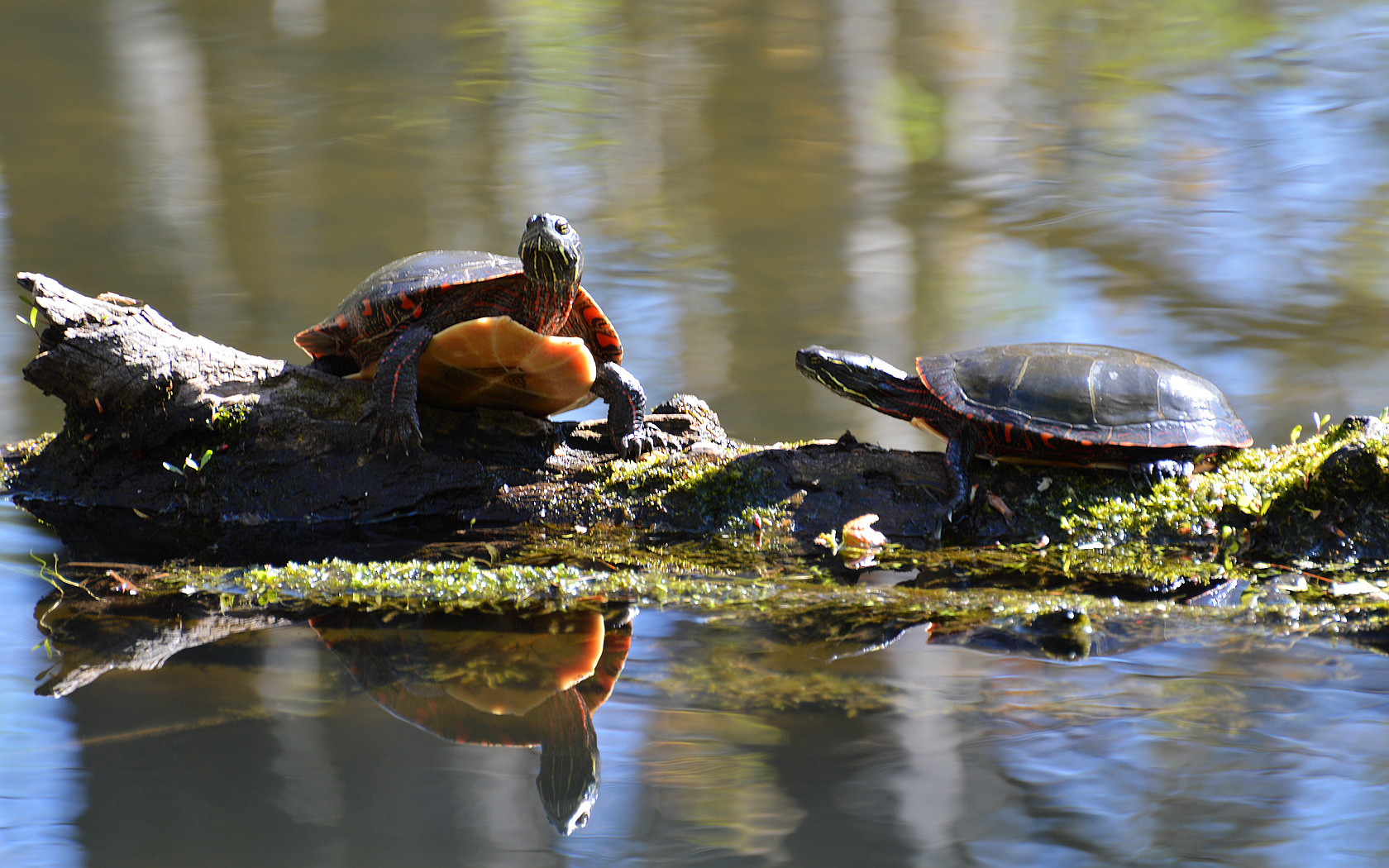
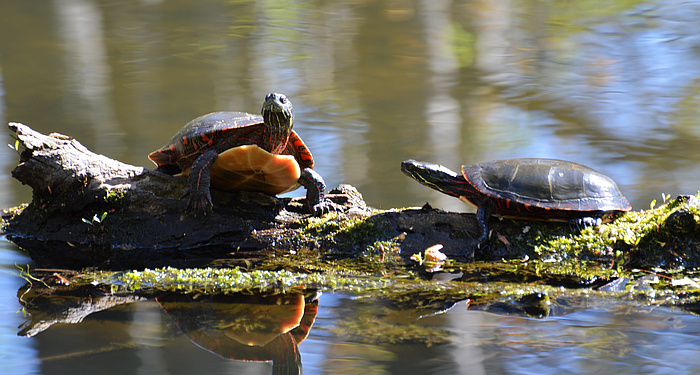
Painted Turtles basking at Mud Lake.
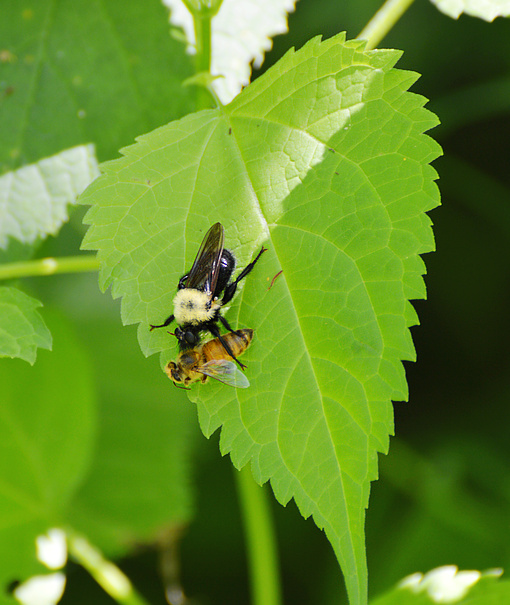
At first I mistook this for a bumblebee, but bumblebees aren't generally in the habit of manhandling other bees! It's actually a predatory Robber Fly making a meal off a honeybee. Its bee-like appearance (common to all robber flies in genus Laphria) is a deliberate subterfuge, simultaneously convincing potential prey that it's a mild-mannered nectar-feeder, and potential predators that it could sting if attacked. Photographed in the Ottawa greenbelt near Corkstown Road.
1680x1050 wallpaper
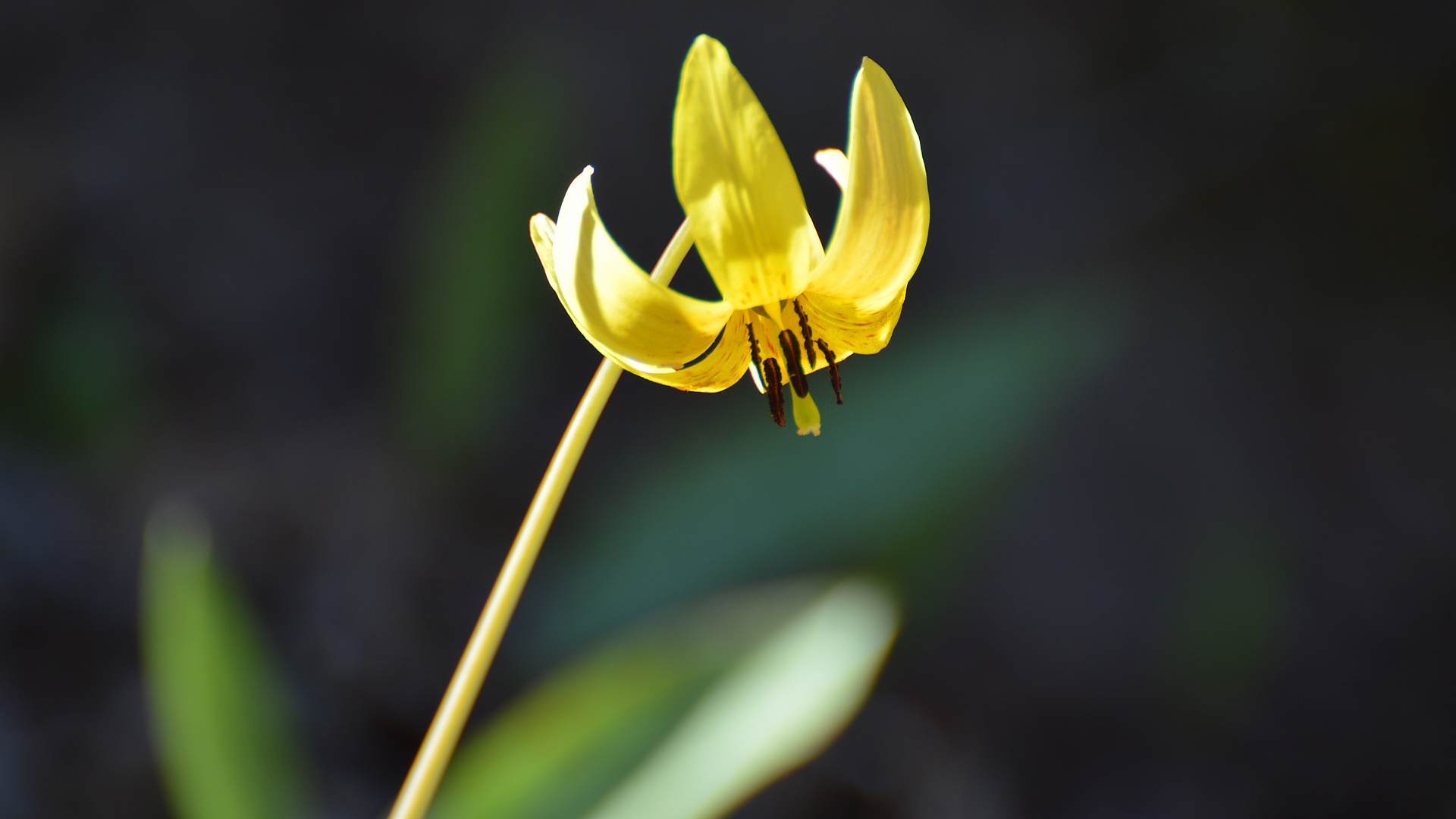
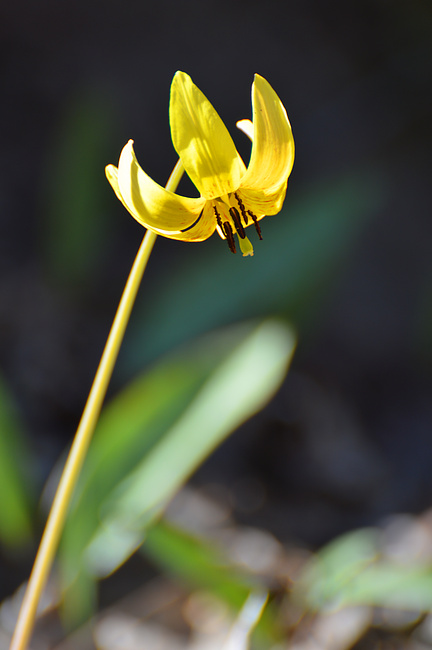
Trout Lily photographed at Carp Ridge.
Late Afternoon at Andrew Haydon Park
November 15th, 2016
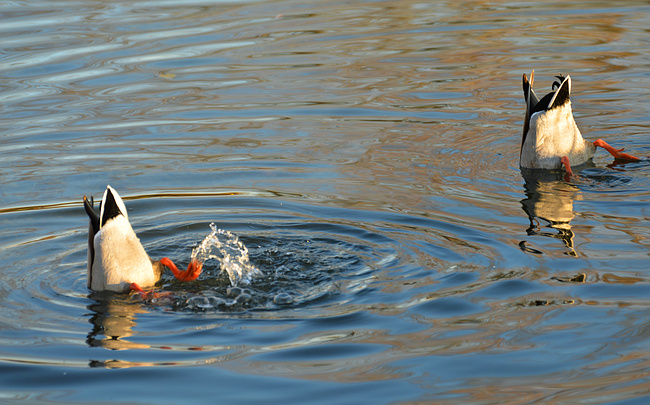
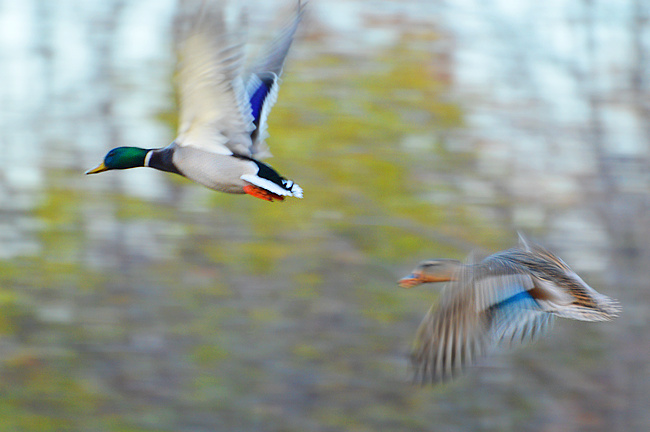
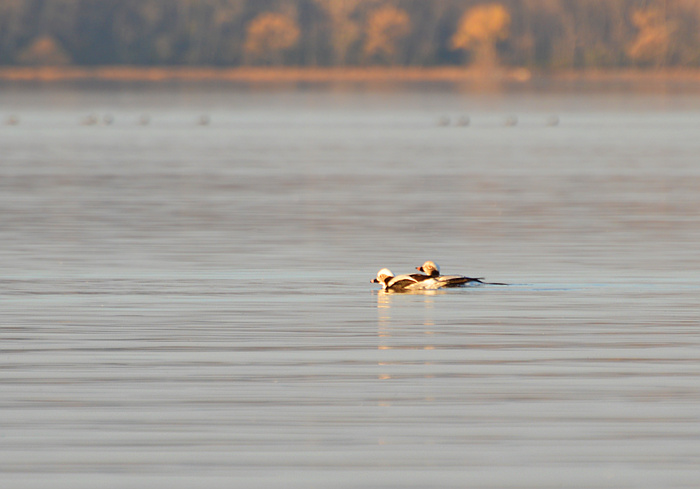
A distant pair of Long-Tailed Ducks on the Ottawa. I seldom find these handsome sea ducks (present here only in migration), and never had the chance to photograph them in the wild before.
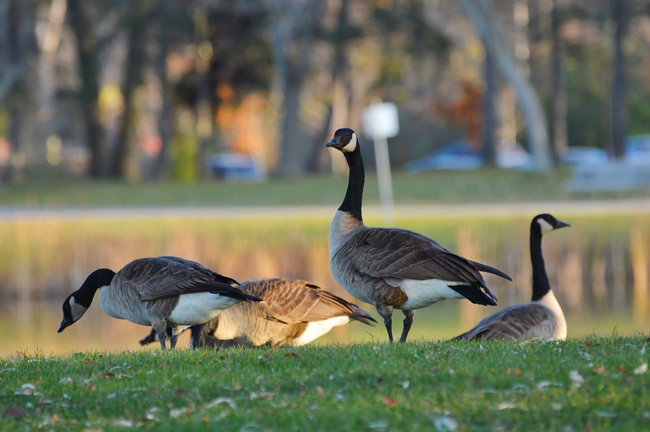
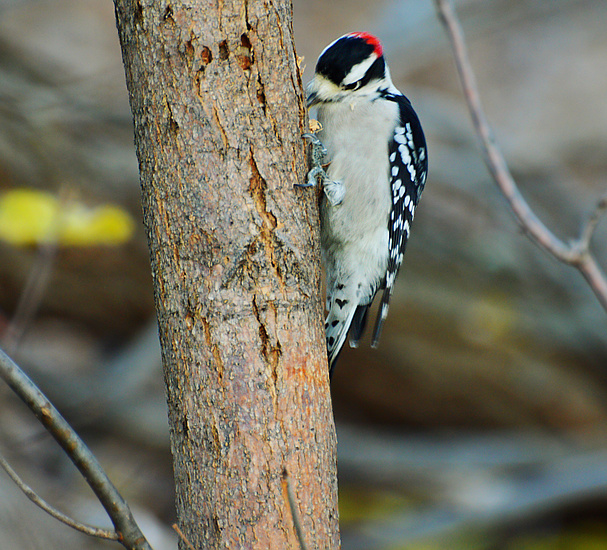
Downy Woodpecker
An Exciting Ottawa Lister
November 10th, 2016
I was thrilled this week to stumble upon a pair of Trumpeter Swans--a new species for my Ottawa list, and only my third sighting of it ever.
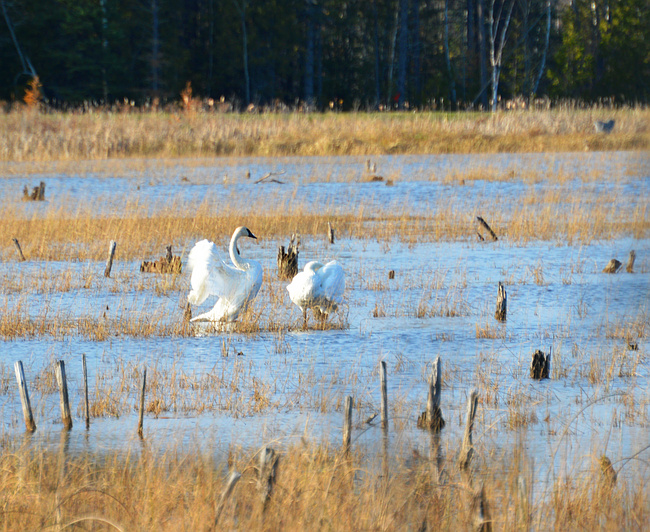
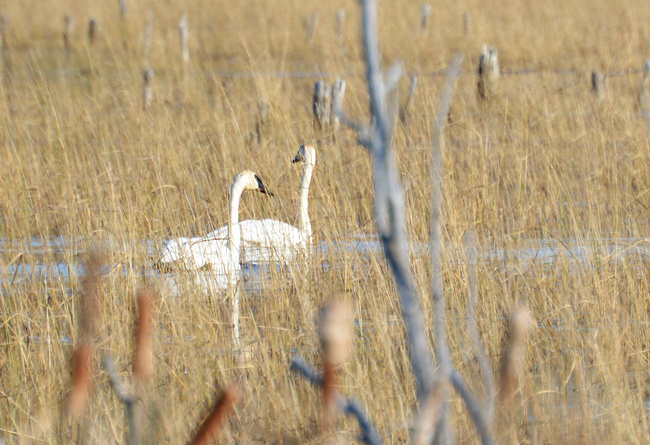
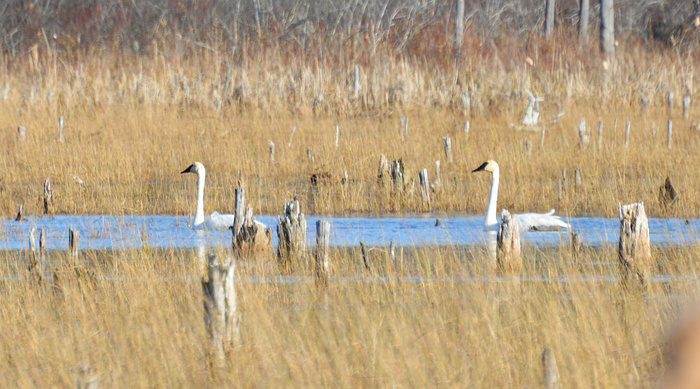
Trumpeter Swans are the largest waterfowl in North America. They are one of our two species of native swans. (Nota bene, the swans frequently seen on the Rideau River in summer are not native and not countable for birders, though they are beautiful!) Trumpeters were driven to the brink of extinction once, primarily by market hunting, but recovery efforts have restored their population to the tens of thousands, with over a thousand in Ontario alone. Numbers continue to rebound, and in the past few years there has been a breeding pair reported on the Jock River. We can well hope to see more of them here in Ottawa in the years to come!
They are nonetheless still a vulnerable species. They need pristine wetlands and a minimum of human disturbance during nesting time. Hunting them is, thankfully, not legal in Ontario, but it only takes a few unethical hunters to do harm. Here's hoping that this pair remains as healthy and unharassed as I found them.
Algonquin Park in Autumn (part 3)
October 29th, 2016
This final part is dedicated to the best (IMO) of my husband's scenery photos. The first two are from Barron Canyon.
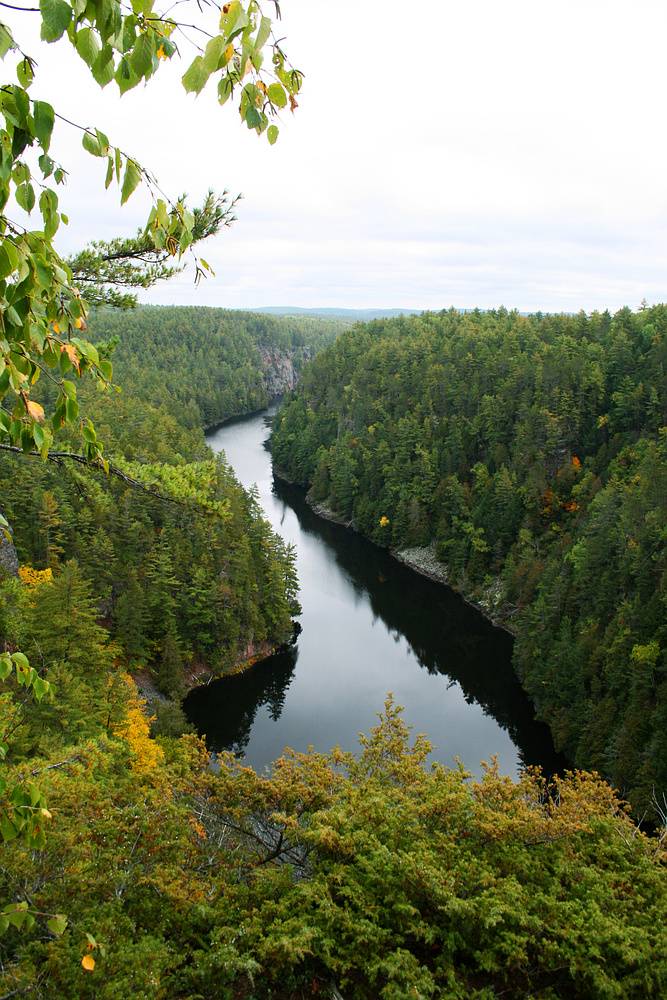
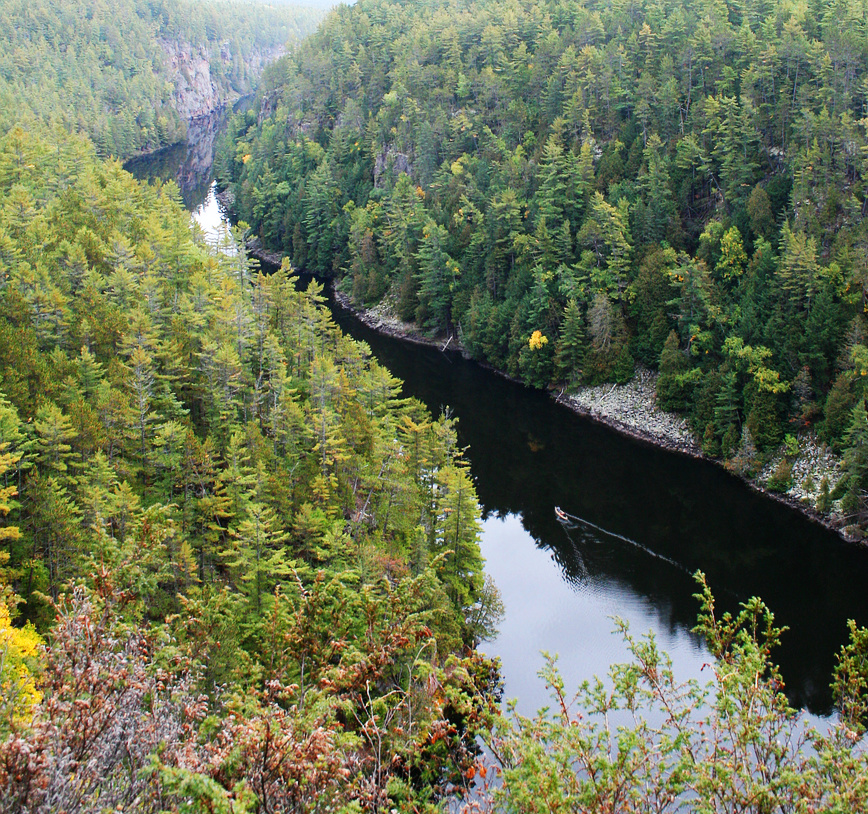
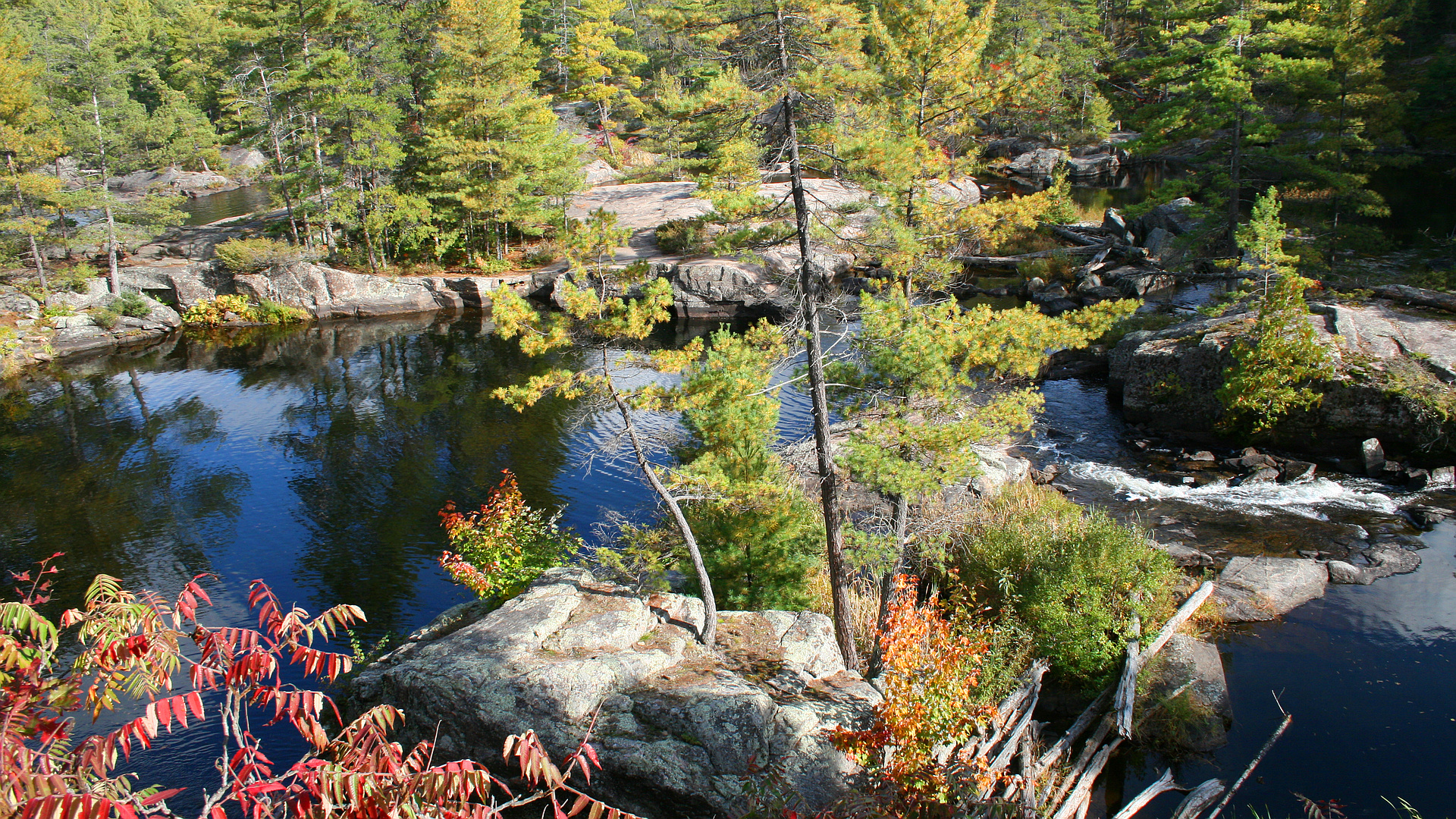
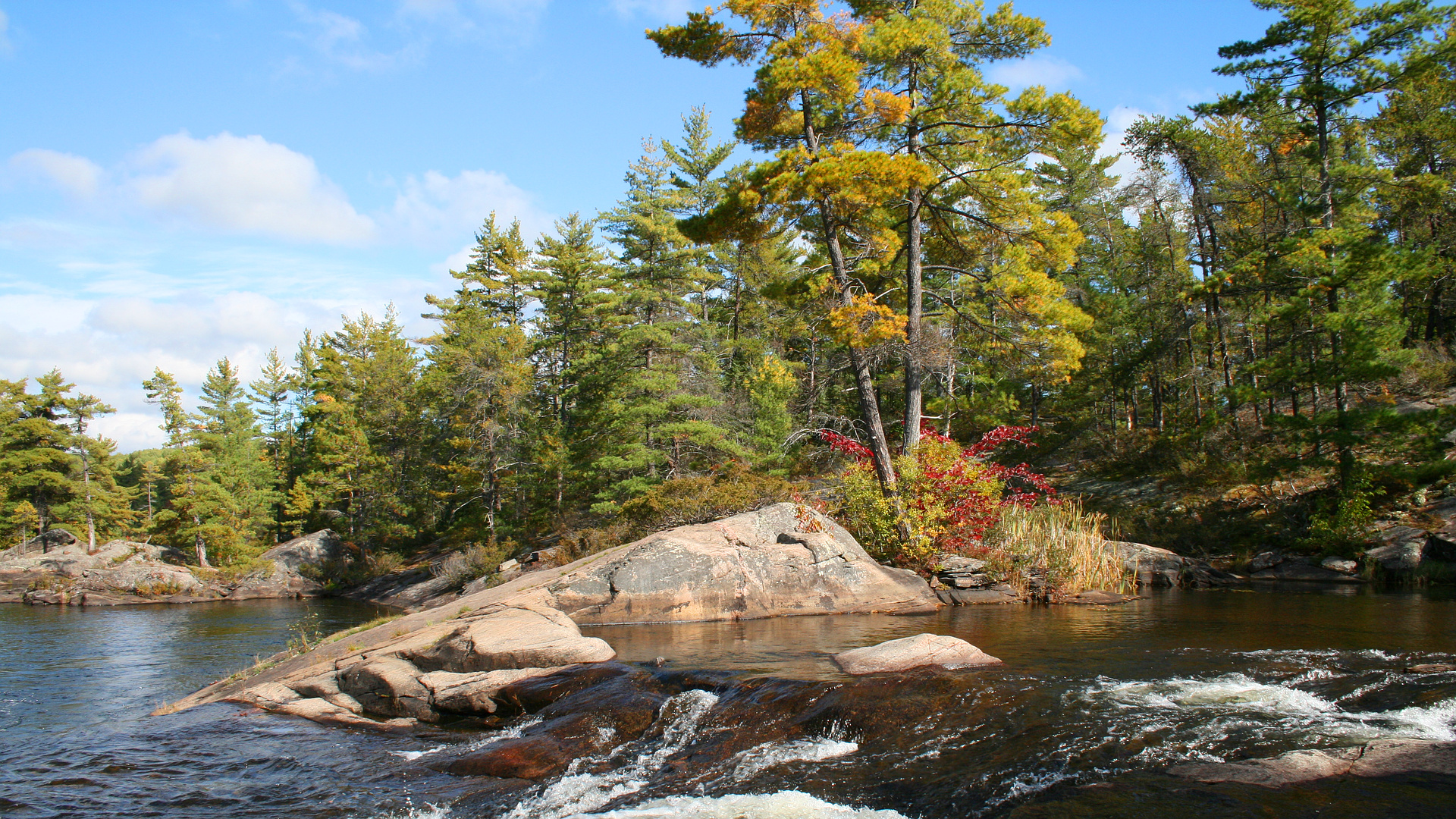
High Falls is sort of an open secret in the north Algonquin backcountry. An inconspicously marked trail (it's called "cheater's trail", because, I suppose, the proper way to get to High Falls is by canoeing!) leads you, after five kilometers or so, to a gorgeous panoramic view of a set of interconnected pools and shallow waterfalls. One of the falls is used as a natural water slide in summer. They say, no joke, that the rock is so well-greased with blackfly eggs, it makes for a smooth and comfortable ride. (NOT recommended during spring runoff, however.)
It would have taken an ultra-wide-angle lens to capture the whole view. But what Mike could capture came out beautifully.
1920x1080 wallpaper
1920x1080 wallpaper
Algonquin Park in Autumn (part 2)
October 23rd, 2016
There were two birdy high points on an otherwise not-very-birdy vacation. Number two was this fellow:
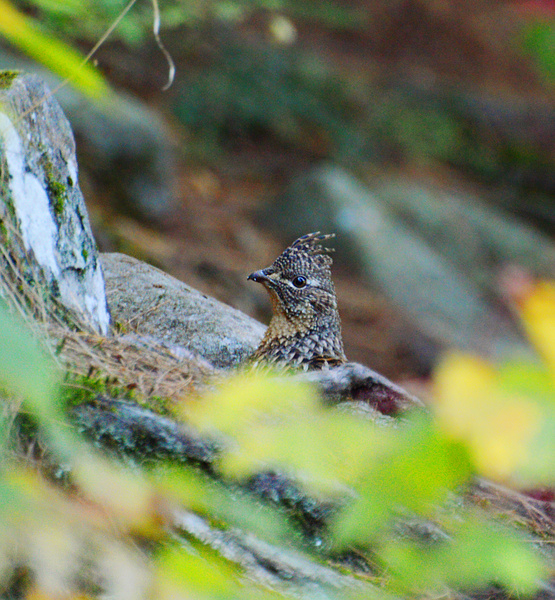
This Ruffed Grouse was right on the trail, and surprisingly reluctant to flush or even sneak away. Not a rare bird by any means, but seldom giving so lengthy and satisfying a view! (Frequently the only indication that you've stumbled upon a grouse is the sound of it flying away.) Its head bobbed up and down as it pecked at something unseen. When we walked by where it had been, we saw a large half-eaten mushroom.
The number one high point was, alas, unphotographed. That was when I spotted a young Bald Eagle perched on the rocks across a small pond. It was the single best, closest view of a juvenile eagle that I've ever had, and Mike got a great view of it too. It soon flew off, whereupon a collection of ravens and vultures flew in, congregating in and around a clump of tall vegetation to the left of the rocks. We realized there must be carrion in there--sizable carrion, given that all of these birds were feeding peacably on it! It may originally have been prey to the eagle, but it's at least as likely that the eagle, too, was a scavenger. (Unlike their cousins Golden Eagles, Bald Eagles don't often prey on live mammals. They prefer fish and carrion.) At one point something spooked them, and four ravens and one vulture all emerged, all previously unseen save for one raven's tail, from that one little clump.
It was also neat to see two of the vultures doing their best cormorant imitation (perching on the rocks and spreading their wings to dry.)
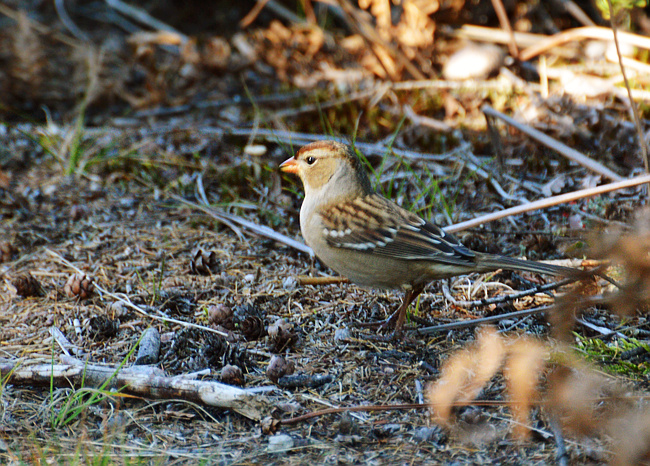
Migrating kinglets were everywhere, and migrating White-Crowned Sparrows were likewise everywhere. One of the latter paused just long enough in an opening for me to photograph it. Like most of the ones we saw, it was a juvenile. (See this post from back in May to compare and contrast with a mature adult.)
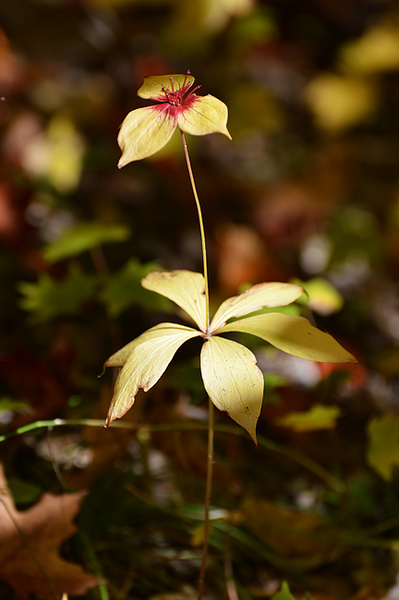
This odd little plant is called Indian Cucumber Root. Its design put me in mind of Painted Trillium, but it's actually part of the lily family. There were lots of them along the Hardwood Lookout Trail, some holding single blue berries on top. The berries are not edible, but the roots are and they really do taste like cucumber.
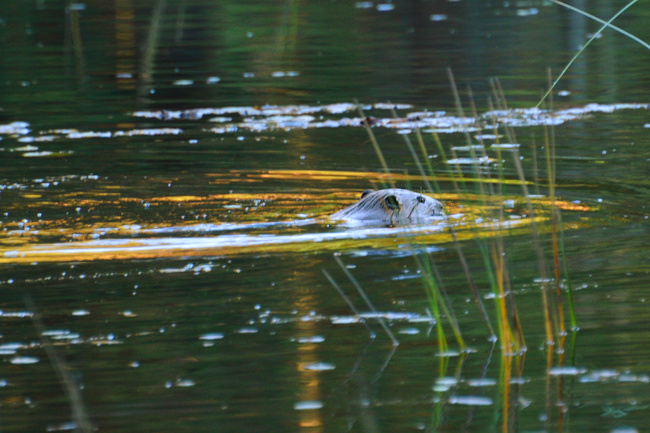
Beaver at sunset along Mizzy Lake Trail.
Algonquin Park in Autumn (part 1)
October 17th, 2016
Michael and I spent four days in Algonquin Park early in October, and had a wonderful time all in all. Bird-watching was poor: no boreal specialties, only common landbird migrants, and a surprising dearth of migrating waterbirds. (I think the weather was just so nice that the attitude for many was, as Mike put it, "what do you mean, migrate? I'm starting a second clutch!") But the Algonquin fall colors were at their absolute peak, and that made up for it. It wasn't in my bucket list to see Algonquin at peak autumn, but it should have been.
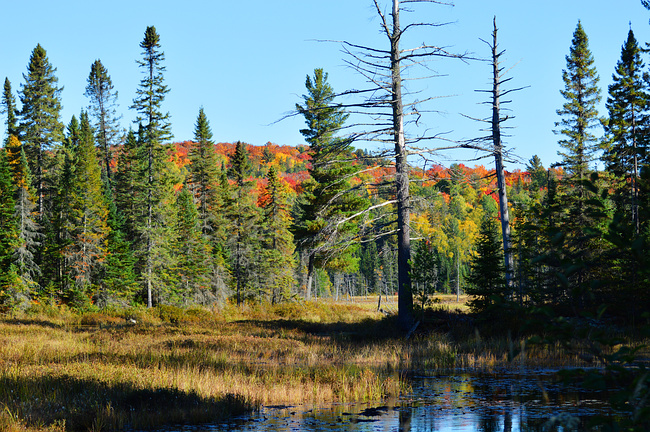
It was uncapturable. I don't think anyone could fully capture such beauty on camera; you have to see it for yourself. (Mom: you really need to visit in October sometime, this place is only two and a half hours away from us!) But that didn't stop me from trying.
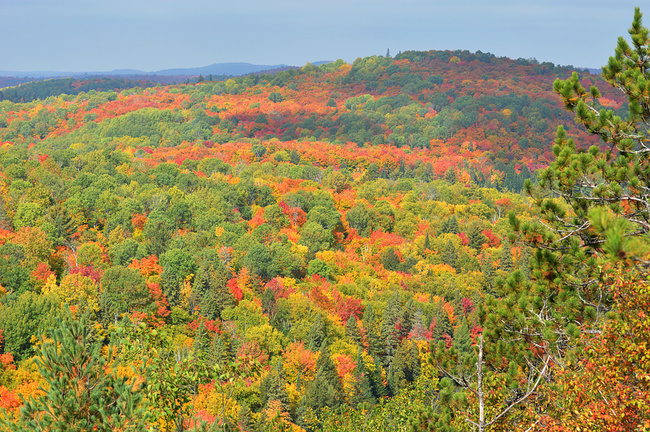
I took scenery photos as best I could with my somewhat ill-suited telephoto lens. My favorites were the ones I got along Mizzy Lake Trail, with classic boreal spruce bog in the foreground, and blazing fall maples in the backdrop. The best of both words.
1680x1050 wallpaper

|