A morning at South March (part 3)
July 22nd, 2014
1680x1050 wallpaper
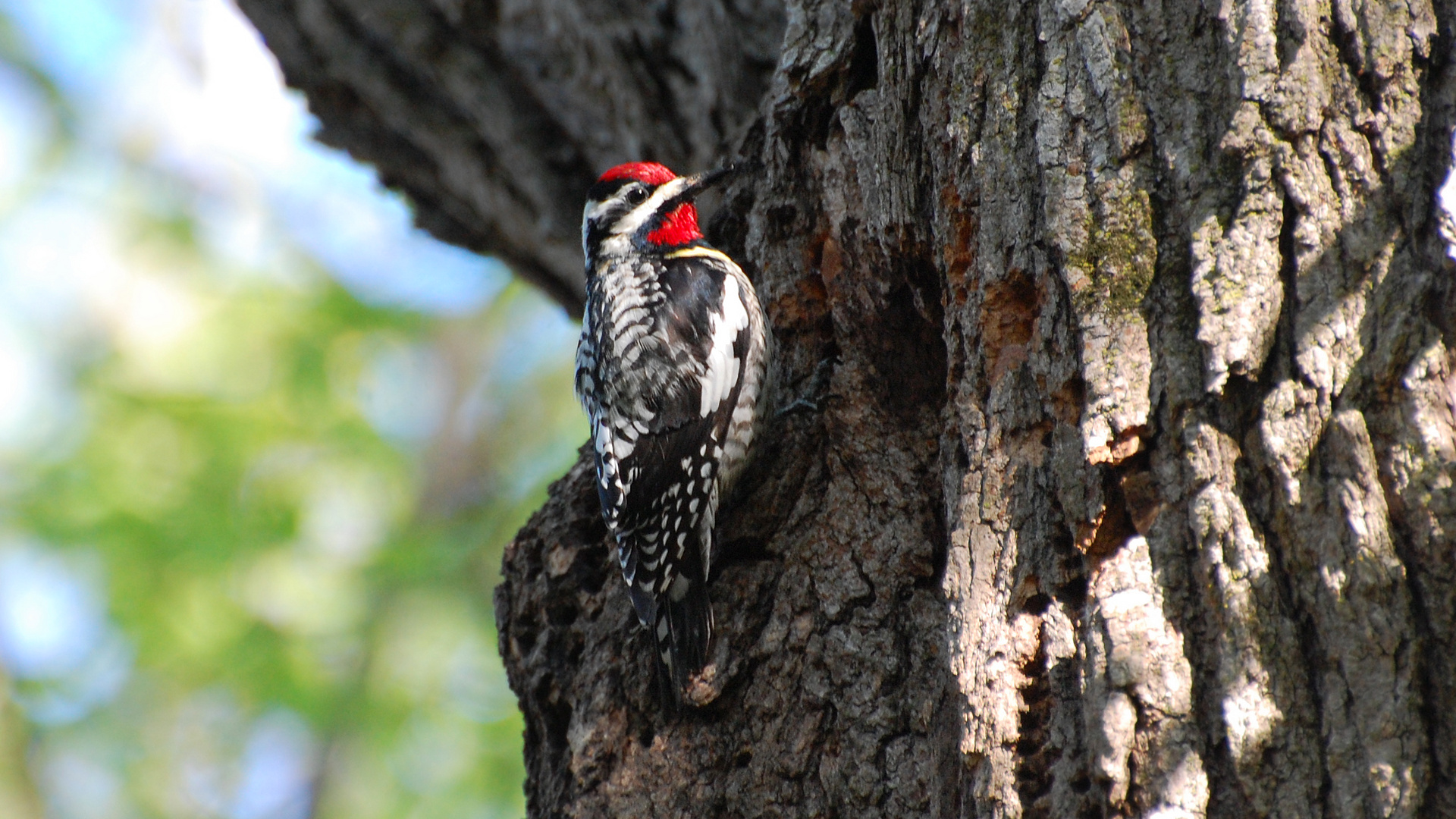
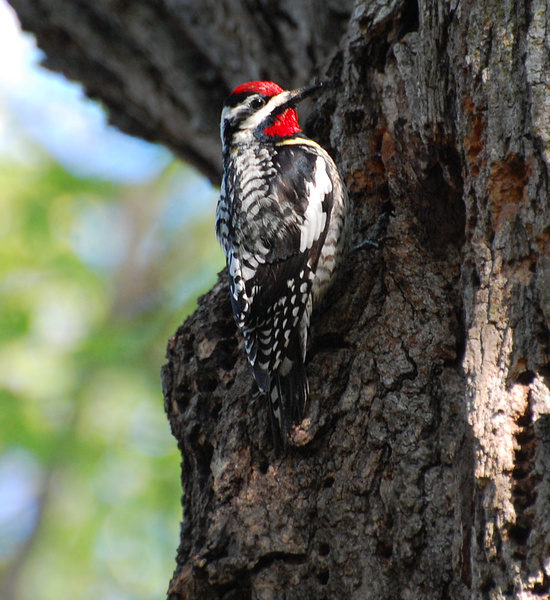
Another sapsucker. You can see some old sap wells in this tree, as well as larger holes probably created by other woodpeckers. Sapsuckers are distinguished from their more common cousins, Downy and Hairy Woodpeckers, by their bright red chins (only on adult males) and by the broad white stripes on their sides. Their call is a nasal mew.
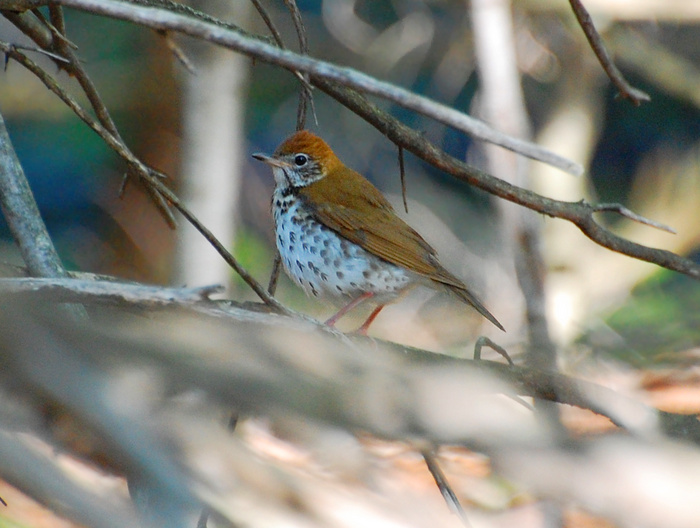
1680x1050 wallpaper
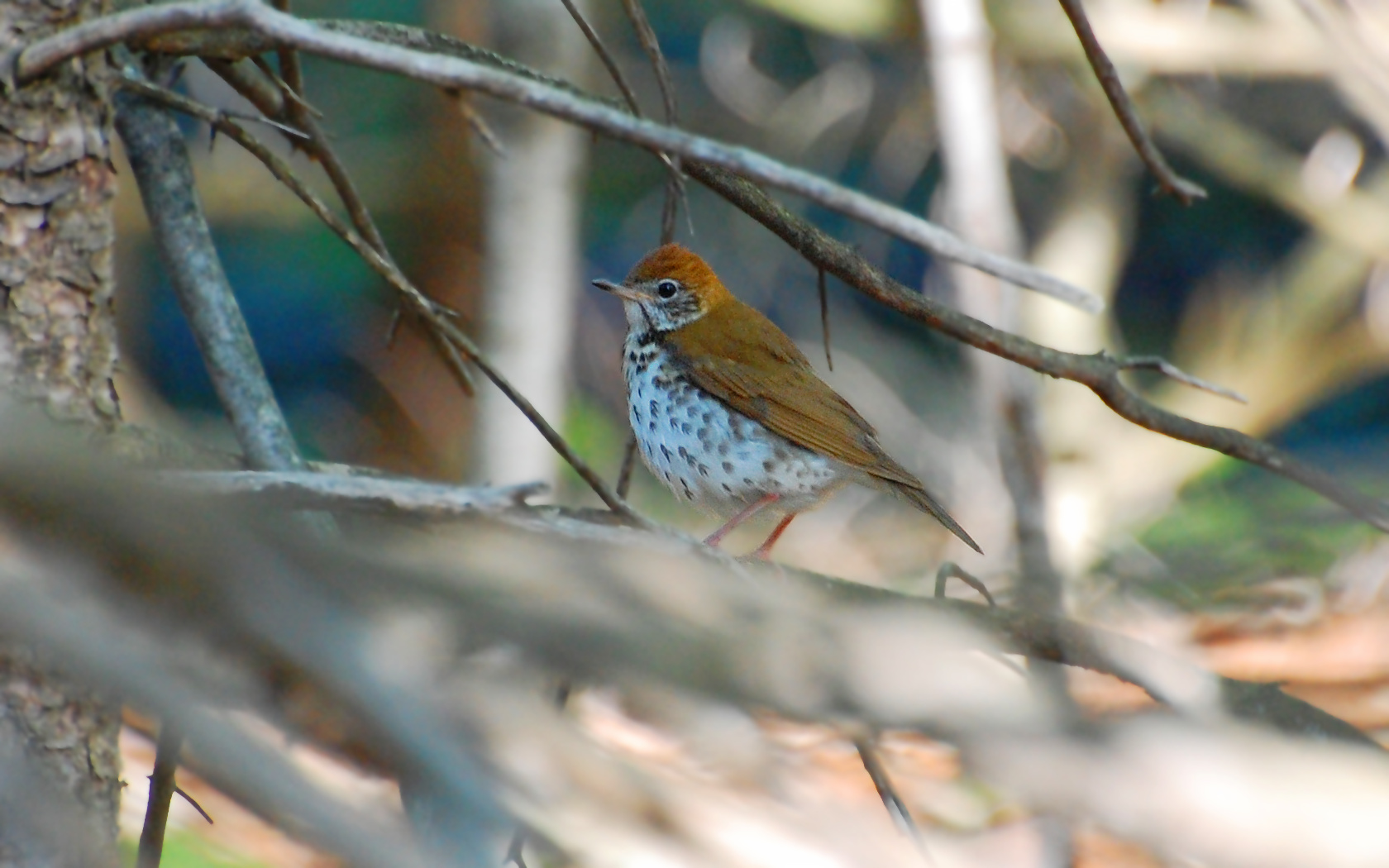
Wood Thrushes are one of the most beautiful songsters of deep woods, but to actually see one is a rare treat. They are often elusive, and this is my first-ever photo. I think it's a female, actually. I could hear her mate singing nearby.
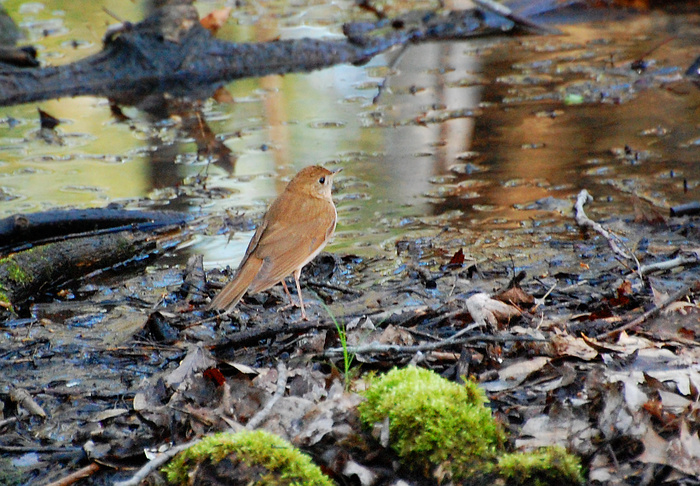
A Veery in veery heaven: rich, mossy wet woods. Veeries are thrushes with a descending waterfall of a song. In the wee hours of morning and evening, they and the Wood Thrushes duet in South March Conservation Forest. If you're lucky, a Hermit Thrush might join in and make it a trio (usually a distant Hermit Thrush as they have different tastes in habitat from the other two.) I feel anyone with even a passing love of nature should hear a thrush symphony at least once in their life.
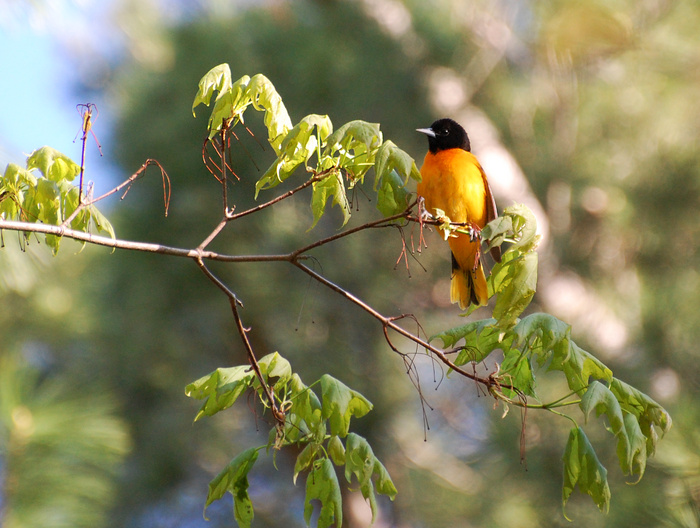
1680x1050 wallpaper
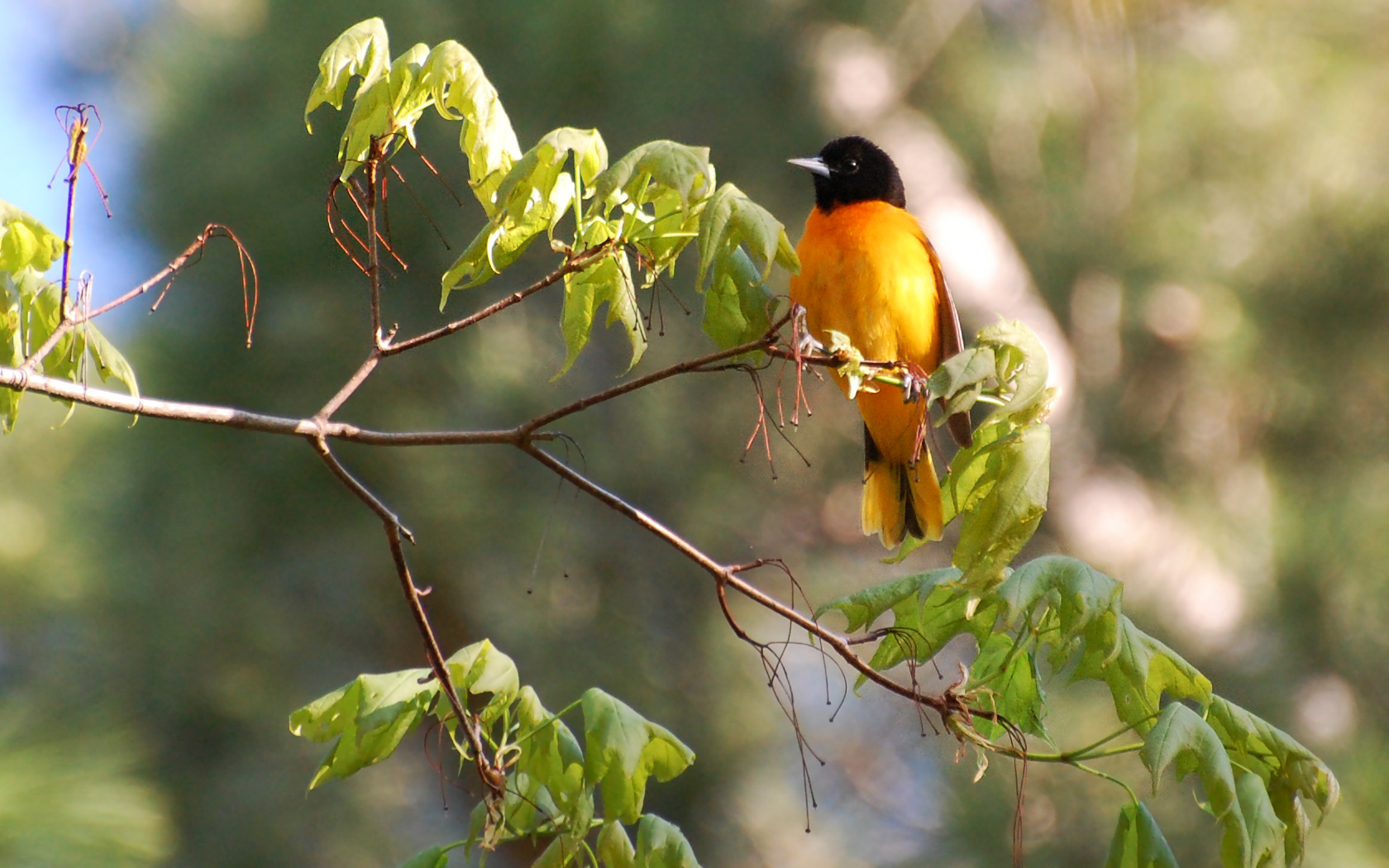
I tracked this "Baltimore Titmouse" (a Baltimore Oriole with a titmouse-like song) a ways into the woods, following his song up a hillside and into a sunny clearing, where he stood resplendent in the morning light.
A morning at South March (part 2)
July 17th, 2014
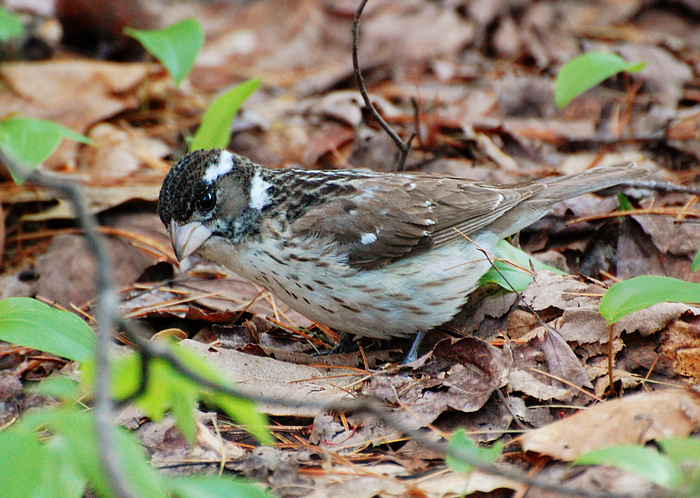
In most of Ottawa, Rose-Breasted Grosbeaks are something you see passing through in spring and fall, but South March has a robust breeding population. I'd never seen them like this before, though: both males and females were foraging on ground--not merely on the ground, but on the trail--right in front of me.
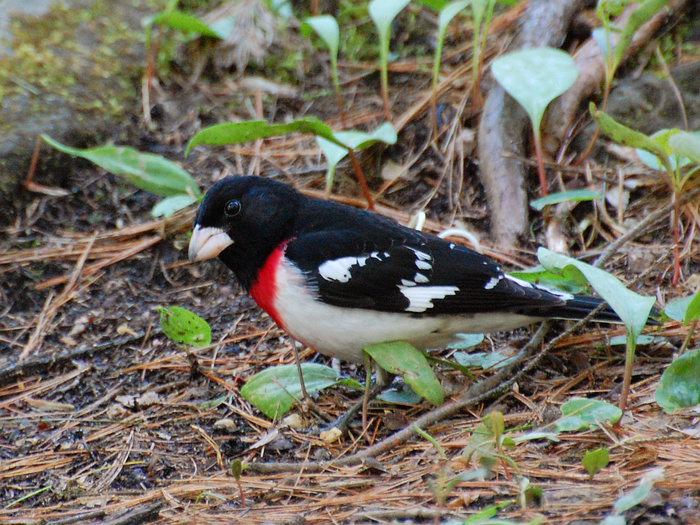
1680x1050 wallpaper
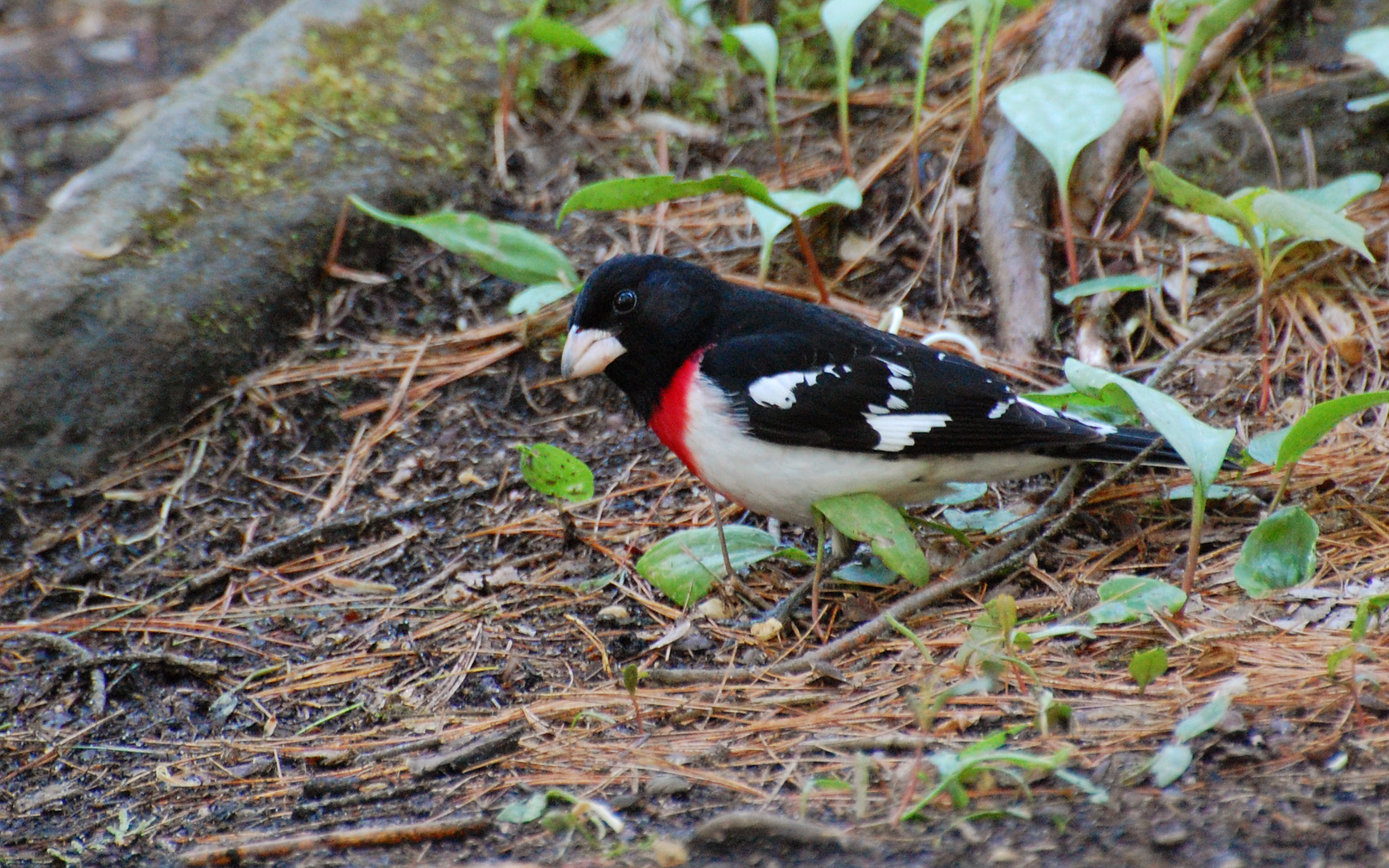
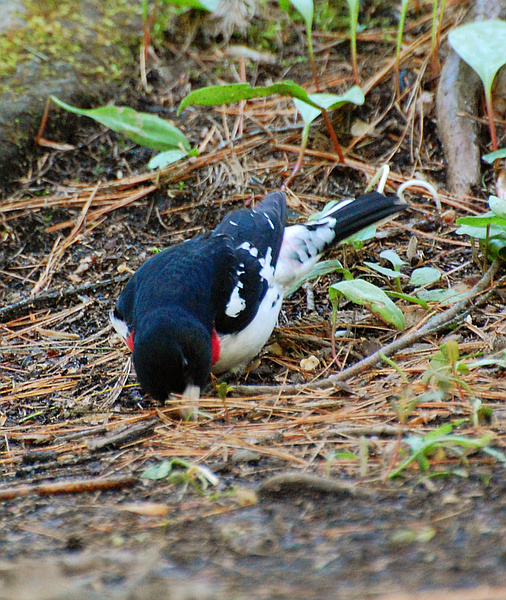
So were they looking for food? On a cold morning like that one, it makes sense that the only insects they could find would be on the ground. Or were they looking for nest material? Or were they gritting, perhaps--eating small pebbles for their gizzards? (Some finches come right out onto roadways to do that.) It was on a later day, walking through the same woods with my husband, that I discovered the answer by kneeling down and studying the earth where a grosbeak had been foraging: someone has been scattering birdseed on the trails.
And I'm of two minds about it. On the one hand it's making for some stunning views of songbirds that usually stay well up in the trees. (That day with Michael I saw a Scarlet Tanager, of all things, come to ground!) On the other hand, it seems questionably ethical to deliberately attract birds onto trails where fast-moving mountain bikes are the norm.
The more soberly attired female:
A morning at South March (part 1)
July 13th, 2014
This is it. A grand finale of sorts.
This post and the following few will contain the photos I took the day
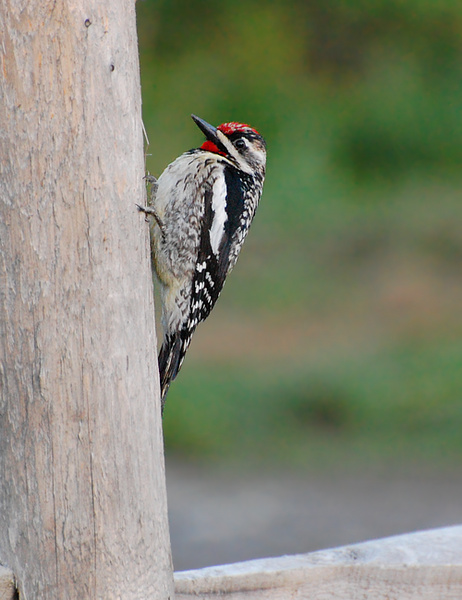
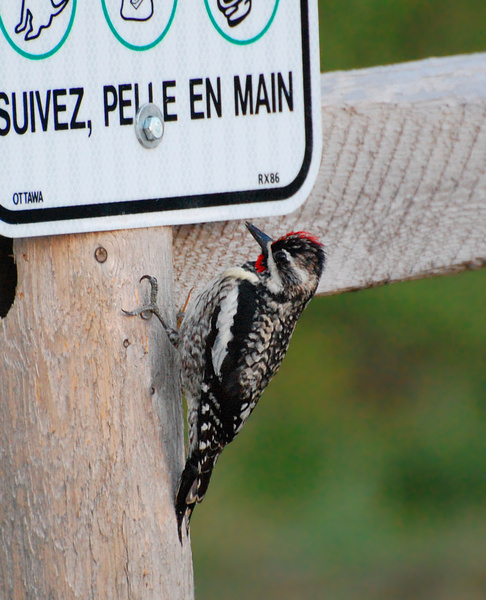
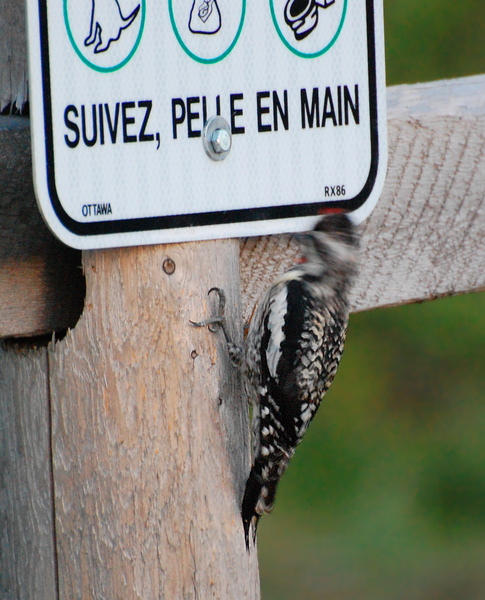
My day began at sunrise with this fellow, a Yellow-Bellied Sapsucker, at the entrance gate. To recap, sapsuckers are specialized woodpeckers who drill rows of tiny holes in living trees, then lick up the sap that wells out--they are not just a joke insult used by Yosemite Sam against Bugs Bunny :-) They're comparatively shy woodpeckers. Only in the early morning, I think, could I have chanced to see one in such an exposed location. He began to play hide and seek with me, as woodpeckers do (skittering around the post to try to stay out of my sight), and eventually flew off.
It was the sound that had announced him: a very loud, resonant clanging. Classically, woodpeckers drum on trees to declare territory, but if they can find something noisier to drum on, they might use that instead. This cheeky fellow got good results by banging on the "stoop and scoop" sign at the trail entrance!
Living Color
July 7th, 2014
Some photos that I didn't get around to posting before.
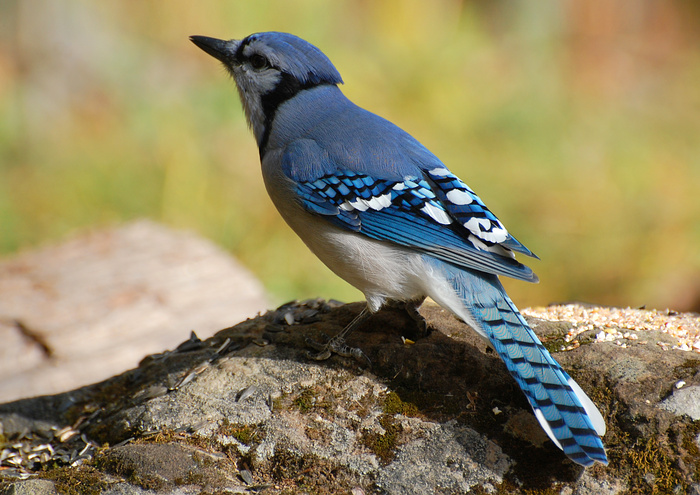
1680x1050 wallpaper
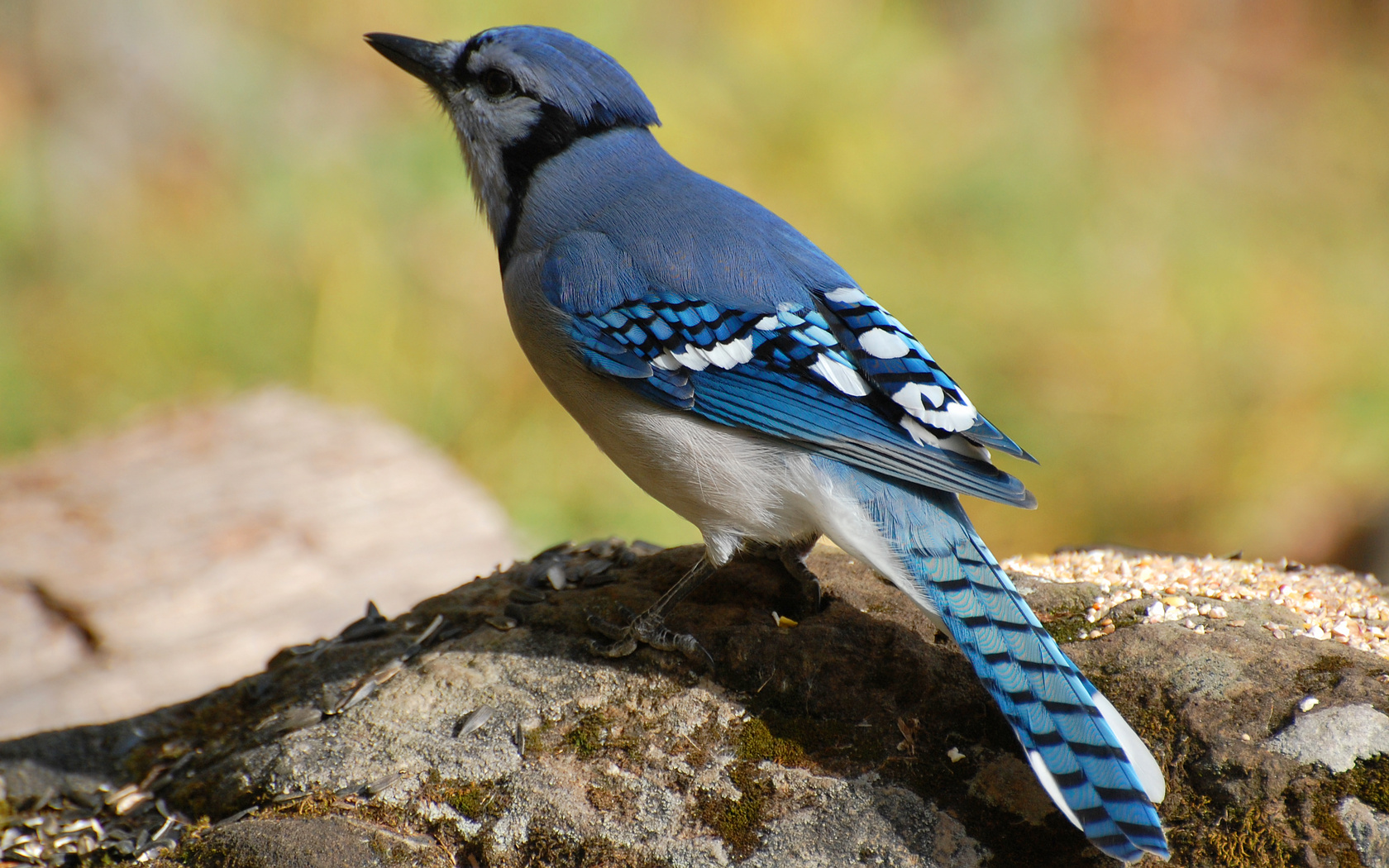
Blue Jays don't get their colors from pigment, but from the way their feather structures refract light. (In other words, if you crush a blue jay feather down to powder, it won't be blue anymore!) They can look amazing when the light strikes them just the right way. View at full res to appreciate--you can actually see a moire pattern on his tail.
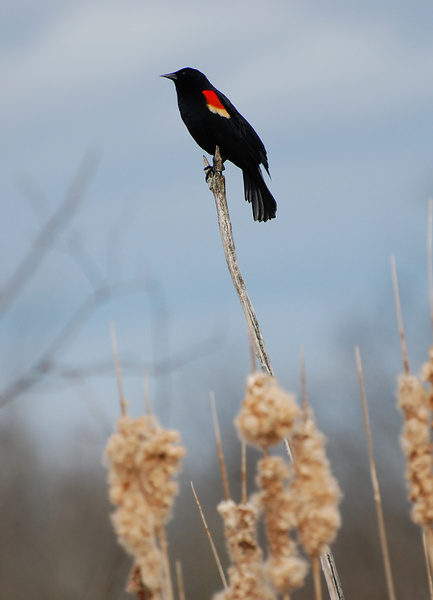
A breeding Red-Winged Blackbird in the Nortel wetland, photographed earlier this year.
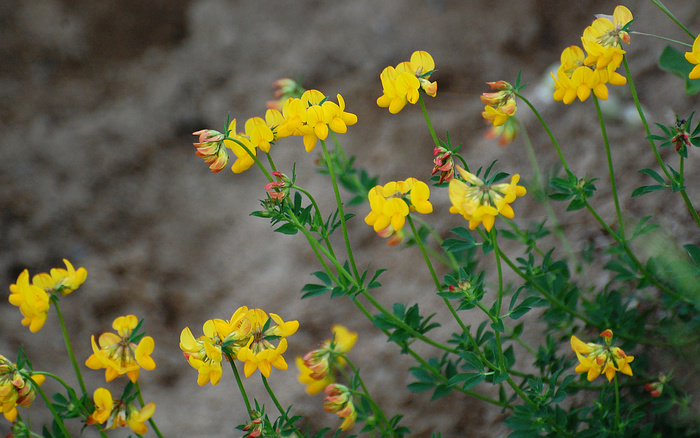
Birdsfoot trefoil. I think this very common wildflower brightens the landscape even better than dandelions.
1680x1050 wallpaper
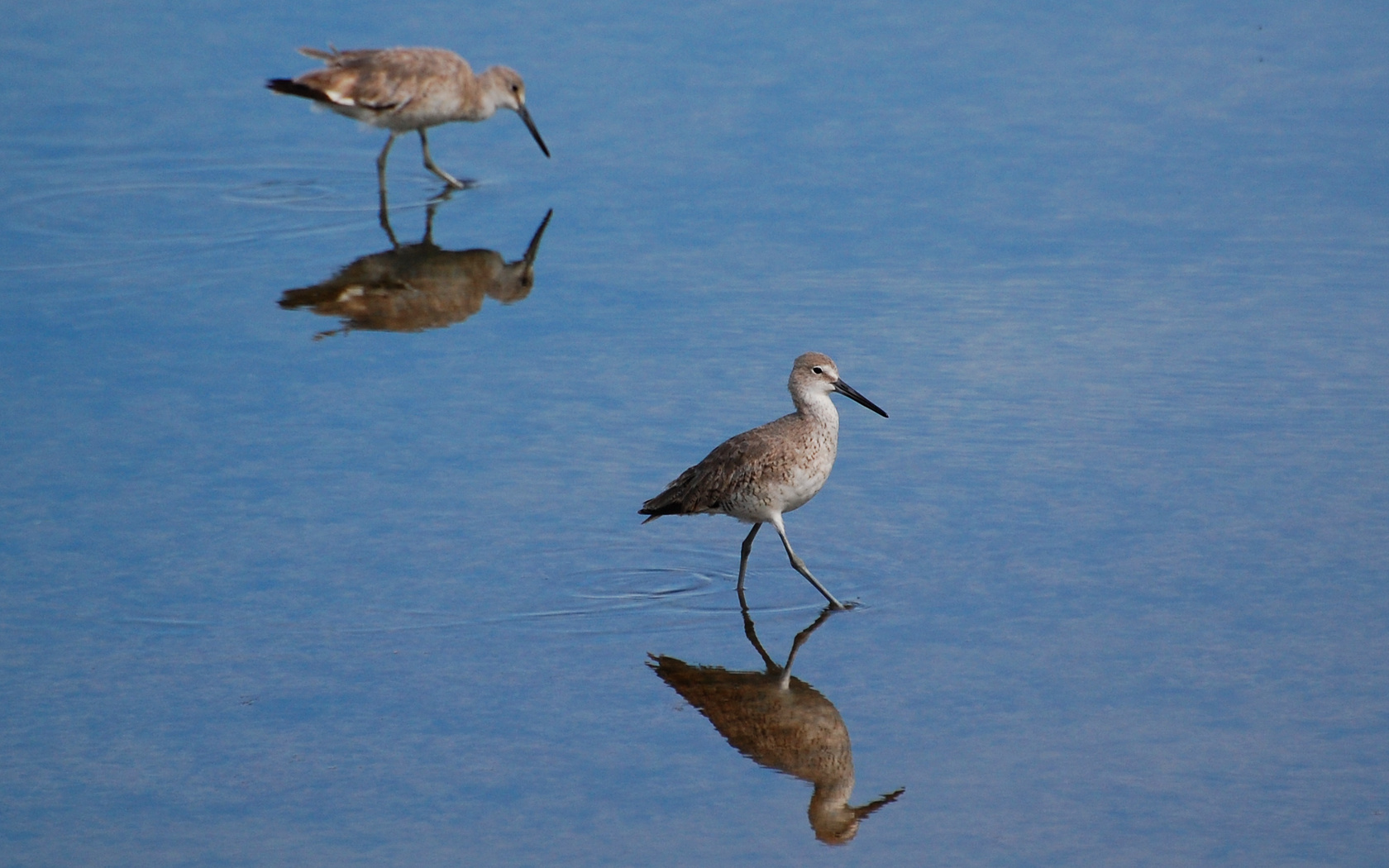
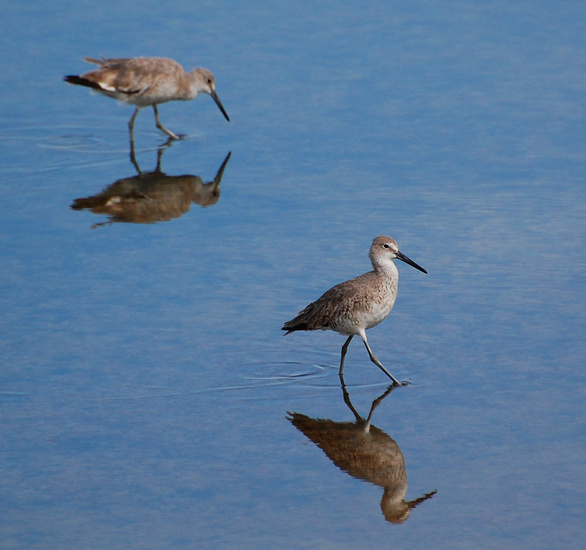
A pair of foraging Willet sandpipers. This one goes back to our Cape Hatteras vacation in summer 2012.
Wood Duck Pair
July 3rd, 2014
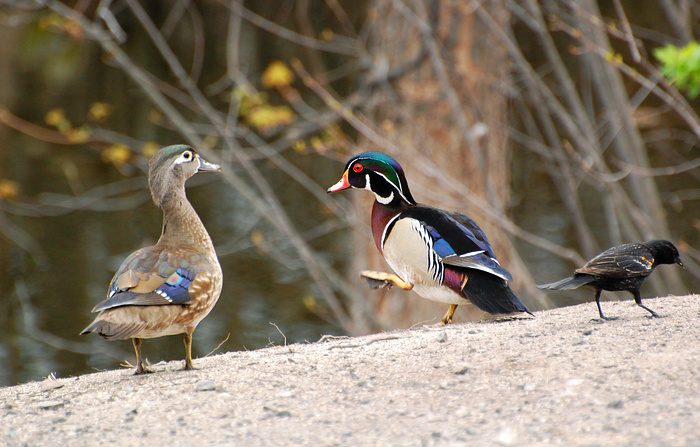
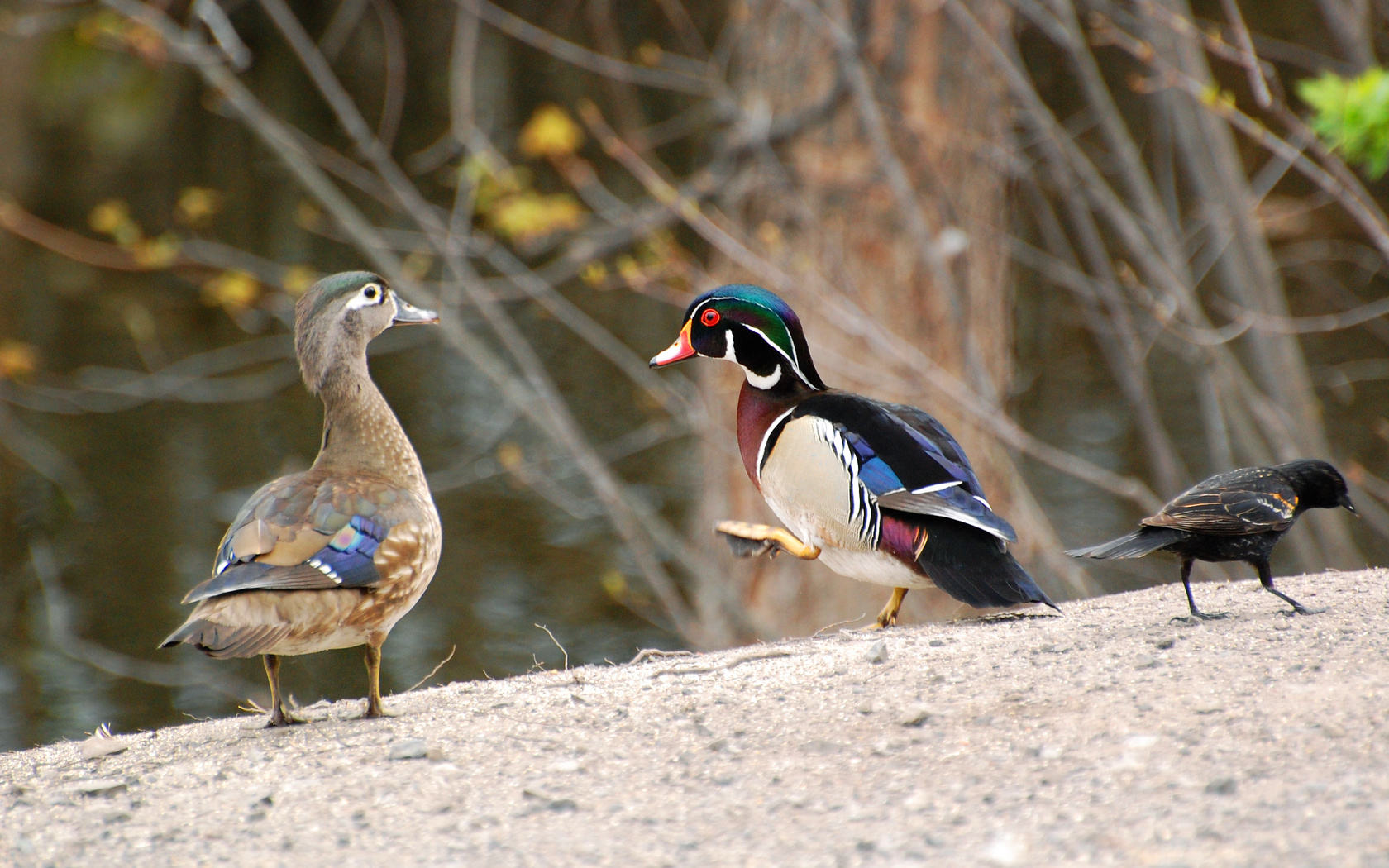
On the shore of Mud Lake, with a first-year male Red-Winged Blackbird foraging nearby. The drake was about to scratch an itch.
1680x1050 wallpaper
Carp Ridge
June 29th, 2014
Every year I'm struck anew by the strange beauty of Carp Ridge. It seems almost otherworldly to me.
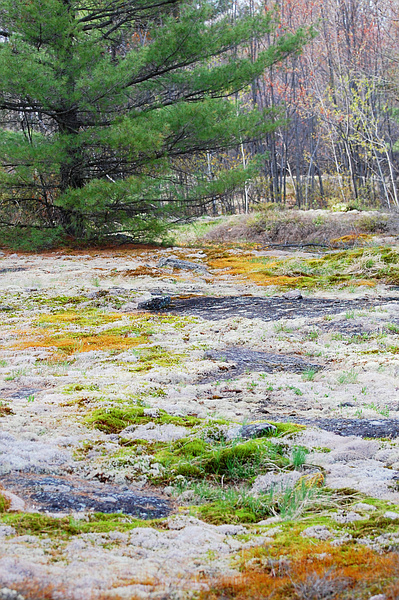
This rocky, lichen-encrusted landscape is one of the best places in Ottawa to find rare breeding birds, including towhees, whippoorwills, and nighthawks. It's also unfortunately one of the best places in Ottawa for finding deer ticks. I've often wondered if there is a connection between these two facts.
April's Kinglets
June 25th, 2014
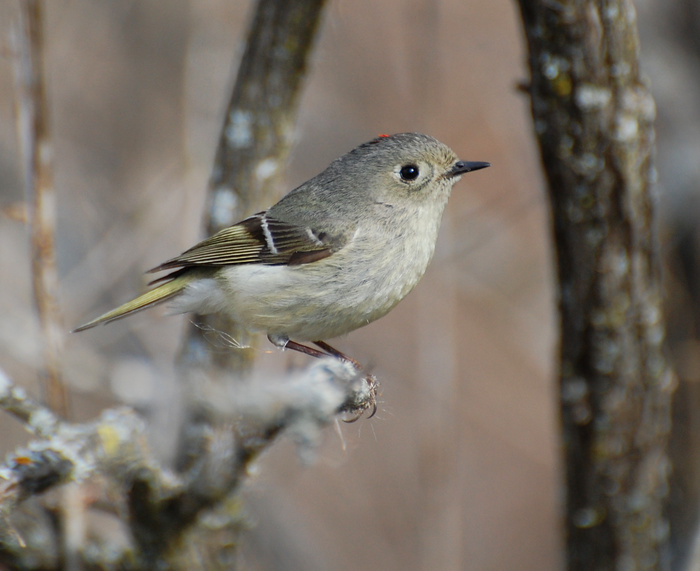
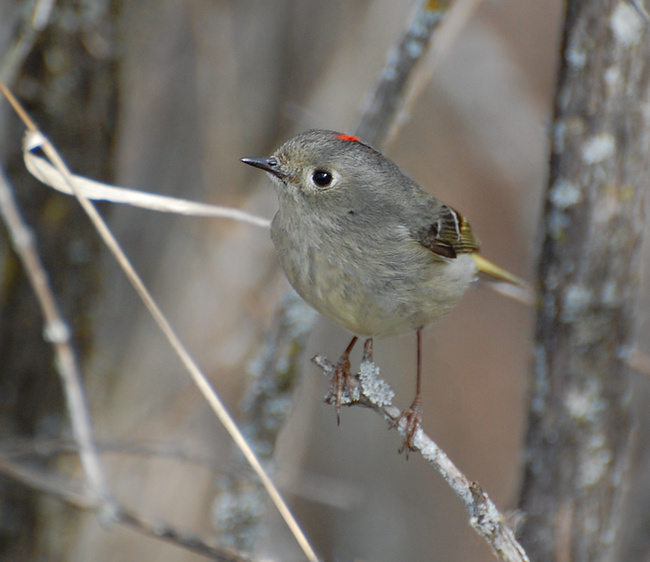
I managed to capture a few Ruby-Crowned Kinglets on their way through this spring. Here they are, somewhat belatedly! This flock was along the trail at Nortel wetland. Notice the filaments on the feet and rump of the first bird: I think that's cattail fluff. They were foraging right next to the marsh and occasionally in it.
Trout Lily
June 9th, 2014
It deserves a better name, don't you think?
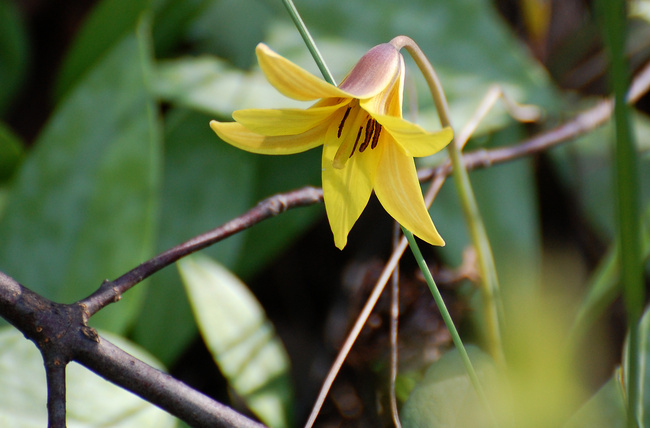
This close-up makes it look huge, but it's actually a delicate miniature lily, one of the first wildflowers to appear in spring. It soaks up the sun before the tree leaves above have unfurled and cast it into shade. Trout lilies grow in often dense colonies in rich woods--but I've never caught more than a few of them blooming at the same time. So I look for the leaves first (green and mottled brown), and then I search for a flower.
Avian Soap Operas
June 1st, 2014
So Sedge Wrens are kind of dastardly.
They are also rare and elusive. They breed in moist tall-grass meadows, where they spend most of their time creeping through said grass. The only time when you really have a hope of seeing one is when it sings. The song at least allows you to hone in on the spot where the wren is creeping through the grass, or, if you're lucky, it might come up a short distance into a bush or onto the top of a tall stalk. The urge to declare territory and/or catch a female wren's eye may briefly overrule the urge to stay hidden. The best time is before the sun is up, or shortly after. These shy birds seem to shrink away from full daylight.
For some reason, they are also very nomadic. A colony of Sedge Wrens may spring up in an area one year, and then disappear from that area for years thereafter for no apparent reason. The going theory among scientists is that good habitat for Sedge Wrens is a very particular and transitory thing, and even a slight change in, say, water level may render a meadow uninhabitable to them. I have an alternative theory, one which also explains why they are so secretive and maybe even whey they are so rare: other birds hate them.
They really do. That by itself (the hate) is more than theory, it's something I've established from repeated observation. I first noticed it back in May of 2012 when I heard a singing Sedge Wren in the Nortel wetland. It was in an odd spot, just a small area of fairly short grass across the trail from the marsh, but I was confident of the ID. A Common Yellowthroat flew towards the song, there was a confusing aerial kerfuffle, and then two birds flew off with one in hot pursuit of the other. Thereafter, there was no more Sedge Wren song. I never saw the bird well enough to list it.
I came back to the spot many more times hoping to see the wren. I even came back in spring of 2013 hoping it would pass through again. Each time I brought a recording device and played Sedge Wren song in hopes of drawing one out. I never got a response from a Sedge Wren, but boy, did I get a response from the other birds! I got scolds, alarm calls, birds flying at me, birds perching in the open and looking in every direction trying to find the singer. The skulking but ever-vigilant Common Yellowthroats were guaranteed to emerge from the undergrowth and give me beautiful looks at themselves whenever I played back the wren.
Why? Because Sedge Wrens are bad neighbors. They are in fact terrible neighbors. These adorable four-inch birds with their delicate staccato songs are little avian sociopaths. They will sneak into the nests of nearby birds (even fellow Sedge Wrens) and methodically puncture every egg. They don't do it (near as we can tell) because they particularly like the taste of eggs. They do it to reduce competition for resources. If their neighbors have no surviving young to feed, that's all the more food for the Sedge Wren's babies. So the birds who share habitat with them have long since evolved to recognize them as a threat. They will do everything they can to dissuade the wrens from settling down to breed.
So--it's a stretch, I know--but could it be Sedge Wrens are so nomadic because they need to burn bridges now and then? That once the area birds are wise to their tricks, adept at harassing them and interrupting their egg-puncturing rounds, it's then time to move on to a fresh batch of
I'd been trying to lifelist this elusive bird for seven years. So when I heard that up to three males were singing in a meadow near the Nortel wetland, I grabbed my scope (the alternative to wading through dew-soaked thigh-deep grass) and rushed out to look for them in the very early morning. I was not disappointed! Over the course of an hour I managed multiple good views. To anyone hoping to do the same, I would offer a few bits of advice: go out there at sunrise or even before the sun is quite up, bring a scope if you have one, and pay special attention to bushes and other elevated spots--they do sometimes ascend when they sing, though they rarely come completely out in the open. And lastly, if there are other birds in the meadow who are acting agitated, follow their eyes. They may be as interested as you are.
This morning I watched as a Red-Winged Blackbird and a robin converged on a bush containing a Sedge Wren (which I could hear but not see.) The instant it dared to sing, they both made their way down towards it, with clear hostile intentions. Its defense: clam up and lay low. Few things are less findable than a Sedge Wren clamming up and laying low. As I watched both birds sit there in the middle of the bush with their eyes glued on the grass below, waiting for it to pipe up again, I was struck by how much they and I resembled each other, the flummoxed birds and the flummoxed birder.
They eventually gave up and left. I didn't. And after the coast was clear, the sneaky Sedge Wren began to sing again.
The Phantom of Carp Ridge
May 27th, 2014
In the wee hours of the morning today, I drove out to Carp Ridge for the nocturnal festival.
There are three nocturnal specialties there. One is the nighthawks. In spring male nighthawks perform spectacular aerial dives to impress their prospective mates. The most spectacular part is the sound: when they dive the wind whooshes through their wings with a *zoom*. I think I have described the sound before as like a tiny sportscar whizzing past your ear. But that's how it sounds when there's still light in the sky. By night they get bolder, and it's more like a full-size fighter jet whizzing past your ear.
The aerial dance of the woodcocks is the second attraction. While the nighthawks "peent" from the sky, woodcocks "peent" as they strut on the ground, then finally they take off with a twittering of wings, circling overhead. The twittering changes to chirping as they descend, finally landing in exactly the same spot on the same rocky clearing as before. On a warm spring night Carp Ridge is alive with these sounds, nasal "peent"s, sudden *zoom*s, and a twittering that seems to come from all directions (and that if you didn't know better, you'd probably assume was bats.) It must be experienced to be believed.
But the star attractions, the ones that haunt me, are the whippoorwills. For seven years I've sought them. Last spring I heard one for the first time since childhood. But to see one is a great deal harder. There's already little light left in the sky when they first start to sing, distantly, from the woods. By the time they make their way out to the roadsides it's almost dusk. Time after time I'd listen to the breathlessly repeated "whip-poorWEEL! whip-poorWEEL! whip-poorWEEL!" while struggling to see the bird that sounded like it was only just past the shoulder, less than ten feet away, and, if field guides are to be believed, perched in the open on a rocky shelf or on the ground. And I'd never see it.
I told my husband that they seemed to have both powers of invisibility and powers of teleportation. Both were necessary to explain it. Because eventually the whippoorwill would stop singing, and then I would immediately hear it singing from down the road, without having seen or heard any sign of its flight. (I think I've cleared that mystery up, though. Because two whippoorwills singing at once is not a harmony but a cacophony, they seem to have come to a gentlemen's agreement that only one in a given area shall sing at a time. So once one bird finally runs out of breath, the next one starts up.)
Last night (or this morning, it gets fuzzy at 4am), I finally discovered the secret: eye shine. You don't have to point the flashlight right at them, and of course you shouldn't! (Just point one at your own eyes for a moment and imagine what that could do to a nocturnal bird.) Shine it on the road nearby. Mild indirect light doesn't seem to bother them, indeed they don't even seem to notice it. But their eye will catch the light and glow, a perfectly outlined orange circle, looming large. Even through a dense thicket you can see it. It's downright eerie, actually--especially when that glowing circle shifts, then dances away. It gives me a fresh appreciation for the superstitious folklore that once surrounded these birds.
Time and again I saw the eyeshine. A few times I saw the brief outline of a wing when it flew. And while it was still too dark for me to get the proper view I had always hoped for, I began to feel that there was something more proper, more true, more essentially whippoorwill about this phantom figure with a glowing eye, than if I had seen the body and the plumage.
Be that as it may, I did finally get what I'd always hoped for. In the first light of dawn at quarter to five, I saw one clearly. By some optical illusion it loomed large in my binoculars, looking much more imposing than the nine and a half inches I was given to expect, but there was no doubt what it was. It was more than a silhouette. I could see its brown and gray plumage, and how seamlessly it blended in to the lichen-encrusted rock. It had been calling softly before, but now that my sights were on it, it was completely silent and still.
I looked away for a moment to swat mosquitos. When I looked back, it was gone.
|